- Licensed & Insured
- 24/7 Emergency
- Veteran Owned · Since 1993
Tree Service in Peapack-Gladstone, NJ
Wayne’s Tree Service works both villages of Peapack-Gladstone — the historic homes along Main Street in Peapack (07977), the estate properties off Pottersville Road and Willow Avenue in Gladstone (07934), and the centuries-old specimen trees on the hunt-country grounds in between. Removals, hazard pruning, stump grinding, and 24/7 storm response, here since 1993.
Get a Free Estimate
A Local Crew That Knows This Hunt Country
Peapack-Gladstone is barely 5.8 square miles, but no two corners of it grow trees the same way. The hilltop estates above Pottersville Road carry 100-year specimen oaks and beeches that need a careful hand and, often, a crane. The historic lots along Main Street and Holland Avenue have mature shade trees planted generations ago, sitting close to homes that predate the borough’s 1912 incorporation. And the low ground along the Peapack Brook holds streamside sycamores and maples that flood-stress and fail in the wind.
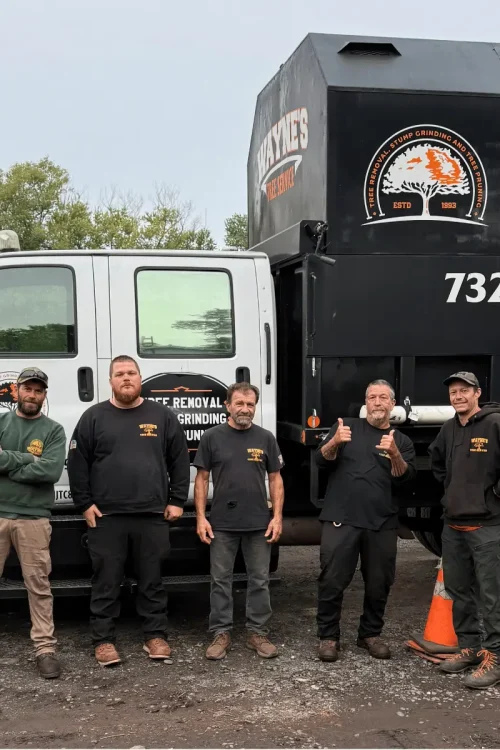
We’ve worked all of it. Wayne’s Tree Service is a New Jersey Tree Expert operation (NJTC #806860, LTCO #565), veteran-owned, fully insured, and based a short run up Route 206 in Somerville — so we’re up in this hunt country constantly, not driving in from far away. You get the licensed, arborist-level care the estate properties here expect, the crane and bucket-truck fleet the big removals require, and a crew that answers the phone when a tree comes down at midnight.
Talk to a local Peapack-Gladstone arborist → Call (732) 805-0609
Peapack-Gladstone's Tree Permit Rules (Some of the Strictest Around)
Peapack-Gladstone regulates tree removal more tightly than almost any town nearby, and most homeowners don’t know it until they’re mid-project. Under Chapter 19 of the Borough Code — amended May 2025 — here’s the framework:
4" DBH Threshold
Any tree 4 inches DBH (diameter at breast height) or larger needs a Tree Removal Permit from the Zoning Officer.
$25 Fee per Tree
Fee paid at filing — standard for both private-property and right-of-way removals under Chapter 19.
Tiered Replacement
1 tree replaced for 4–18" DBH · scaling to 4 trees for 39"+ DBH per the Chapter 19 table.
18" DBH Ceiling
Nothing over 18 inches DBH comes down without a permit — period.
We’ll walk your property and tell you exactly where each tree falls in that table — what needs a permit, what’s exempt, and how many replacements the borough will want — before any work starts. Filing the permit is on you or your engineer; we don’t file it for you. But you won’t get surprised by the Zoning Officer after the fact. For storm-damaged trees, we document the hazard condition so the fee and replacement exemption applies.
Annual Residential Exemption
Lots under 3 acres: up to 3 trees a year in the 4–18" range. Lots over 3 acres: up to 5 trees a year.
Hazard-Tree Exemption
Genuine dead, diseased, or hazardous trees are exempt from both the fee and the replacement requirement.
Our Tree Services in Peapack-Gladstone, NJ
Removals, pruning, stump grinding, planting, land clearing, and 24/7 emergency response — built around the borough’s estate canopy and Chapter 19 ordinance.
Tree Removal in Peapack-Gladstone
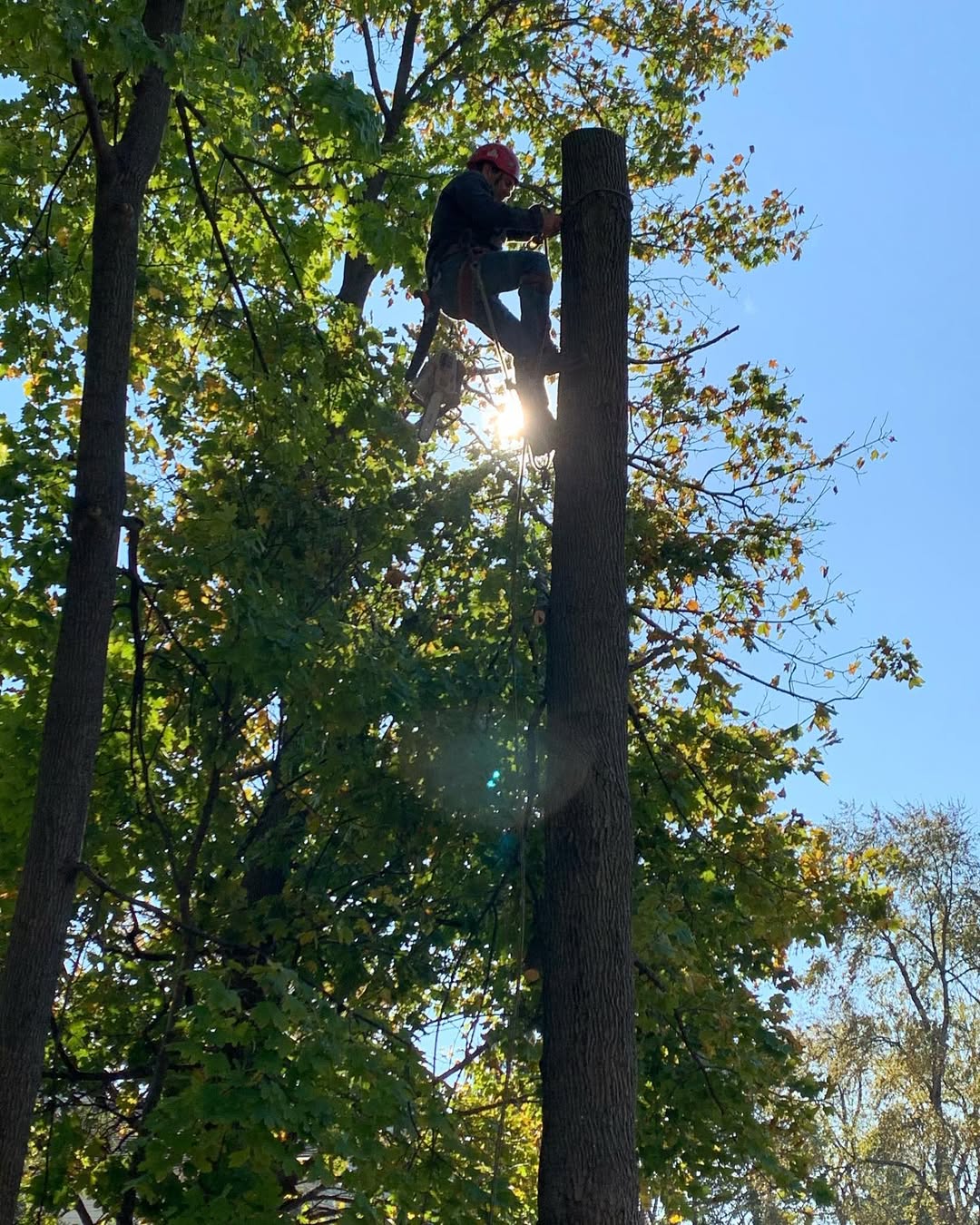
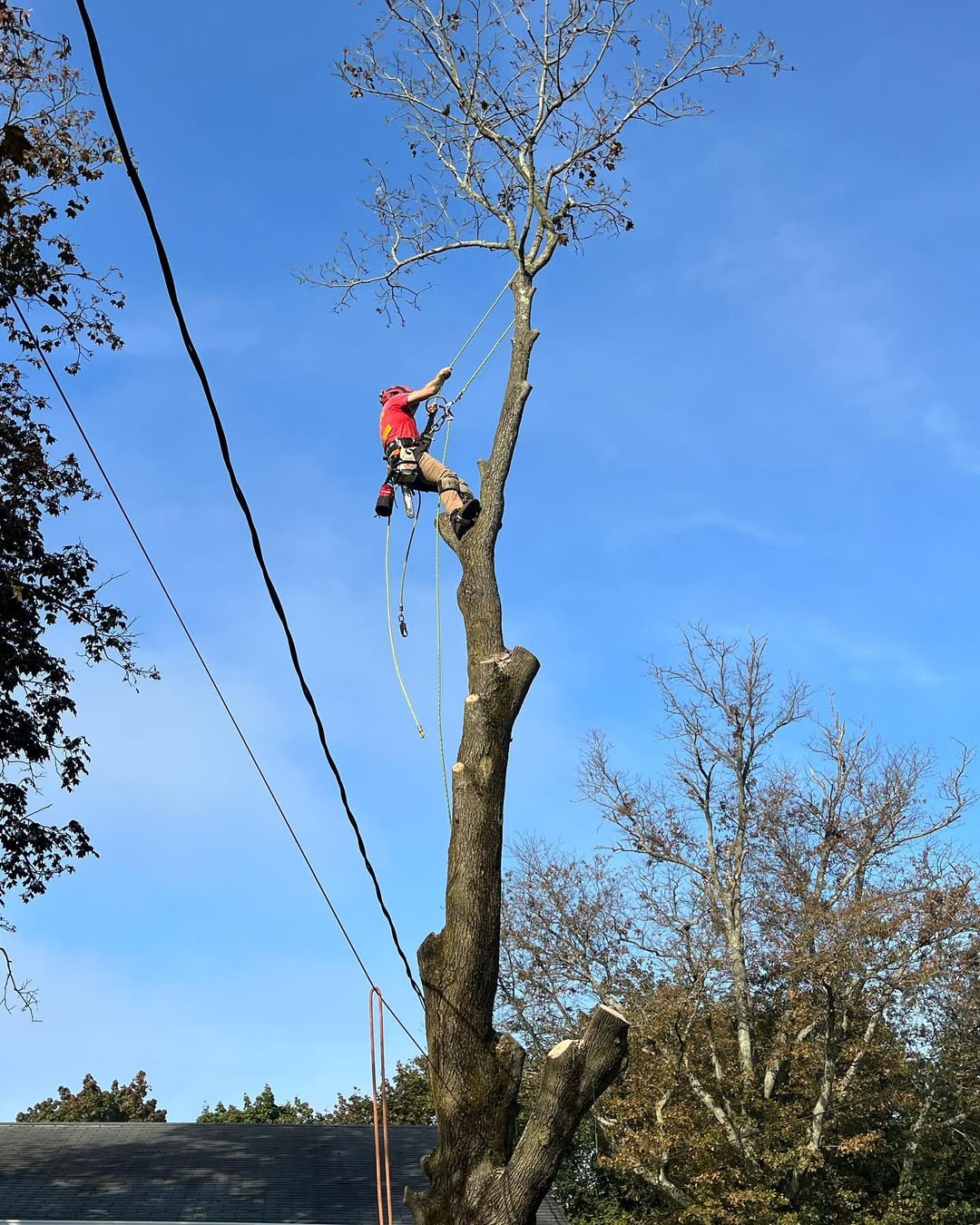
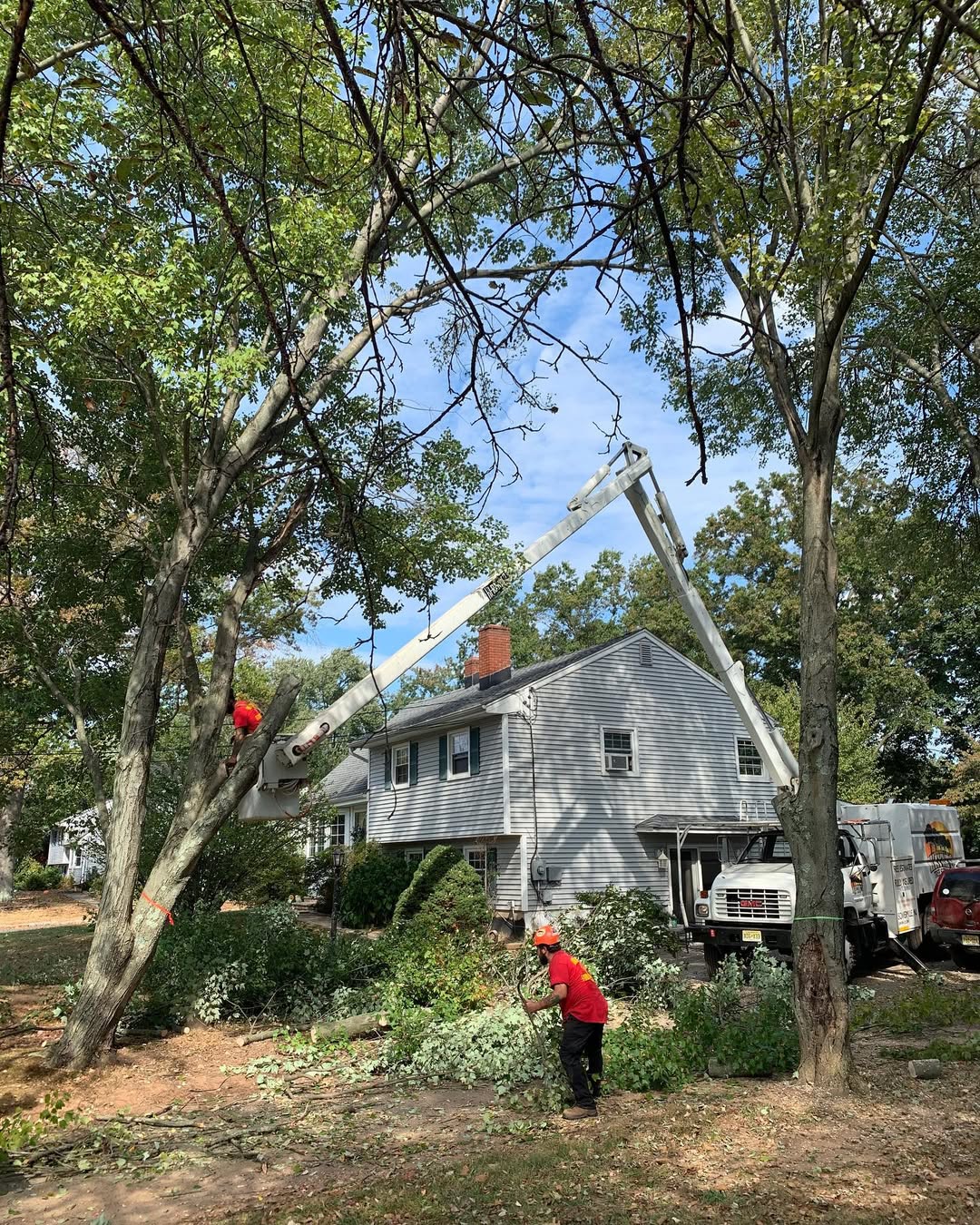
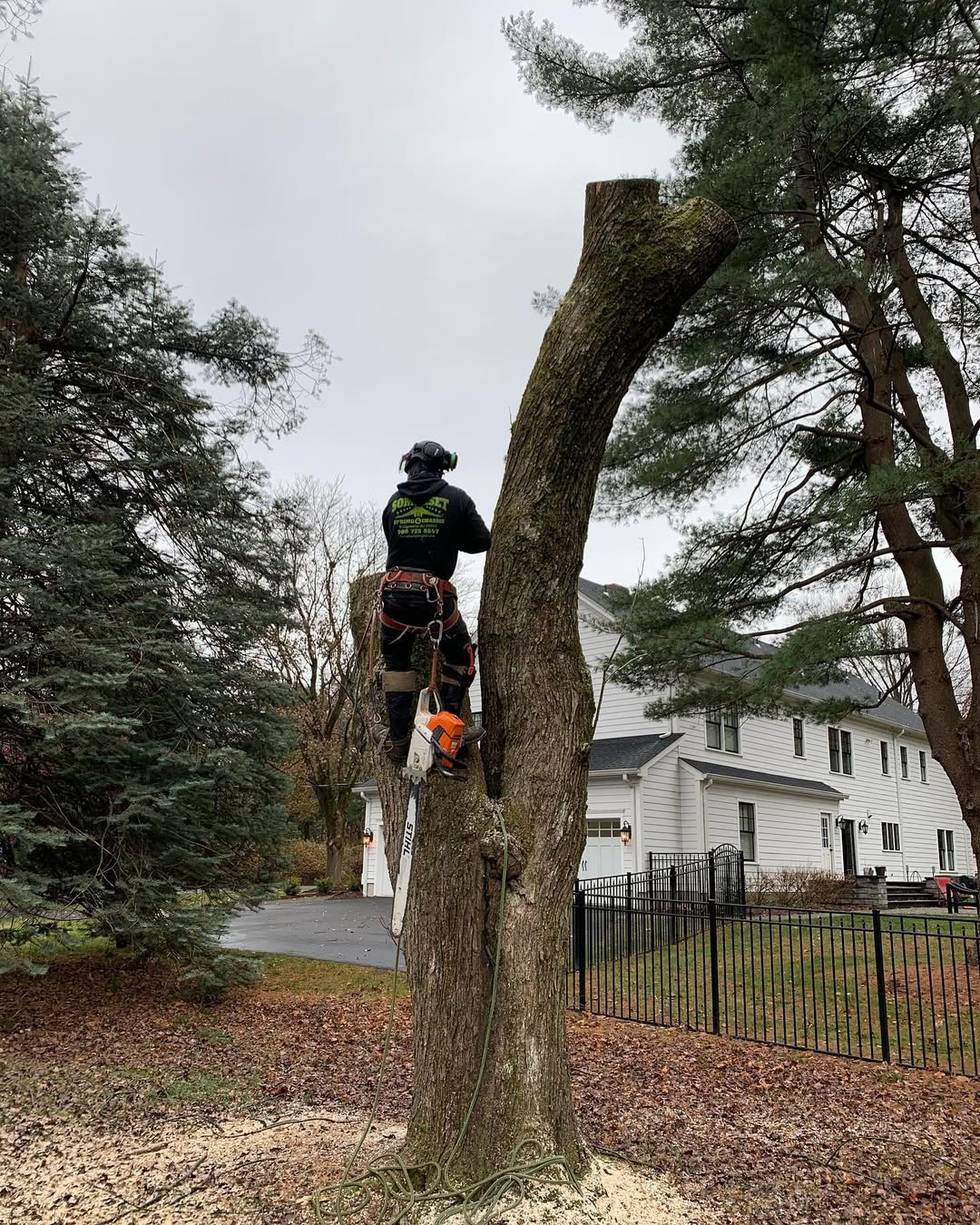
Big, old, and close to something irreplaceable. We take down 80–100-ft oaks and beeches off Pottersville Road and around Hamilton Farm with the crane, clear flood-loosened sycamores and silver maples along the Peapack Brook, and remove EAB-killed white ash borough-wide. Every job leaves the grounds clean and the surrounding trees untouched.
Tree Trimming & Pruning
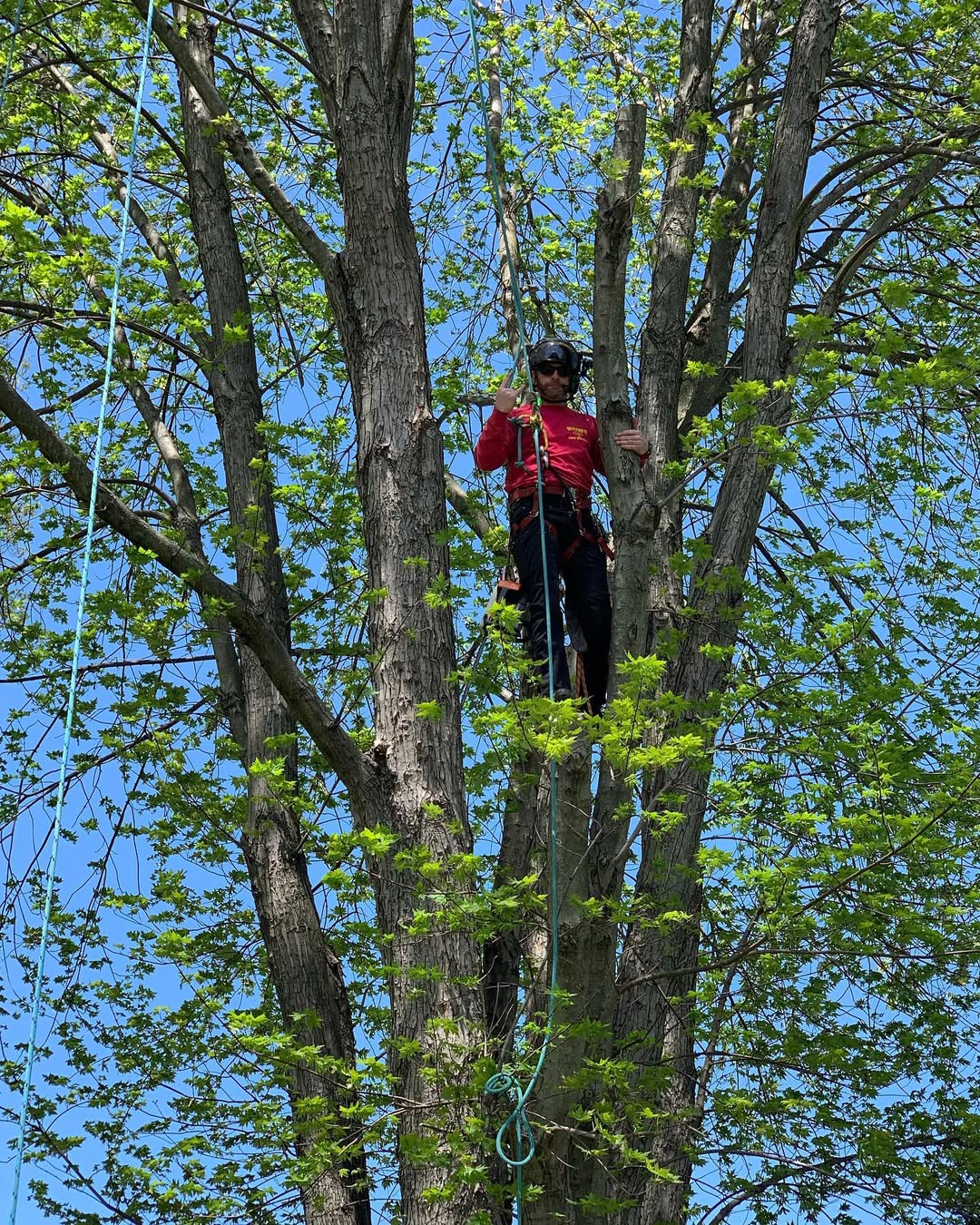
Pruning is preservation here, not cleanup. ANSI A300 standard: deadwood and weak unions out of century-old oaks and beeches, crown reduction to cut wind-sail on hilltop lots above Willow Avenue, and clearance pruning to keep canopy off JCP&L lines along Main Street and Route 206.
Stump Grinding & Removal
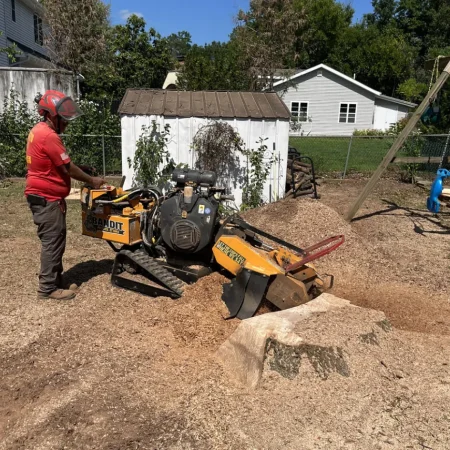
A ground-out stump clears the way for replanting — which Chapter 19’s replacement rule may require anyway. We grind well below grade on lots from Main Street to Highview Avenue, working clean around surrounding roots and turf. Grindings haul out or stay as mulch.
Tree & Shrub Planting
In this borough, replacement plantings are often required by ordinance after a removal. Species matched to the site (brook-corridor soil or drier hilltop estate ground), sized to satisfy the replacement table, and chosen to hold up to heavy local deer pressure.
Land Clearing
Selective and careful, never bulldoze-it-flat. Wooded estate parcels and brook-edge lots where you want a building envelope opened while protecting specimen trees and the Peapack Brook buffer. Erosion control built into anything near the water; Chapter 19 always in view.
24/7 Emergency Tree Service
When a storm hits this hill country, JCP&L outages run long. Tree across a driveway off Mosle Road or blocking Main Street? Call us first and JCP&L for the power. We dispatch 24/7 and write up the scope your insurance adjuster needs before we leave.
- TESTIMONIALS
What Our Customers Say About Our Tree Services
Common Peapack-Gladstone Trees & the Problems We See
For five and a half square miles, Peapack-Gladstone packs in some of the region’s most mature estate canopy. Here’s what’s on local properties and what threatens each.
White Oak — Quercus alba
Dominant on the hilltop estates above Pottersville Road and the larger Natirar-adjacent parcels. Vulnerable to root-zone compaction during construction and to oak wilt in summer — upper-crown thinning and bark seeps are the early warnings.
American Beech — Fagus grandifolia
Heritage specimens on the older estates and the Gill St. Bernard’s grounds. Under double threat now from beech bark disease and the newer beech leaf disease — smooth-bark splits, canopy thinning, and dark-banded leaves are the signs to catch early.
Tulip Poplar — Liriodendron tulipifera
Fast-growing canopy giants on borough estate lots. Soft wood sheds big limbs in summer storms, and co-dominant stems with included bark drive a large share of Peapack-Gladstone’s emergency calls.
White Ash — Fraxinus americana
Emerald Ash Borer, confirmed in New Jersey in 2014, has hit the region’s ash hard. A thin crown, low trunk shoots, and D-shaped exit holes mean the treatment window has closed — removal is the safer call.
Red Oak — Quercus rubra
Common around the historic Main Street area and the Hamilton Farm perimeter. Susceptible to oak wilt and bacterial leaf scorch, both present in central New Jersey.
Sycamore — Platanus occidentalis
Streamside along the Peapack Brook corridor. Anthracnose drives annual early leaf-drop — usually cosmetic, but heavy years weaken the older brook-line trees.
Not sure what’s on your property? We do free hazard assessments anywhere in Peapack-Gladstone — call (732) 805-0609.
About Peapack-Gladstone's Tree Canopy
Peapack-Gladstone was incorporated as a borough on April 23, 1912, and spans just 5.80 square miles in northwestern New Jersey — small, but home to some of the oldest canopy in the region. Around 2,500 residents live across the twin villages of Peapack (zip 07977) and Gladstone (07934), linked by U.S. Route 206 and County Route 512. Its character is equestrian estate country: the grounds of the United States Equestrian Team at Hamilton Farm, the Essex Hunt Club, Hamilton Farm Golf Club, and the 247 acres of Natirar that sit within the borough all carry centuries-old specimen oaks, beeches, and tulip poplars. That heritage is exactly why tree work here rewards a crew that knows estate trees and the borough’s strict protection rules — and why generic, in-and-out tree cutting so often goes wrong.
Where We Work in Peapack-Gladstone
Gladstone Village & the Station Area
Tree removal, hazard pruning, and stump grinding for the homes around the Gladstone train station and along Holland Avenue and Willow Avenue, where mature street trees sit tight against older houses.
Peapack Village & Main Street
Crown balancing and deadwood removal for the historic homes along Main Street and the lower village, where generations-old shade trees need careful work to stay safe without losing their character.
Pottersville Road & Hamilton Farm Estate Belt
Crane removals and specimen-tree preservation on the hilltop estates and large wooded parcels off Pottersville Road, near the Hamilton Farm and Essex Hunt grounds.
Ravine Lake & the Mountain Colony
Storm-prevention pruning and hazard work for the wooded lake-community properties, where exposure and slope put extra load on mature trees.
The Peapack Brook Corridor
Streamside removal, flood-stressed-tree assessment, and erosion-conscious clearing along the brook on the borough’s lower ground.
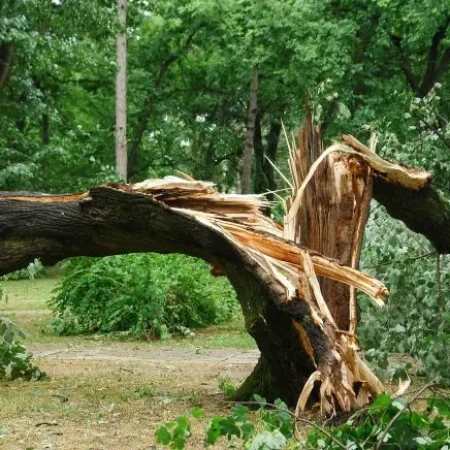
Storm Damage & Emergency Response in Peapack-Gladstone
We’ve cleaned up after every major storm to reach the area in the last three decades:
Hurricane Irene — 2011
Saturated ground and sustained wind drove full-tree uproots across the estate properties and brook corridor.
Hurricane Sandy — 2012
Severe wind dropped mature hardwoods borough-wide, with long JCP&L outages on the hilltop and wooded lots.
Hurricane Ida — 2021
Record rainfall flooded the Peapack Brook lowlands and loosened root plates on mature trees across both villages.
When a Tree Comes Down — What to Do
Step 1 — Clear the Zone
Get everyone away from the impact area, especially near power lines. Call JCP&L first.
Step 2 — Document It
Photograph everything before anything moves, for your homeowner’s claim.
Step 3 — Call Wayne’s
(732) 805-0609 — 24/7 dispatch, same-day work when the site is safe.
Step 4 — Adjuster Coordination
Written removal scope and pricing for your insurer.
Free written estimates · Same-day emergency quotes · 24/7 dispatch · (732) 805-0609
Peapack-Gladstone Tree Service — FAQs
Do I need a permit to remove a tree in Peapack-Gladstone?
Usually yes. Under Borough Chapter 19 (amended May 2025), any tree 4 inches DBH or larger needs a Tree Removal Permit from the Zoning Officer, with a $25-per-tree fee and tiered replacement plantings. Smaller lots get a limited annual exemption, nothing over 18" DBH comes down without a permit, and genuine hazard trees are exempt. We’ll tell you which category each tree falls in before any work — you or your engineer file the permit.
How fast can you get to Peapack-Gladstone?
We’re based just up Route 206 in Somerville and work these hills daily, so we reach Peapack and Gladstone quickly — and we dispatch 24/7 for storm emergencies. Call (732) 805-0609.
Can a dying ash tree be saved, or does it have to come down?
If it shows a thin crown, low trunk shoots, and D-shaped exit holes, that’s Emerald Ash Borer and the treatment window has passed — removal is the safer option. Dead ash gets brittle fast, which makes it more dangerous to take down later.
Do you do crane removals on estate properties?
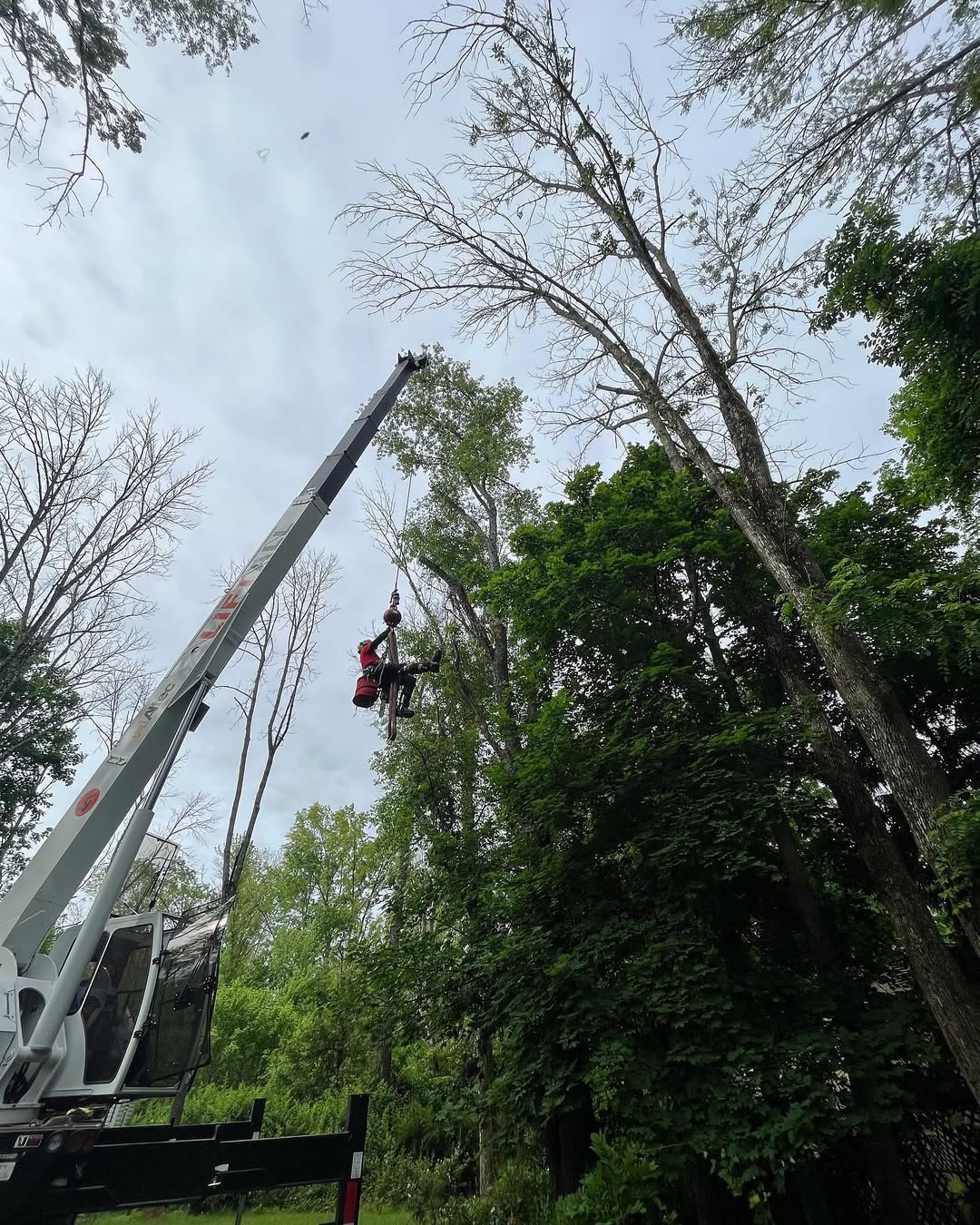
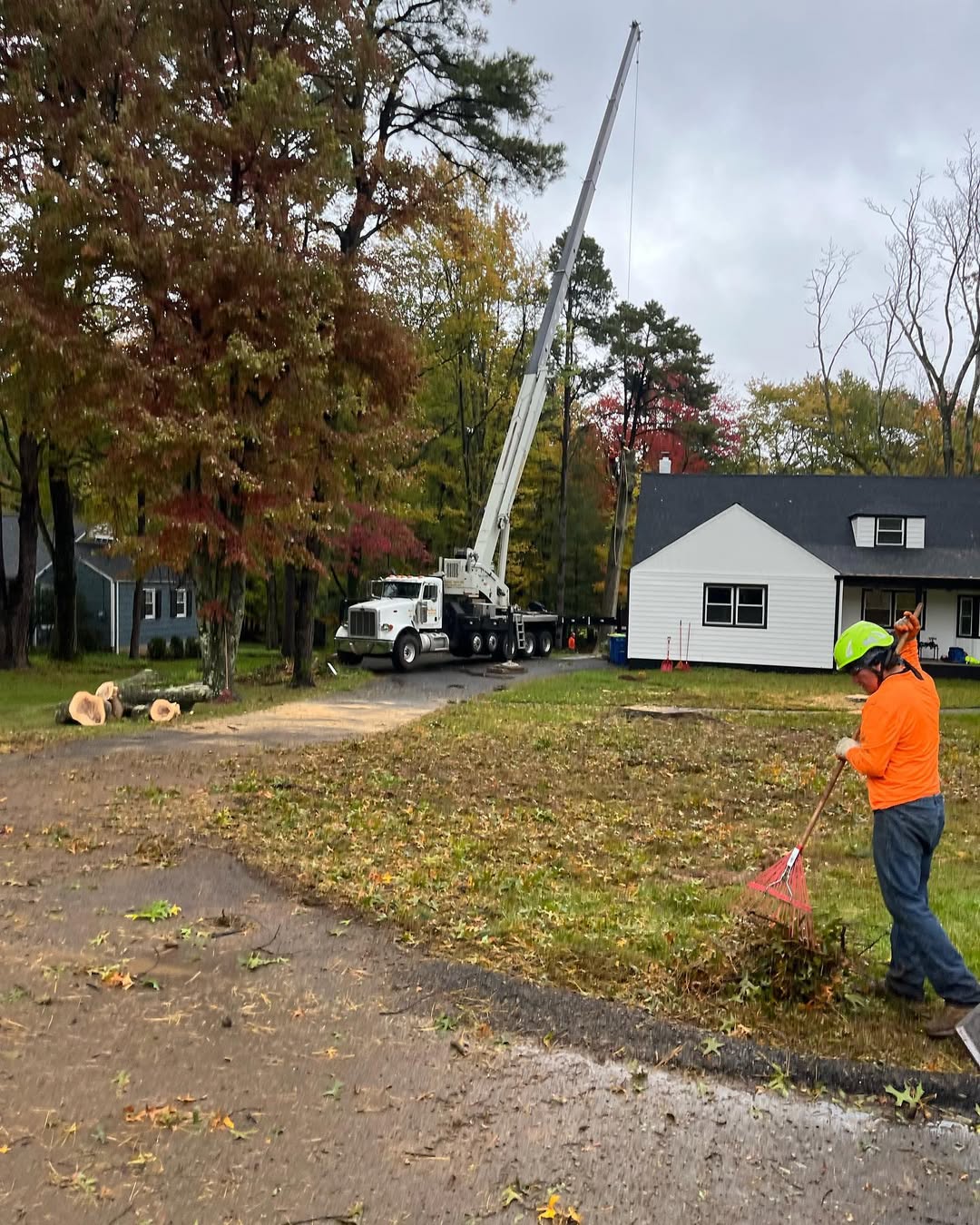
Yes. We own and operate cranes and bucket trucks, which is what the large oaks and beeches on Peapack-Gladstone’s hilltop and estate lots usually require for a safe, damage-free takedown.
Are you licensed and insured?
Fully — New Jersey Tree Expert NJTC #806860 and LTCO #565, bonded and insured for residential, commercial, and municipal work. We’ve served Peapack-Gladstone and the surrounding towns since 1993.