
TL;DR: The spotted lanternfly (Lycorma delicatula) is an invasive insect that’s now firmly established across New Jersey, including Somerset County. It feeds on sap from dozens of trees and vines, stressing them through heavy feeding, sticky honeydew, and black sooty mold.
If you’re a homeowner, you can protect your trees with regular monitoring, smart host tree management (especially dealing with tree of heaven), well‑placed traps, and, where it makes sense, professional systemic insecticide treatments like dinotefuran bark spray.
Key Takeaways for New Jersey Homeowners
- Spotted lanternfly is now entrenched across much of New Jersey and is a serious issue for shade trees, ornamental landscapes, and agriculture, especially vineyards and orchards.
- High‑risk hosts in Central NJ include tree of heaven (Ailanthus altissima), black walnut, maples, willow, birch, and grapevines. Oaks, cherries, apples, and some pines can also be affected and should be watched.
- Typical warning signs are sticky honeydew, black sooty mold on bark and hard surfaces, weeping sap wounds, clusters of insects on trunks, and gray, mudlike egg masses on trees, stone, and outdoor gear.
- Useful homeowner tools include egg mass scraping (September–May), circle traps on trunks, carefully guarded sticky bands, and selective removal of tree of heaven to cut down the main “magnet” host.
- Systemic insecticide options such as dinotefuran bark spray can give high‑value trees strong protection when applied correctly and in line with Rutgers and NJ Department of Agriculture guidelines.
- Somerset County is in the NJ SLF quarantine zone. Before you move vehicles, firewood, or outdoor items, inspect for egg masses and live insects and destroy what you find.
- Repeated SLF feeding rarely kills a healthy mature tree by itself, but it does weaken trees over time and increases the risk of disease, limb failure, and storm damage.
- Removing tree of heaven and keeping up with long‑term monitoring are the most sustainable ways to lower spotted lanternfly pressure on and around your property.
Quick Definitions: What Is the Spotted Lanternfly?
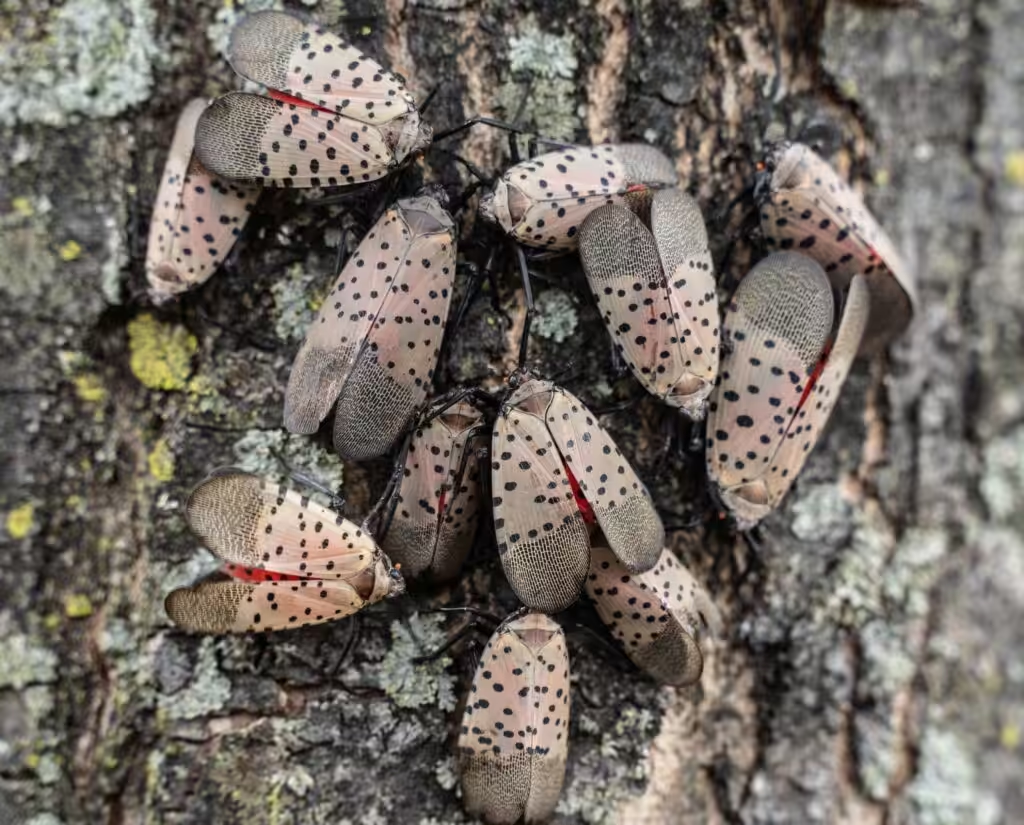
What is the spotted lanternfly? The spotted lanternfly (Lycorma delicatula) is an invasive planthopper from Asia that feeds on sap from more than 70 types of trees, vines, and plants. It showed up in the Mid‑Atlantic a little over a decade ago and was first confirmed in New Jersey in 2018. Since then it has spread across much of the state.
Lanternflies tap into a tree’s phloem, the tissue that moves sugars and nutrients. Heavy feeding stresses the tree, forces it to burn energy to replace lost sap, and leads to large amounts of sugary honeydew. That honeydew coats leaves, trunks, decks, and cars, and then supports sooty mold growth, which can cut down photosynthesis and attract other nuisance insects like wasps and ants.
What Is the Spotted Lanternfly and Why Should NJ Homeowners Care?
Spotted lanternfly is not a native bug that just showed up quietly. It’s an invasive planthopper from Asia that feeds on more than 70 different tree and plant species and has adapted extremely well to our climate. Since it was first detected in New Jersey in 2018, it has spread rapidly across the state and is now a routine problem in counties like Somerset, Hunterdon, and Middlesex.
Instead of boring into wood like an ash borer, SLF feeds from the outside. Huge numbers of nymphs and adults pierce bark and twigs to drain sap, and the sheer scale of feeding is what does the damage. You get sap loss, stress, honeydew raining down like syrup, and black sooty mold coating everything underneath.
Spotted lanternfly was first picked up in Pennsylvania in 2014 and it didn’t waste time spreading across the Mid‑Atlantic. The USDA APHIS SLF program and Penn State Extension now rank it among the most economically important invasive insects in the region. Grapevines and orchard crops are especially vulnerable, and nursery stock growers have to juggle both plant health and quarantine rules.
In New Jersey, the NJ Department of Agriculture and Rutgers Cooperative Extension SLF program handle the statewide fight. They coordinate monitoring, set quarantine rules, and provide science‑based guidance to homeowners and professionals. Their work and field research show that spotted lanternfly usually doesn’t walk up and kill a big healthy shade tree overnight, but it can:
- Cause severe stress and long‑term decline over several seasons of heavy feeding.
- Reduce annual growth and new leaf production so trees gradually thin out.
- Leave trees more open to fungal diseases, decay, and wood‑boring insects.
- Drive major economic impact on agriculture, especially grapes and fruit trees in commercial production.
For homeowners in Central NJ and Somerset County, that adds up to two big issues. First, it’s a nasty nuisance, with sticky patios, stained siding, swarming insects, and blackened outdoor furniture. Second, over time, it’s another stressor stacked on top of old age, poor pruning, construction damage, and storms, which can turn marginal trees into safety risks.
Which Trees Are Most at Risk in Central NJ?

Not every tree in your yard is equally tempting to spotted lanternfly. The insect will sample a lot of plants, but it reliably builds its largest populations on a shorter list of hosts. In Central New Jersey, that usually means tree of heaven, black walnut, maples, birch, willow, and grapevines.
Understanding this host tree preference list helps you use your time and money wisely. You don’t have to treat every plant the same. You focus your inspection, trapping, and any professional treatment on the species that tend to carry the most bugs.
High‑Risk Species
These are the trees and vines in Central NJ that I routinely see covered with lanternflies when populations are high:
- Tree of heaven (Ailanthus altissima) – This is the big one. It’s the primary host and acts like a magnet, especially late in the season. Large stands can hold thousands of nymphs and adults and then “seed” nearby trees. It’s invasive, on the NJ invasive plant list, and a prime target for removal.
- Black walnut – Common along property edges and in older neighborhoods. In late summer, it’s not unusual to see entire trunks and larger limbs streaked with honeydew and swarming with adults.
- Maples (red, silver, Norway) – Some of the most common shade and street trees in Somerset County. Both nymphs and adults love them, which is why so many homeowners see big clusters on maple trunks and branches.
- Willow – Especially weeping willows along streams, ponds, and low wet areas. These trees often become heavy feeding sites and can drip honeydew onto lawns, patios, or water features.
- River birch and other birches – Very popular as ornamental landscape trees. They host large numbers of nymphs and adults, and the peeling bark can be streaked with sooty mold.
- Grapevines (ornamental and commercial) – These are some of the hardest‑hit plants. In vineyards, SLF can weaken vines to the point of yield loss and vine death. Even backyard grape arbors can look rough after heavy feeding.
On mixed properties, SLF often piles onto tree of heaven first, then spills onto nearby maples, walnuts, and grapes. If you’ve got that combination in or near your yard, expect higher pressure.
Moderate‑Risk Species
These trees are not always the main attraction, but they still get regular feeding, especially when the local population is high or they grow near preferred hosts:
- Oaks – Red, white, pin, and other oaks can host SLF. Numbers are usually lower than on maples or tree of heaven, but I’ve seen oaks in mixed stands carrying noticeable infestations.
- Cherries and ornamental Prunus – Flowering cherry, plum, and related ornamentals are common in yards and streetscapes and often show moderate numbers of nymphs and adults.
- Apples and crabapples – Backyard and small orchard trees can see stress and reduced vigor from repeated feeding, especially if they already struggle with disease or poor site conditions.
- Some pines and other conifers – Conifers are not high on the menu, but lanternflies will sometimes rest or feed lightly on them, particularly if they stand among preferred broadleaf hosts.
In a typical Central NJ yard, you might see a mix of maples, walnuts, ornamental cherries, and a few conifers. If there’s tree of heaven nearby, those maples and walnuts are the ones I’d watch closest and consider for traps or professional protection.
Agricultural Impact
Spotted lanternfly doesn’t stop at residential trees. It’s already a major headache for farmers and growers across New Jersey and neighboring states, which is why quarantine and reporting programs exist.
- Grapes – This is the crop that gets hammered the hardest. Heavy feeding on grapevines can cause wilting, reduced vigor, and over several years, vine death. Wineries and vineyards invest a lot in timing sprays, monitoring, and trapping just to keep vines alive and productive.
- Orchard crops – Apples, peaches, and other fruit trees experience stress from sap loss, which can cut into yield and fruit quality. Growers often have to adjust their spray programs and scouting routines to include SLF.
- Nursery and landscape stock – Trees, shrubs, and ornamental plants grown for sale need to be kept relatively clean of SLF, both for plant health and for NJ SLF quarantine compliance. That can mean extra inspections and treatments, which cost time and money.
You might not be running a vineyard in your backyard, but understanding that bigger picture explains why the NJ Department of Agriculture and USDA APHIS put so much emphasis on public help with monitoring, egg scraping, and not moving infested materials.
How to Identify Spotted Lanternfly Damage on Your Trees
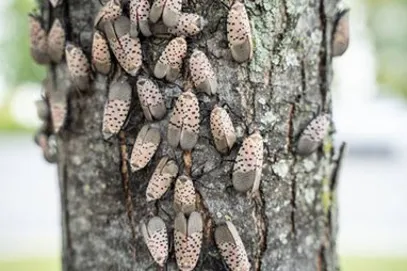
Most homeowners first notice the mess before they notice the bug. You see sticky spots on your car, blackened patio furniture, or moldy trunks, then spot the insects. Spotted lanternfly doesn’t chew leaves or bore deep into wood like some pests, so you have to look for sap feeding and the symptoms that follow.
Think in terms of three things: the insects themselves, their egg masses, and the side effects of heavy feeding like honeydew, sooty mold, and stressed foliage.
Egg Masses
Egg mass identification is one of the most practical skills a homeowner can pick up, because scraping those masses from fall through spring directly cuts next year’s population on your property.
- Appearance: Fresh egg masses look like someone smeared a patch of gray or tan mud about 1–1.5 inches long. The surface often looks smooth or slightly cracked, like dried putty. As they age, the coating flakes off and you’ll see neat rows of small, seed‑like eggs underneath.
- Location: Lanternflies are not picky. They lay on tree trunks and larger branches, but also on firewood, fence posts, stone walls, sheds, play sets, grills, patio furniture, trailers, and even under car bumpers.
- Timing in NJ: Adults lay eggs from about September through November. Those egg masses overwinter and can be scraped anytime from fall until hatch in spring, usually around May in New Jersey.
Before you move firewood, yard furniture, campers, or other outdoor items out of the NJ SLF quarantine zone, a slow walk‑around looking for these muddy patches is a simple, high‑impact step.
Nymph Stages
After eggs hatch in spring, spotted lanternfly nymphs go through four nymph stages (instars) before becoming adults. Being able to recognize these stages helps you know when circle traps and other methods will do the most good.
- 1st–3rd instars (early nymphs): Very small, about 1/8–1/4 inch long, black bodies with bright white spots. They’re fast and jumpy, and you’ll find them on a wide range of plants, from perennials in flowerbeds to shrubs and young trees.
- 4th instar (late nymph): About 1/2 inch long, with a sharp red and black body pattern and white spots. These are the striking red and black nymphs you see by early to mid‑summer on favored hosts like tree of heaven, maples, grapevines, and walnuts.
- Behavior: Nymphs cluster on tender stems, new growth, and undersides of leaves, sucking sap. They jump readily when disturbed, often dropping to lower branches or the ground and climbing back up.
Circle traps and guarded sticky band traps shine during the nymph period, because those young stages do a lot of climbing up and down trunks from late spring into early summer.
Adult Identification
Adult spotted lanternflies are hard to miss once you know what to look for, and by the time you’re seeing big clusters, you’re dealing with a significant local population.
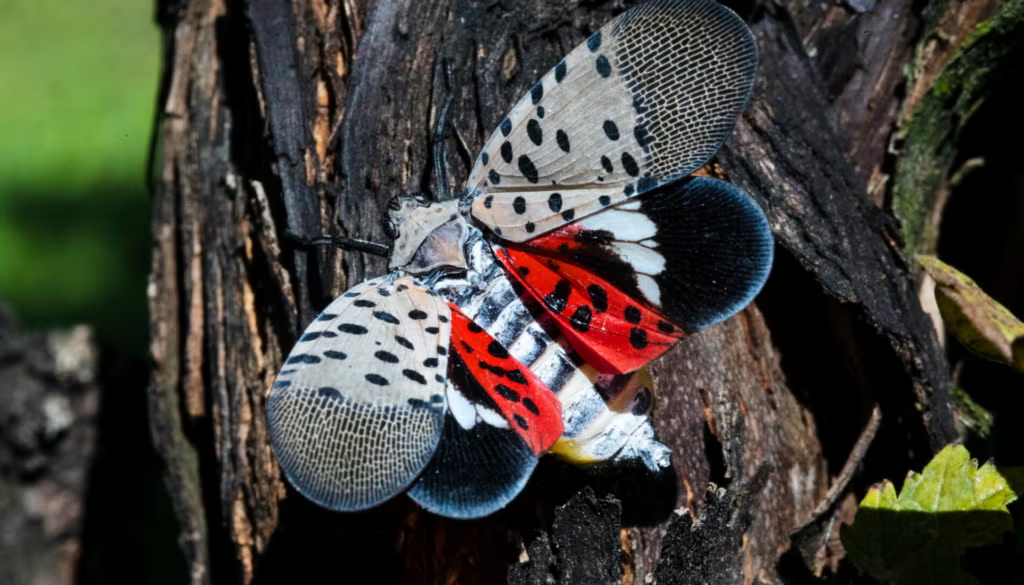
- Size and color: About 1 inch long. At rest, the forewings are light gray with black spots and a pattern of dark blocks near the wing tips.
- Open wings: When they jump or fly, they flash bright red hind wings with black spots and a white band. The abdomen is yellow with black bands, which is often visible even when wings are partly closed.
- Timing in NJ: Adults typically start showing up in July and remain active into the fall. August through October is when you see the heaviest trunk aggregations and the most honeydew and sooty mold.
- Behavior: Adults gather in large groups on trunks, lower branches, and sometimes on grapevines. They hop more than they fly, and they constantly excrete honeydew while feeding.
Tree Damage Signs
Spotted lanternfly damages trees by robbing them of sap and coating surfaces with honeydew that fosters mold. The signs are usually pretty visible once you know them:
- Honeydew excretion: Look for a sticky, often shiny coating on leaves, bark, railings, patio furniture, or whatever sits under an infested tree. You may even feel it underfoot. On parked vehicles, it can look like fine, sticky spots on the paint or glass.
- Sooty mold growth: Dark, powdery or velvety black mold grows wherever honeydew accumulates. On leaves, it blocks light and interferes with photosynthesis. On trunks, deck boards, or stone, it looks ugly and can be slippery when wet.
- Weeping sap wounds: On trunks and large branches where SLF feed heavily, you may see wet spots, oozing sap, or darker streaks on the bark. Sometimes there’s a fermented or vinegar‑like smell and you’ll see ants, wasps, or bees attracted to the sap and honeydew.
- Leaf yellowing or wilting: Under intense feeding, some trees show curling, yellowing, or drooping leaves, especially late in the season. You may also see early leaf drop.
- Long‑term stress: Over several years, heavily affected trees may show thinner canopies, smaller leaves, dead twigs at branch tips, and increased issues with secondary infection such as cankers or internal decay.
On its own, SLF damage usually doesn’t mean you have to cut down a mature tree. But if the same tree already has root damage, decay, or poor structure, lanternfly stress can be the extra push that turns it into a risk that needs professional evaluation.
Spotted Lanternfly Treatment Options for NJ Homeowners
There’s no single magic fix for spotted lanternfly. Effective control in New Jersey is about stacking several tools through the season. You reduce the local population, protect your highest‑value trees, and avoid blanket spraying that hurts beneficial insects and the environment.
The main tools you have are egg mass scraping, circle traps, carefully set sticky bands, smart host tree management, and in some cases, systemic insecticide treatments done by professionals.
Egg Mass Scraping (Fall–Spring)
From September through May, destroying egg masses is one of the safest, cheapest, and most effective steps a homeowner can take.
- Use a plastic card, old credit card, or a putty knife to scrape egg masses into a container with rubbing alcohol or hand sanitizer. This breaks them up and kills the eggs. You can also crush them hard in a bag.
- Don’t just knock egg masses to the ground or scrape them off onto the soil. If you do, many of those eggs will still hatch next spring.
- Pay special attention to trunks of high‑risk trees, fence rails, stacked firewood, outdoor playsets, sheds, and trailers. Those smooth surfaces are egg magnets.
A simple way to stay ahead is to build egg checks into your fall yard cleanup and again in early spring before you move firewood, trailers, or stored furniture off‑site.
Circle Traps
Circle traps are one of the best homeowner tools right now. They use a screen and funnel system around the trunk to guide climbing insects into a collection bag, all without exposed sticky surfaces.
- Installation height: Mount them around 3–4 feet above the ground on the trunk of a tree that sees a lot of SLF activity, such as a maple or black walnut near a tree of heaven stand.
- Effectiveness (capture rate): On a heavily infested tree, a properly installed circle trap can pull in hundreds or even thousands of nymphs and adults per season. That’s a big dent in the population under that tree.
- Wildlife safety: Because these traps don’t rely on exposed adhesive, they avoid the bird and small mammal injuries that are common with plain sticky bands.
- Cost per trap: Commercial circle traps usually run around $20–$40 per trap. Many folks in NJ build their own versions from mesh, plastic, and simple hardware.
- Recommended density: Most residential properties get good results with 1–3 traps placed on the highest‑pressure host trees rather than trying to trap every tree on the property.
Rutgers and other university extension programs put circle traps at the top of their homeowner recommendations because they are effective, relatively low‑maintenance, and much safer for wildlife than unguarded sticky bands.
Sticky Band Traps (Use with Caution)
Sticky bands can catch a lot of nymphs, but I’ve also seen the ugly side when birds and small mammals get stuck. If you’re going to use them, you have to do it right.
- Always install a wildlife guard such as wire mesh or window screen over the sticky band so only small insects can reach the adhesive. The guard sits slightly off the bark and the band is underneath.
- Check bands at least once a day. If any non‑target animals are caught, remove the band and contact a wildlife rehabber if possible.
- Use lower‑tack commercial products designed for insects. Avoid high‑strength flypaper, duct tape, or homemade glues that are almost impossible for wildlife to escape.
Many experts now prefer circle traps because they do the job without the same level of risk. If you already have sticky bands up, consider switching to circle traps for the longer term.
Systemic Insecticide Treatment
For certain trees, especially those that provide shade to your home, frame your yard, or hold sentimental or property value, a well‑planned systemic insecticide treatment can make a big difference in SLF pressure.
Based on guidance from Rutgers Cooperative Extension and the NJ Department of Agriculture, here’s what you need to know:
- Active ingredients: Systemics like dinotefuran and imidacloprid are commonly used where labeled for spotted lanternfly. The tree takes up these products and they kill lanternflies that feed on its sap.
- Dinotefuran bark spray: A popular approach for SLF is a dinotefuran bark treatment. The product is mixed according to label directions and applied as a bark spray around the lower trunk, usually in spring or early summer, so it gets into the vascular system ahead of peak feeding.
- Application method: Depending on the product, the insecticide is applied either to the bark as a spray or as a soil drench around the base of the tree where roots can absorb it. In both cases, proper dosage and timing are critical.
- Timing (NJ): Treatments are usually done in spring through early summer. That gives the tree time to move the product through its system before large numbers of nymphs and adults arrive. Some labels provide season‑long control. Others will need annual reapplication for continued protection.
- Cost per tree in NJ: Professional systemic treatments often run from about $75–$250+ per tree, depending on trunk size, product used, number of trees, and how complex the site is.
These products can be hard on pollinators and aquatic life if misapplied. Because of that, systemic insecticides should:
- Be reserved for situations where trapping and egg scraping aren’t enough to protect important trees.
- Be focused on high‑value host trees under heavy pressure rather than applied all over the yard.
- Be applied by licensed professionals who understand both the product labels and Rutgers/NJDA recommendations on timing, rates, and buffer zones.
When to Consider Professional Help
There’s a point where a DIY approach stops being practical or safe. You should consider calling a qualified tree care professional if:
- You have multiple large host trees that are heavily infested every year and simple tools aren’t cutting it.
- You’re thinking about systemic insecticide use near wells, streams, vegetable gardens, or pollinator‑friendly plantings and want to avoid mistakes.
- Your trees show a combination of SLF stress and structural problems like large dead limbs, cracks, or obvious decay that might threaten buildings, cars, or power lines.
A good arborist will look at the whole picture. They can help you decide which trees to prune, which to treat, and which might be too far gone or too risky to keep, then build a long‑term monitoring plan around that.
For why tree of heaven sits at the top of every NJ avoid list, see our tree of heaven on avoid list guide.
Tree of Heaven Removal: Eliminating the Primary Host
If you ask me what single step has the biggest long‑term payoff against spotted lanternfly on residential land, it’s dealing with tree of heaven. Removing this favorite host reduces the main “staging ground” SLF use before they move onto your maples, walnuts, and grapes.
Tree of heaven (Ailanthus altissima) is listed on the NJ invasive plant list for good reason. It grows fast, spreads aggressively along roadsides, rail lines, fence lines, and disturbed ground, and throws off clouds of seeds. Spotted lanternfly is strongly drawn to it, especially in late summer and fall, which is why we target it in SLF management plans.
How to Identify Tree of Heaven
Plenty of trees have compound leaves, so misidentification is common. Before you cut anything, double‑check that you really have tree of heaven and not a native like sumac or a young walnut.
- Leaf type: Tree of heaven has large compound pinnate leaves that can reach 1–3 feet long, with 11–25 leaflets lined up along a central stalk.
- Leaflet details: Each leaflet usually has one or more small bumps or “glandular teeth” near the base, often with a tiny gland. The rest of the leaflet edge is mostly smooth, not serrated like ash or walnut.
- Bark texture: On younger trees, the bark is smooth and gray and can be mistaken for ash or sumac. As it ages, it develops shallow furrows but still looks relatively smooth compared to many hardwoods.
- Smell when crushed: Crush a leaflet or twig and you’ll get a strong, unpleasant odor, often compared to rancid peanut butter or burnt rubber. That smell is a dead giveaway.
- Growth rate: Tree of heaven grows quickly and loves to send up root suckers several feet away from the main stem, forming dense patches if left alone.
- Sex: The species is dioecious, so there are male and female trees. Female trees produce massive clusters of winged seeds that hang in bunches and travel far in the wind.
If there’s any doubt, compare the details with a regional field guide or take clear photos and check with a local expert before you start cutting. You don’t want to remove a valuable native by mistake. Once you’ve cleared a host, the next step is replant after host tree removal with a non-host species so the spot doesn’t draw SLF back in.
Why Removal Needs Herbicide (Cut‑Stump Method)
A common mistake is to just cut tree of heaven and walk away. That almost always backfires. This species is wired to respond to cutting by sending up lots of new shoots from the stump and roots, often creating a thicker stand than you started with.
The best way to deal with it is the cut‑stump herbicide treatment, which is a two‑step process:
- Step 1: Plan timing. Late summer into early fall is usually recommended. During this period, the tree is moving carbohydrates and, if applied, herbicide down into the root system.
- Step 2: Cut the tree. Cut the trunk as low to the ground as is safely practical. Wear proper safety gear and be mindful of power lines and structures.
- Step 3: Apply herbicide. Immediately after cutting, ideally within a few minutes, apply an approved systemic herbicide directly to the fresh cut surface. Focus on the outer ring of the stump where the cambium and phloem are located, since that’s where uptake occurs.
- Step 4: Monitor for resprouts. Over the next year, watch for new root suckers and stump sprouts. Spot‑treat them according to Rutgers or label guidance before they get large.
Because herbicide choices and application rules vary and misapplication can affect non‑target plants or nearby water, follow Rutgers Cooperative Extension guidance closely or work with a licensed applicator who understands tree of heaven control in New Jersey.
Managing Female Trees and Nearby Seedlings
If you can’t do everything at once, start with the trees that are spreading the most seed.
- Prioritize large female seed‑producing trees. Removing these first will dramatically cut the number of new seedlings that show up across your property each year.
- Walk your fencelines, back corners, and disturbed areas for young seedlings and saplings. These are easier to control with simple pulling or spot treatments before they develop big root systems.
- If tree of heaven spans property lines, coordinate with neighbors, HOAs, or nearby landowners. Leaving one big female tree untreated nearby can undo much of your hard work.
Once you knock back tree of heaven, think ahead about replacements. Choose non‑host, native trees that match your soil and light conditions so you get your shade or screening back without creating another problem for SLF.
Expert Tip: Use Trap Trees Strategically
On larger properties, especially those near vineyards or orchards, some professionals use what are called “trap trees”. Instead of removing every tree of heaven, they leave a small number behind and treat those specific trees with systemic insecticide.
- Lanternflies are attracted to those remaining tree of heaven, feed on them, and pick up the insecticide in the sap, which kills them.
- This approach should be handled by professionals who understand both SLF behavior and pesticide labels. Done carelessly, it can create unnecessary risk to non‑target organisms.
Trap trees are not necessary on most typical suburban lots, but they can be a useful tool on big properties where tree of heaven removal over acres isn’t realistic in the short term.
NJ Spotted Lanternfly Quarantine Rules
Because SLF hitchhikes so well on vehicles, firewood, trailers, and even yard furniture, New Jersey put quarantine rules in place. Somerset County is inside the NJ SLF quarantine zone, which means both businesses and homeowners have specific responsibilities to help slow the spread.
The NJ Department of Agriculture SLF quarantine is aimed at limiting how quickly lanternflies move into new, less‑infested counties and across state lines. The details change as the situation evolves, so always check current NJDA resources, but the basic framework has stayed consistent.
NJ SLF Quarantine Zone and Somerset County
As of the latest updates, Somerset County status: quarantined due to established spotted lanternfly populations. The NJ SLF quarantine zone includes several counties with significant SLF activity and may expand or adjust over time as new areas become infested.
Business Requirements
Businesses moving materials that can carry SLF out of the quarantine area have stricter rules than homeowners. If you run or hire a business in the zone, pay close attention to these requirements:
- Regulated articles often include nursery stock, firewood, construction materials, landscaping supplies, outdoor equipment, and similar items that could harbor egg masses or live insects.
- Business permit requirement: Companies in the quarantine area that transport regulated articles typically must complete SLF training, obtain a permit, and keep records showing they’ve inspected and managed risk on loads.
- Commercial haulers and contractors are expected to inspect vehicles and cargo for all SLF life stages and remove or destroy what they find before leaving the quarantine zone.
Exact rules and any updates are available through the NJ Department of Agriculture and USDA APHIS SLF program websites, and reputable businesses should already be familiar with these obligations.
Homeowner Responsibilities (Voluntary Compliance)
Homeowners in the quarantine zone are not usually under the same legal requirements as businesses, but voluntary compliance is strongly encouraged. If residents take it seriously, spread slows down. If they don’t, lanternfly gets a free ride to new towns.
- Homeowner obligation: Before you move vehicles, campers, trailers, firewood, grills, or outdoor furniture out of the quarantine area, give them a careful inspection. Look for egg masses, nymphs, and adults in wheel wells, under bumpers, on frames, and on flat surfaces.
- Egg mass destruction: From September through May, scrape and destroy any egg masses you find on firewood, stone, plastic, or wood surfaces. Every mass you destroy prevents dozens of new lanternflies.
- Yard clean‑up: Try to reduce piles of unused lumber, stacked debris, old equipment, or other clutter along property edges. These are prime hiding spots for egg masses that are easy to overlook.
While you’re not usually facing fines for missing a single egg mass, the combined effort of thousands of homeowners doing these small checks makes a tangible difference in how fast lanternfly spreads.
Reporting Spotted Lanternfly in New Jersey
NJDA still wants reports from new or lightly infested areas, especially at the edges of the known range or in counties not yet under quarantine.
- Reporting method: Use the online reporting form, email, or phone number listed on NJDA’s SLF page. Clear photos of the insect or egg mass from different angles help officials confirm what you’re seeing.
- In heavily infested counties like Somerset, state agencies already know SLF is present. In that case, reporting every sighting is less helpful than focusing your time on scraping egg masses and using traps.
Those reports from new locations help state agencies update distribution maps, decide where to adjust quarantine boundaries, and figure out where to focus survey and control work.
How SLF‑Weakened Trees Become Safety Hazards
Spotted lanternfly doesn’t behave like a chainsaw on your trees. The damage is slower and more subtle, but over years it adds up. In New Jersey’s stormy climate, the combination of chronic stress and weather can turn borderline trees into real hazards.
As an off‑road mechanic might look for metal fatigue in a frame, an arborist looks for stress signals in a tree. Repeated SLF feeding is one more stress that weakens a tree’s natural defenses and structure over time.
How SLF Stress Weakens Trees
Heavy, repeated phloem feeding and all the side effects that come with it can gradually wear a tree down:
- Divert energy: Trees spend extra energy replacing lost sap and maintaining leaves coated in honeydew and mold. That energy isn’t going into building solid wood, roots, or chemical defenses.
- Reduce photosynthesis: Sooty mold on leaves blocks sunlight. Less light means less energy production, year after year, which shows up as thinner crowns and weaker growth.
- Impair compartmentalization: Healthy trees “wall off” damaged or infected areas to keep decay from spreading. A stressed tree does this less efficiently, so rot can spread more easily through trunks and limbs.
- Invite secondary infection: Fungi, canker diseases, and wood‑boring insects tend to attack the easiest targets. SLF‑stressed trees often become those easy targets, and the secondary problems do much of the structural damage.
So you don’t normally see a tree die just from spotted lanternfly. What you see is a slow decline where branches die back, cavities form, and the overall structure becomes less reliable under load.
Storms, Nor’easters, and Ice: NJ‑Specific Risks
New Jersey’s weather patterns put extra pressure on any tree that’s already weakened. Lanternfly stress just adds one more factor to the equation.
- Nor’easters and coastal storms bring high winds and saturate the soil. That combination makes roots work harder to hold, and any existing decay in the root crown or trunk can lead to uprooting or trunk failure.
- Ice and snow loads add weight to limbs, especially in maples and other brittle species that already have thin canopies from multiple stressors, including SLF.
- Summer thunderstorms drop heavy rain and gusty winds on dense foliage. Dead or partially decayed limbs that might hold under calm conditions can snap and fall onto roofs, vehicles, sheds, or power lines.
In neighborhoods throughout Bridgewater, NJ and across Somerset County, you’ll see mature maples, walnuts, and willows planted close to homes and driveways. As those trees age, any extra stress, including spotted lanternfly, makes good maintenance and periodic inspection even more important.
Monitoring and Maintenance for SLF‑Stressed Trees
You don’t have to climb into the canopy to spot early warning signs. A few simple observations done once or twice a year can tell you when it’s time for a professional look.
- Watch for progressive canopy thinning, bare branch tips, or entire sections of the crown that leaf out late or not at all.
- Look for fungal fruiting bodies (mushrooms or shelf fungi) on the trunk or at the base. Those usually mean internal decay is present, not just surface issues.
- Schedule periodic inspections and pruning to remove dead or compromised limbs before they drop in a storm or under snow load.
Need help? See our pruning SLF-weakened trees service overview.
Spotted lanternfly may not be the main reason a tree fails, but in Central NJ it’s quickly becoming part of the background set of stressors we factor into risk assessments around homes and structures.
FAQ: Spotted Lanternfly and Trees in New Jersey
Does spotted lanternfly kill trees directly?
Spotted lanternfly rarely kills healthy, mature trees outright. What it does is weaken them over several years. Heavy feeding reduces growth, stresses the tree, and makes it easier for diseases, borers, and decay to take hold. Grapevines, young trees, and already stressed or poorly sited trees can decline and die much faster under that combined load.
How much does spotted lanternfly treatment cost in NJ?
There’s a wide range. DIY approaches like circle traps, egg mass scraping, and guarded sticky bands are relatively inexpensive and mostly a matter of time and materials. Professional systemic insecticide treatments, including dinotefuran bark sprays, usually run about $75–$250+ per tree in New Jersey, depending on tree size, number of trees, access, and the specific products and methods used.
Do homeowners have to follow SLF quarantine rules?
For homeowners, the NJ SLF quarantine is generally treated as voluntary compliance, not a day‑to‑day enforcement target. You’re not typically getting fined for moving a grill across a county line, but you’re strongly encouraged to inspect vehicles, firewood, equipment, and furniture and to destroy any egg masses you find before you transport them out of the quarantine area.
How do I report spotted lanternfly in New Jersey?
If you live in or travel to an area where SLF isn’t yet confirmed or is only lightly established, report what you see to the NJ Department of Agriculture using their online form, email, or phone hotline listed on their SLF page. Include clear photos if you can. In heavily infested counties like Somerset, your time is usually better spent managing the problem than reporting every insect.
Will spotted lanternfly ever be eradicated from New Jersey?
At this point, complete statewide eradication is considered unlikely. The insect is too widespread and well established in many counties. The focus now is on managing populations to protect high‑value trees and crops, and on slowing spread into new areas. Over time, natural enemies, better management tools, and continued public participation should help keep numbers in check, but total removal from the landscape is not realistic with current tools.
What time of year should I treat for spotted lanternfly?
Timing depends on the tactic. In New Jersey, egg scraping runs from September through about May. Nymph trapping with circle traps and guarded sticky bands is most effective from late spring into early summer while the insects are actively climbing. Systemic insecticide treatments are usually applied in spring or early summer so the tree has time to absorb the product before peak adult feeding. Always follow label directions and Rutgers/NJDA timing recommendations.
Can I use home remedies like dish soap sprays on SLF?
Soapy water sprays can kill spotted lanternflies they directly hit, especially nymphs and adults on reachable branches and surfaces. But they don’t offer residual protection, and heavy use can burn or damage plant foliage. They also won’t touch eggs or lanternflies higher in the canopy. Treat them as a small, targeted tool for accessible clusters, not as your main control strategy.
Are my pine trees safe from spotted lanternfly?
SLF prefers broadleaf trees and vines such as tree of heaven, maples, walnuts, willows, birches, and grapes. Pines and other conifers are typically low‑risk hosts. Lanternflies may land on them or feed lightly if high‑pressure infestations are nearby, but serious damage on pines is not common. Still, keep an eye on the pines while focusing most of your effort on the higher‑risk species.
What should I plant after removing tree of heaven?
Once tree of heaven is gone, pick non‑host, site‑appropriate native trees that match your yard’s soil and light and that fit the space at maturity. Good options often include oaks, some native maples, serviceberry, dogwood, or other regional natives. This way you restore shade or screening without re‑creating ideal conditions for spotted lanternfly.
Who can I contact for local tree help in Somerset County?
For science‑based advice about SLF and tree health, reach out to Rutgers Cooperative Extension. For on‑site inspections, pruning, or treatment options, contact a reputable tree care Bridgewater company that understands Central NJ and has experience dealing with spotted lanternfly under New Jersey regulations.
Final Summary: Protecting Your NJ Trees from Spotted Lanternfly
Spotted lanternfly is now part of the landscape in New Jersey and it’s not going away anytime soon. While it usually doesn’t kill mature trees quickly, it can put real stress on key species like maples, walnuts, willows, birches, and grapevines, and it contributes to long‑term decline and storm‑related safety concerns.
As a homeowner, your most effective moves are to:
- Learn to recognize all SLF life stages, from gray egg masses to black‑and‑white nymphs and adult insects, along with signs like honeydew and sooty mold.
- Keep a closer eye on high‑risk host trees in your yard and prioritize them for monitoring, trapping, and any professional protection.
- Remove invasive tree of heaven using herbicide‑assisted cut‑stump methods and root sucker control, then replace it with better, non‑host species.
- Use circle traps, properly guarded sticky bands, and seasonal egg mass scraping to knock down local populations without over‑relying on sprays.
- Consider targeted systemic insecticide treatments such as dinotefuran bark spray for high‑value trees, making sure they’re applied according to Rutgers and NJDA guidance.
- Follow NJ SLF quarantine recommendations every time you move vehicles, firewood, or outdoor items, especially out of Somerset County and other quarantined areas.
By combining these practical steps, you not only protect your own trees and property but also help New Jersey’s broader effort to manage spotted lanternfly and support local agriculture for the long haul.