TL;DR: For storm damage tree cleanup in New Jersey, you always start with safety, not with a chainsaw. Assume any wire on or near a tree is live, keep everyone back, and get your utility involved fast. While you’re waiting, document everything for insurance from multiple angles.
Tackle immediate hazards first, like trees on roofs and blocked driveways, and leave large removals, crane work, and anything near power lines to licensed professionals. Coordinate with your insurer and municipality so you’re not paying for work or debris removal that could have been covered.
Key Takeaways
- Nor’easters, hurricane remnants, ice storms, and summer thunderstorms all beat up trees differently in NJ, from root failures and crown snap to ice-loaded branch breaks. Knowing which storms you get most often helps you plan.
- After a storm, sort trees into repairable, monitor, or removal required by looking at crown loss, trunk and root damage, and what each tree could hit if it fails.
- Your first steps: keep everyone safe, report downed lines, take photos and videos, call your insurer, then bring in a qualified tree service for hazardous cleanup instead of jumping into risky DIY work.
- NJ homeowner insurance usually covers tree damage to structures like houses, garages, and fences. Trees that fall only in the yard often have limited debris removal coverage with strict sublimits.
- After federally declared disasters, FEMA disaster assistance in NJ may help with some uninsured tree-related costs if you meet eligibility rules and your insurance doesn’t cover everything.
- Central NJ homeowners can significantly cut storm losses with preventive pruning, cabling weak unions, and removing dead or high-risk trees before nor’easter and hurricane seasons ramp up.
- NJ municipal curbside debris pickup rules are different in every town. You need to know size limits, bundling requirements, and any special post-storm pickup dates ahead of time.
- Downed trees that touch or threaten main power lines are handled by utilities such as JCP&L. Never attempt DIY cutting anywhere near energized or possibly energized lines.
What Is Storm Damage Tree Cleanup in NJ?
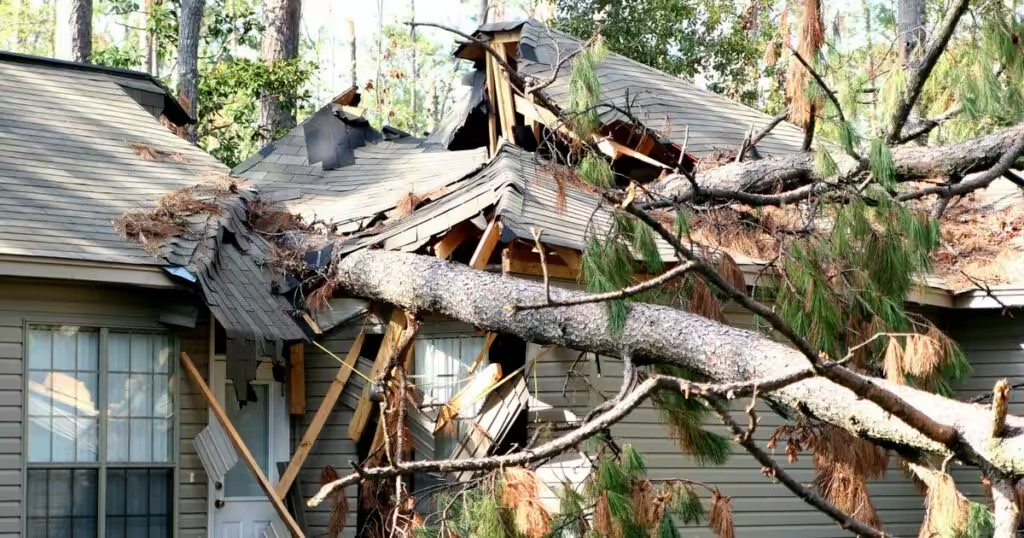
Storm damage tree cleanup in NJ means getting your property safe, usable, and insurable again what to do after a tree falls nor’easter, hurricane remnant, ice storm, or severe thunderstorm tears through.
It usually involves walking the site for a post-storm tree assessment, cutting out hazardous limbs, dealing with uprooted trees, chipping or hauling debris, and gathering proof for homeowner insurance storm claims. In bigger events you may also be coordinating with the power company, your town’s debris rules, and sometimes FEMA and state agencies to keep costs under control.
NJ Storm Types That Damage Trees (Nor’easters, Hurricanes, Ice Storms)
Different storms beat up trees in different ways. In New Jersey, we get a little bit of everything, so your oaks, maples, and pines see a full workout over the years. If you know how each storm hits, you can spot weak spots in your landscape before they show up as a tree on your roof.
In short: Nor’easters bring long-duration wind and saturated soils that promote uprooting. Hurricane remnants hit with sharp gusts that snap crowns and break big limbs. Ice storms load branches until they fail. Summer thunderstorms bring short, intense bursts and lightning that can silently wreck a tree from the inside. Central and North Jersey see more nor’easters and ice, while hurricane remnants and violent summer storms can hammer the entire state.
Nor’easters: Long-Duration Wind & Saturated Soil
Nor’easters are those long, ugly coastal systems that park themselves offshore and grind away at New Jersey for a day or more. For trees, they’re a slow but serious stress test.
- Sustained winds: Instead of one big gust, you get hours of steady pressure. That repetitive loading works like bending a coat hanger over and over, fatiguing stems and roots until something gives.
- Saturated soils: Heavy rain before and during the storm turns soil into soup. Roots lose grip, especially in shallow or compacted soils, and you start seeing whole trees tipped over in what we call wind throw uprooting.
- Rain-to-snow transitions: Those late-season storms that flip from rain to heavy, wet snow can be nasty. If leaves or needles are still on the trees, they catch that snow like a sail and the extra weight breaks branches or even main leaders.
In Central and North Jersey, nor’easters are almost a yearly tradition. Over time they shape which trees stay and which fail. Shallow-rooted maples, spruce in soggy lawns, newly planted trees that never rooted properly, and anything in compacted subdivision soil are the usual victims. If you stand in a neighborhood after a nor’easter, you’ll often see the same species failing in the same way from yard to yard.
Hurricane Remnants: Extreme Gusts & Crown Snap
We don’t often take a direct Category 4 hit here, but hurricane remnant damage in NJ is no joke. Those leftover tropical systems can still pack serious wind, and they usually show up when trees are in full leaf.
- Short, extreme gusts: These storms throw hard-hitting gusts that slam the canopy. That’s where crown snap happens, where the upper canopy or whole leaders shear off and land on structures or cars.
- Wind throw uprooting: Any tree with a compromised root system from past storms, construction damage, or poor planting is a candidate to go over once those gusts hit.
- Flying debris: The sharp, broken ends of limbs become missiles. I’ve seen an 8-foot branch punch through siding like it was cardboard.
Because these winds often arrive in late summer or early fall while foliage is still full, trees catch more wind. That extra drag is like adding a big parachute on top of the tree. Species with dense crowns or bad structural pruning in the past are the ones that usually crack first in a hurricane remnant.
Ice Storms & Snow Load: Branch Load Failure
Ice storms and heavy wet snow don’t look dramatic while they build, but they quietly wreck more trees than many people realize. Ice storm branch load and snow load branch failure are all about simple weight and leverage.
- Ice glazing: A quarter inch of ice doesn’t sound like much, but once it coats every twig and needle, the total weight is huge. At 0.5 inches and up, you start seeing large limbs peel away and crotches split wide open.
- Split crotches and co-dominant stems: Trees with tight, V-shaped unions or co-dominant stems that were never corrected in youth are prime candidates for splitting when that uneven weight builds up.
- Power line impacts: Ice pulls limbs down into lines, causing outages, arcing, and sometimes fires. That’s where utilities like JCP&L spend a lot of their storm restoration effort.
Central NJ often sees borderline events where rain flips to sleet and then to snow. On radar it just looks like “a mix,” but on the ground you’ll have maples and pines with limbs bent to the ground, and you’ll hear cracks echoing around the neighborhood. These storms teach you quickly which trees have weak structure and which ones were pruned smart over the years.
Summer Thunderstorms: Localized Wind Throw & Lightning
Those pop-up summer thunderstorms that seem to appear out of nowhere can do as much damage on one block as a nor’easter does across a whole county.
- Microbursts and downbursts: Think of these as a vertical hammer of wind that suddenly slams into the ground. You’ll see a strip of flattened trees with almost surgical precision, while yards a block away just got some rain.
- Wind throw uprooting: A lone tree sitting in the middle of a yard or field with all the wind exposure usually fares worse than a group of trees that share the load.
- Lightning strikes: Lightning can blow bark off, split trunks, or cook the internal tissues. Sometimes the tree dies right away. Other times it looks mostly fine, then slowly declines or fails structurally months later.
These storms are why you might have one NJ cul-de-sac full of snapped pines and crushed fences, while the next street over just has some twigs on the lawn. After a strong thunderstorm, always assume a lightning-hit tree may have hidden internal damage even if it’s still standing.
Post-Storm Tree Assessment: What’s Salvageable vs What Must Go
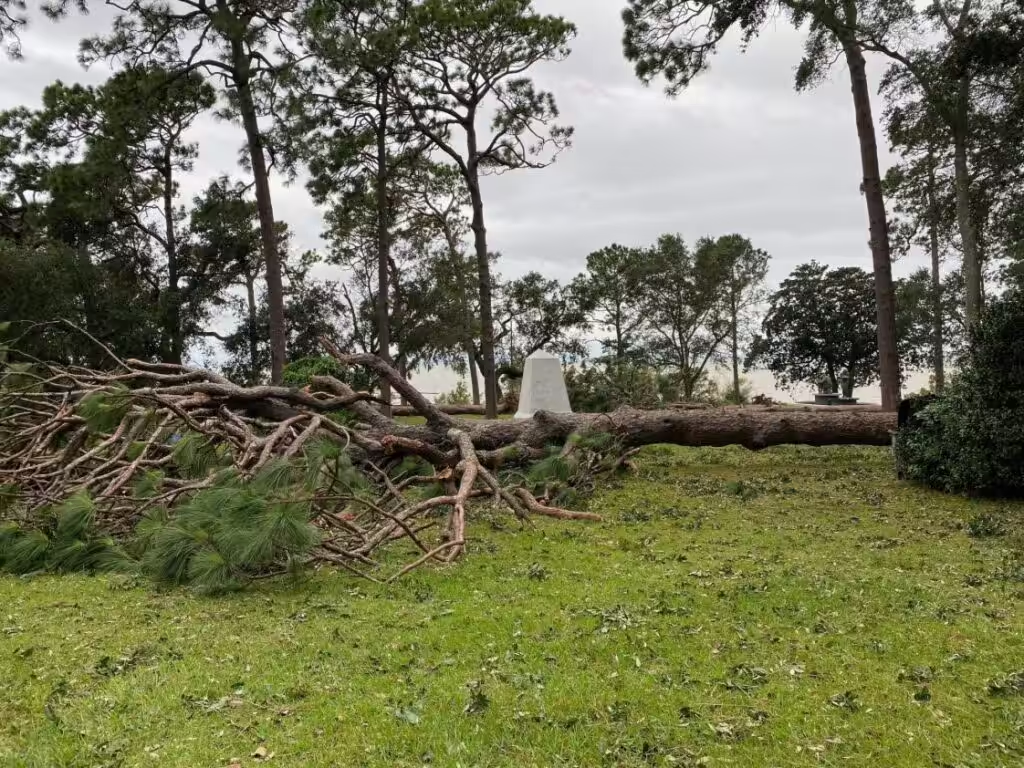
Once the wind dies down and it’s actually safe to walk the property, you need to figure out which trees you can fix and which ones are now a problem waiting to happen. That post-storm tree assessment is where good decisions save you money and headaches down the road. Rule of thumb:
- Repairable: Roughly under 30% crown loss, only minor lean, and no serious trunk or root damage. These respond well to pruning and ongoing care.
- Monitor: Around 30–50% crown loss, some root or trunk concerns, or damage that might evolve. These need rechecks and maybe support systems.
- Remove: More than half the crown gone, major structural root failure, severe trunk splits, or a tree hanging over or already on a “target” like a house or power line.
This is where a trained eye pays off. A qualified arborist or experienced storm damage tree removal crew can spot subtle cracks, root plate shifts, and decay pathways that homeowners walk right past. What looks “mostly fine” from the lawn may be a serious hazard up close.
Repairable Storm Damage
Trees in the repairable category usually just need some skilled cutting and time to bounce back. They might look rough right after the storm, but they still have the structure they need to recover.
- Minor broken branches: Limbs under about 4–6 inches that snapped but didn’t tear deep into the trunk can be pruned back cleanly to a lateral branch or to the trunk at the branch collar.
- Limited crown loss: If you still have most of the main scaffolding branches and only lost small stuff, the tree can usually rebuild its canopy over a few seasons.
- Small lean: A slight lean without disturbed soil, lifting roots, or cracks at the base is often an old lean you’re just now noticing, not new damage.
- Intact trunk: No big vertical cracks, crushed sections, or jagged splits running down the main stem.
These trees tend to do well with:
- Corrective pruning that cleans up torn and hanging branches, makes clean cuts to speed healing, and removes stubs that would invite decay.
- Crown cleaning to strip out dead, diseased, weakly attached branches so the tree isn’t lugging around unnecessary weight in the next storm.
- Light crown reduction in species that tolerate it, to take some leverage off long, overextended limbs and reduce wind load.
In practice, I like to fold this work into your regular preventive pruning program. Instead of a one-time emergency hack job, you build a plan that restores structure and keeps the tree stronger for future nor’easters and hurricanes.
Monitor & Reassess
The monitor group is where most homeowners get stuck. The tree is still standing, but you’re not sure if you should trust it. That uncertainty is exactly why a follow-up schedule matters.
- 30–50% crown loss: Trees can live through losing this much canopy, but they’re stressed. They may be more prone to decay and pest issues until they rebuild foliage.
- Partial root exposure: If you see some lifted soil and a few exposed roots but the tree is still mostly upright, the root system might be compromised yet not outright failed.
- Minor trunk wounds: Bark stripped off in patches or smaller cracks that don’t go deeply across the entire trunk can still become decay entry points later.
- Damaged co-dominant stems: One of a pair of main stems might have a partial split or crack that did not fully separate, which is exactly the kind of thing that lets go in the next big storm.
For trees in this gray zone, smart next steps include:
- Professional evaluation: Have a certified arborist do a hazard limb identification and structural assessment. They may use tools like resistographs or sounding hammers to check for hidden hollows.
- Cabling and bracing: Properly installed hardware can share the load between weak stems and buy you years of safe use from a borderline tree.
- Scheduled follow-up: Put it on the calendar. A recheck in 6–12 months helps catch new cracks, decay pockets, or soil changes that show up after the tree has gone through another cycle of wind and growth.
Sometimes a storm is the warning shot. As we cover in our storm damage as removal indicator guide, a tree that barely survives one event often doesn’t have a long future. It can be cheaper and safer to plan a non-emergency removal than to wait for the next nor’easter to drop it on your deck.
Removal Required
Removal required trees are the ones you do not gamble with. These are serious hazards that often get worse with every freeze, thaw, and gust until they finally fail.
- More than 50% crown loss: Especially if the missing portion includes major leaders or primary scaffold branches. You’re left with a lopsided, stressed structure.
- Structural root failure: Root plate heaving, a tree tipped out of the ground, or big anchoring roots ripped on one side means that tree has lost much of its ability to stay upright.
- Split or cracked trunk: Long vertical cracks, big chunks of trunk sheared away, or a trunk that has split into two pieces is one good gust away from failure.
- Tree leaning over a structure or target: A new or rapidly increasing lean toward a house, driveway, playset, pool, or sidewalk is a major red flag.
- Tree compromised near power lines: Any contact with wires or even very close proximity where a failed limb could hit lines immediately changes the risk profile.
These trees are firmly in storm damage tree removal and, if they threaten life or property, emergency tree removal territory. The hidden forces in a storm-damaged tree can be nasty. Limbs under tension spring, trunks roll, and cut sections shift unexpectedly. This is not a DIY proving ground. You want a crew with the right experience, insurance, and gear handling removals like this.
Step-by-Step Storm Cleanup for NJ Homeowners
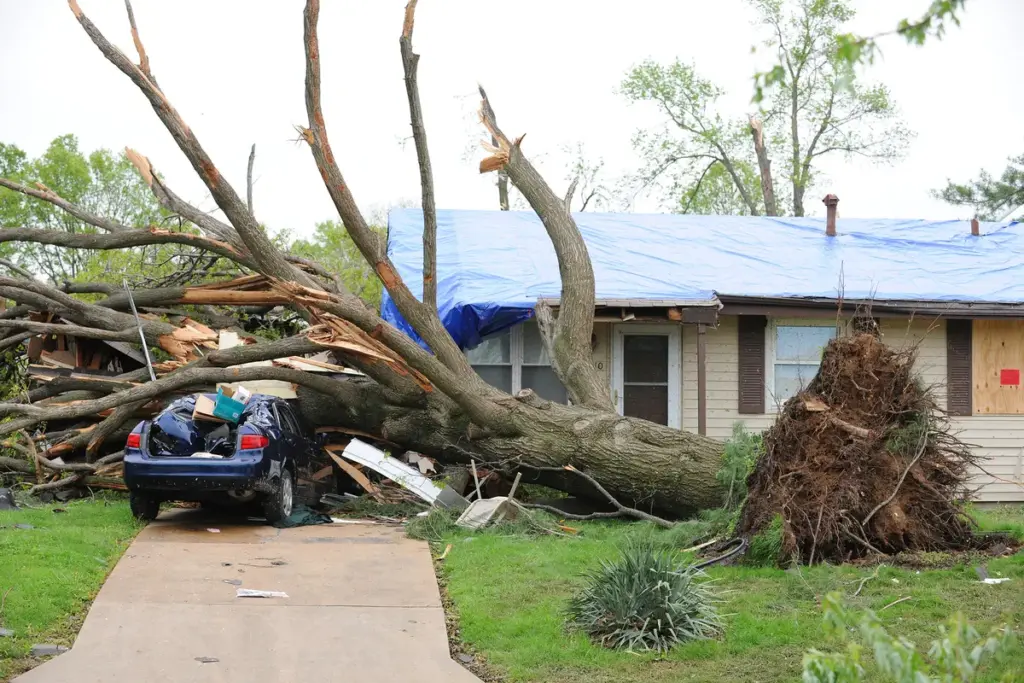
Storm tree cleanup in New Jersey can feel like chaos if you walk outside and see multiple trees down, wires draped around, and branches everywhere. A simple, logical order of operations keeps you from getting hurt or making costly mistakes with insurance and debris handling.
In short: Protect people first, then stabilize property, loop in utilities, document everything, call your insurer, then bring in professionals for the dangerous work. Only after that do you worry about tidying the yard and hauling brush.
Immediate Safety
Your first job is not picking up a chainsaw. It’s making sure nobody gets fried, crushed, or trapped.
- Stay away from downed power lines: Treat every line as live, no matter what. A branch lying on a service drop can energize surrounding ground and fences. Don’t touch anything nearby.
- Report downed lines immediately: Call your utility’s emergency line, such as JCP&L storm restoration, and dial 911 if a line is blocking a road, sparking, or on a structure.
- Inspect from a distance: Use binoculars or your phone’s zoom camera to scan for hanging limbs, leaning trees, and crushed structures so you don’t walk into danger blindly.
- Secure the area: Rope or tape off obvious hazards if you can do it safely. Keep kids, pets, and curious neighbors away from unstable trees and broken branches overhead.
- Check for utility damage: Look at your electric service drop, meter, and gas line area. If anything looks pulled, bent, or crushed, back off and call the utility or gas company.
Remember, utilities clear the main lines first. Your tree service works on your side of the system after the utility has confirmed everything is safe. That order matters.
Insurance Documentation
Once people are safe and the power company is on the way, start building your homeowner insurance storm claim file. Good documentation can mean the difference between a smooth payout and a long argument.
- Photograph everything: Take wide shots of the entire property and each affected area, then close-ups of the exact spots where trees hit roofs, fences, sheds, and other structures.
- Include context: Shoot photos that show your house number, street sign, or neighborhood damage so the adjuster can see this was a legitimate storm event, not gradual damage.
- Record dates and times: Write down when the storm hit, when you first saw damage, and when you took each set of photos. This timeline helps back up your claim.
- Save receipts: Keep every invoice and receipt for tarps, plywood, emergency tree work, generator fuel, and debris hauling. Many policies reimburse “reasonable mitigation expenses.”
- Call your insurer promptly: Report the claim early, ask what specific photos or forms they want, and get clarity on what’s covered so you don’t waste money where the policy would have paid.
During big regional events, adjusters are slammed. The more organized your photos and notes, the easier it is for them to approve the work you need without a lot of back-and-forth.
Professional Cleanup
Once the scene is safe and you’ve started the claim, it’s time to plan out actual tree work. This is where you separate “I can drag branches” from “this needs a professional crew.”
- Prioritize hazards: Trees on houses, blocking driveways or exits, or hanging over walkways and power drops get handled first. Cosmetic damage waits.
- Hire qualified professionals: Look for insured tree services with proper gear, like bucket trucks, rigging, and cranes if needed. Ask about their experience with storm work specifically, not just routine pruning.
- Clarify scope and pricing: Get a written estimate that breaks out emergency stabilization, structural removals, pruning, and debris hauling. Insurance might cover one part and not another.
- Preserve salvageable trees: A good arborist will tell you what can recover. Don’t assume every damaged tree needs to go. Sometimes a careful pruning and cabling plan is the smarter play than losing mature shade trees.
If a tree is actively threatening your home or blocking access, emergency tree removal jumps to the front of the line. Just make sure your insurer knows what’s happening and that you keep all paperwork and before/after photos.
Municipal Debris Pickup
Once the big hazards are gone, you’re left with piles of branches and logs. After major storms, storm cleanup Central NJ often gets some help from municipal programs, but those come with strings attached.
- Check municipal announcements: Hit your town’s website, sign up for alerts, or keep an eye on official social media. Post-storm, they usually post clear guidance on how, what, and when to put debris out.
- Follow size and bundling rules: Many NJ municipal curbside debris pickup programs require limbs cut into short lengths and tied into manageable bundles. If you ignore this, they may leave your pile behind.
- Separate different debris types: Keep logs and branches separate from roofing shingles, broken furniture, or demolition material. Mixed piles often don’t get picked up.
- Understand time limits: Those special pickups are usually short-term, sometimes a couple of weeks. Miss the window and you’re paying a private hauler.
- Confirm curb vs. drop-off: Some towns come by with grapple trucks, others open brush drop-off sites or compost facilities where you have to haul the debris yourself.
The NJ Office of Emergency Management (NJ OEM) and county OEMs like Somerset County OEM often coordinate messages about debris and disposal during big disasters. But your local Department of Public Works is the final word on what they’ll actually take from the curb.
NJ Insurance for Storm Tree Damage (What’s Covered)
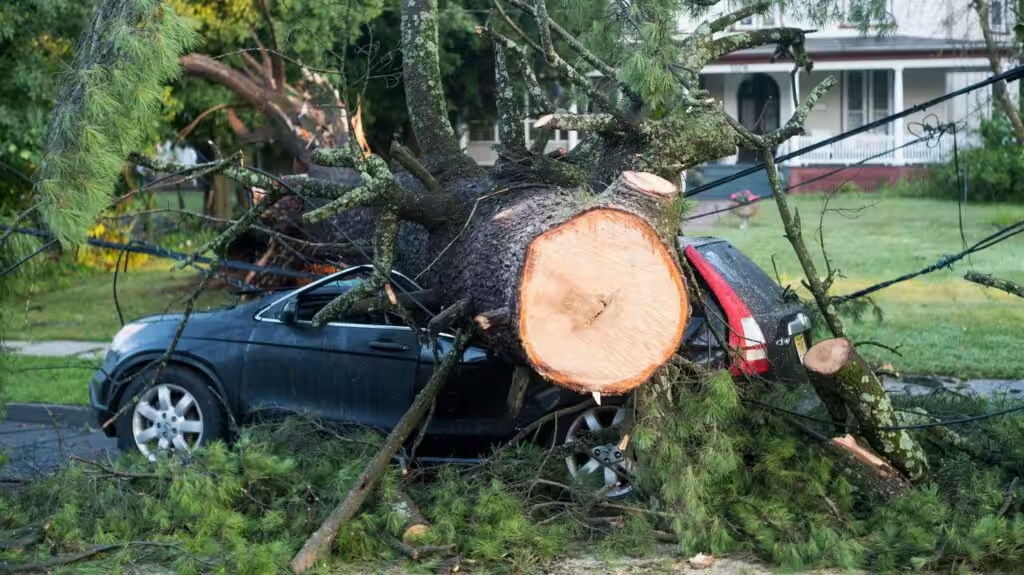
Insurance for tree damage after a storm in NJ is not as simple as “tree fell, everything’s covered.” The details depend on where the tree landed, what it hit, and how your particular policy is written.
Broadly: If a tree damages a covered structure like your house, garage, shed, or fence, there’s usually coverage for the damage and some debris removal. If the tree just lies across the lawn without hitting anything, you’re typically looking at limited debris coverage at best.
Tree on Your House or Other Structures
For most standard NJ homeowner policies, a tree that actually damages a structure is the clearest scenario.
- Tree falls on your house: The cost to repair roof, siding, and interior damage is generally covered, minus your deductible, as long as the loss was sudden and storm-related.
- Debris removal: Reasonable costs to get the tree off the structure and out of the way are often covered up to a certain dollar limit. Some policies raise that limit if the tree blocked a driveway or access.
- Additional living expenses: If the house is not safe to live in, your policy may help pay for a hotel or temporary rental under Loss of Use/Additional Living Expense coverage.
One thing I see homeowners miss all the time is that insurers care about documentation. Before the tree crew starts cutting, snap photos that clearly show the tree contacting the structure from multiple angles.
Tree on Your Vehicle
If a tree lands on your car or truck, you’re usually dealing with your auto policy, not your homeowner policy.
- Comprehensive auto coverage: This is what responds to storm damage, including fallen trees. It pays for repairs or total loss value, minus your auto deductible.
- Homeowner policy: Won’t pay for the vehicle itself but may cover some debris removal if the same tree also hit a structure or blocked an insured driveway.
So if you carry only liability on the vehicle, a tree fall is usually out-of-pocket on the car side, even if your homeowner policy is handling the rest of the cleanup.
Tree in the Yard Only
A tree that just flops over into the grass without hitting anything is where coverage usually tightens up.
- Limited debris removal coverage: Many policies offer a small sublimit, sometimes a few hundred dollars per tree or per event, toward removal if the tree doesn’t hit a structure or block a driveway.
- No “tree replacement” benefit: Standard policies don’t pay to replace the tree itself just because it fell, unless you bought special landscaping or tree endorsements.
- Landscape coverage: Even when landscaping is covered, limits are usually low and focused on events like vandalism or fire, not general storm loss.
Because removal of a large tree can cost more than the policy sublimit, you’ll often share that bill. Knowing your limits ahead of time lets you plan which trees you might remove proactively instead of rolling the dice each storm season.
FEMA & NJ Disaster Assistance
In larger events where the damage stretches across several counties, a FEMA NJ disaster declaration can open another avenue for help.
- FEMA NJ disaster assistance may help with certain tree-related costs if trees make your home unsafe or inaccessible and insurance doesn’t fully cover the work.
- The help is meant for primary residences, not vacation places or investment properties, and usually kicks in only after insurance has paid its share.
- You apply directly through FEMA once your county is officially included in the federal disaster declaration.
Agencies like Somerset County OEM and the NJ Office of Emergency Management usually push out clear directions on when and how to apply after severe nor’easter or hurricane events. Following their guidance keeps you away from scams and misinformation.
Pre-Storm Tree Preparation for Central NJ Homeowners
Storm cleanup is expensive and stressful. Prevention is where you save both money and aggravation. Central NJ homeowners can massively reduce nor’easter wind damage, hurricane tree damage in NJ, and ice-related failures by doing the right work before the weather turns ugly.
Big picture: You build a routine. Yearly pruning to reduce wind load, regular removal of dead wood, structural correction on young trees, cabling for known weak spots, and a realistic view of which species on your lot are storm-prone all pay off when the next system rolls through.
Pre-Storm Pruning Window
Timing your pruning is just as important as what you cut. In Central NJ, there’s a sensible rhythm for a pre-storm pruning window.
- Late winter to early spring: This is prime time for structural pruning on many species. Trees are dormant, you can see the branch framework clearly, and disease pressure is usually lower.
- Before nor’easter season: Get your major preventive pruning wrapped up by early fall, before the stronger autumn and winter nor’easters start to stack up.
- After major events: Use each storm as a diagnostic. What failed? What barely held on? Plan follow-up pruning or removals before the next season using what you learned.
If you want to get more granular, our pre-storm pruning window guide walks through month-by-month timing for common Central NJ species so you’re not guessing.
Reduce Wind and Snow Load
Good pruning is about balance. You are not trying to “hurricane-proof” a tree by stripping it bare. You’re trying to build a strong, compact structure that handles wind and snow better.
- Remove dead wood: Dead branches are guaranteed failures in a storm. They break early, fall unpredictably, and can rip living tissue as they go.
- Thin overcrowded crowns (selectively): Targeted thinning can open the canopy just enough to reduce wind resistance, but it must be done carefully so you don’t destabilize the tree.
- Shorten overly long limbs: Long, heavy limbs extending far from the trunk act like levers. Reducing their length takes a lot of strain off the branch unions.
A mistake I see constantly is “lion-tailing,” where all the inner branches are stripped and only foliage at the ends is left. That’s a recipe for storm damage because it moves all the weight and wind load out to the tips. Any pro who suggests topping or lion-tailing as “storm protection” is one you should skip.
Cabling and Bracing Weak Structures
Some trees are structurally flawed but still worth saving. That’s where support systems come in. Done right, cabling and bracing can keep a beloved tree standing through many more storms.
- Co-dominant stems: Two equal-size trunks leaving the same spot on the main stem often have weak attachment. Under storm load, they like to split right down the middle.
- V-shaped crotches: Tight unions with bark embedded between the stems, common on Bradford pears and certain maples, are notorious failure points.
- Heavily weighted limbs over targets: Large, horizontal limbs stretching over houses, driveways, or playsets carry a lot of risk if they fail.
Professional cabling and bracing systems can:
- Share forces between stems during high winds so one weak point isn’t taking the whole hit.
- Reduce the chance of crown snap or split crotches during heavy snow load and ice buildup.
- Extend the safe life of mature shade and specimen trees that you’d otherwise have to remove.
These systems aren’t DIY jobs. They require proper hardware, placement, and periodic inspection. But if you’ve got a tree you really want to keep, they’re often a smart investment.
Identify High-Risk Trees Before They Fail
Regular walk-throughs of your own yard can catch many problems early. You don’t need to be an arborist to spot warning signs, just be observant and consistent.
- Sudden or increasing lean: A tree that used to stand straight but now leans, especially with cracked soil or raised roots on one side, is a concern.
- Fungal growth at the base: Mushrooms or conks on the trunk or root flare often indicate decay inside where you can’t see it.
- Cracks, cavities, or seams: Vertical cracks, long seams, and large hollows weaken the load-bearing capacity of the trunk.
- Dead or dying branches in the upper crown: Dieback in the top can be a sign of root issues, trunk decay, or severe past stress.
If you spot several of these signs on the same tree, get an arborist involved. Use resources like our storm damage as removal indicator article to help decide whether proactive removal makes more sense than waiting for nature to finish the job during a nor’easter.
Species Vulnerability Assessment
Some trees just don’t stand up well to NJ’s storm mix. Knowing which species are troublemakers on your lot helps you plan long-term replacements instead of repeating the same damage every few years.
- Fast-growing, brittle species: Poplars, some willows, and ornamental pears often grow quickly with weak wood and bad branching angles. They break early and often.
- Shallow-rooted species: Certain maples and many conifers planted in wet or compacted soils are more likely to uproot in strong winds.
- Over-mature or stressed trees: Old, neglected trees or those worn down by drought, insects, or previous bad pruning are much less tolerant of storm loads.
Gradually replacing poor performers with tougher, better-structured species is one of the best long-term strategies for Central NJ yards. Planting smaller but stronger trees now usually costs less than removing massive, storm-damaged ones later.
NJ Municipal Storm Debris Pickup: What to Know
NJ municipal curbside debris pickup can save you serious hauling money after a storm, but only if you play by the rules. Every town handles debris a little differently, and they’re strict for a reason. Heavy equipment, chipper feed, and landfill rules all depend on consistent sizing and sorting.
Essential points: Each municipality sets its own policies. Most want branches cut to a certain length, bundled a certain way, and separated from non-vegetative waste. Special post-storm pickups are often announced for a short window, then it’s back to normal schedules where you shoulder more of the cost.
Know Your Town’s Debris Management Plan
Most New Jersey towns have a written debris management plan that lines up with state and NJ DEP storm debris guidance. Few homeowners read it until after a storm, which is backward.
- What materials are accepted: Towns usually take leaves, small branches, and logs up to a certain diameter. Stumps and massive trunk sections are often excluded.
- Collection schedule: You might have a regular yard waste day and then separate, one-time storm tree cleanup New Jersey events after larger storms.
- Drop-off sites: Some towns open temporary brush sites or use existing compost facilities where residents can bring storm debris for free or a low fee.
Knowing these rules ahead of time means you can tell your tree service how to cut and stage logs and brush so you don’t have to re-handle everything later.
Common Curbside Requirements
While every town is a little different, a few patterns show up over and over again in New Jersey yard waste rules.
- Cut to length: Branches usually must be cut down to manageable pieces, often 3–4 feet long, and may need to be under a certain diameter so crews can lift and chip them safely.
- Bundled and tied: Branch bundles often need to be tied with natural twine so workers can grab and stack them. Wire and plastic ties can damage chippers and are often banned.
- Separation: You’ll be asked to keep storm branches separate from bagged leaves, regular trash, recycling, and construction debris.
- Placement: Piles should be just behind the curb, not piled in the gutter or halfway into the street where they block drainage or traffic.
If your piles don’t meet the requirements, they might sit there untouched, and then you’re paying a private hauler or your tree company to come back and fix it.
Special Pickups vs Homeowner Responsibility
After some storms, towns bend the normal rules. After others, they keep business as usual and expect homeowners to manage within the normal system.
- Declared emergencies: For bigger regional events, municipalities often coordinate extra rounds of curbside pickup funded by emergency budgets or in coordination with state agencies.
- Routine operations: Smaller storms that knock down only a few branches usually get handled under the regular yard waste program, not as a special event.
- Private hauling: Large logs, stumps, and debris generated by contractors almost always remain the homeowner’s responsibility, regardless of how big the storm was.
County organizations like Somerset County OEM sometimes share general updates, but your local DPW sets the actual pickup rules. If you are unsure, a quick call or website check before you stack everything at the curb can save a lot of rework.
Common Mistakes in Storm Damage Tree Cleanup (and How to Avoid Them)
Even folks who are pretty handy can get themselves into trouble during storm cleanup. I see the same errors repeated after every big blow, and they usually cost someone money, an insurance hassle, or a trip to the ER. Here’s what to avoid and how to sidestep the problems.
- Mistake 1: Cutting before documenting
Problem: Jumping straight into chainsaw work means you lose the chance to prove what happened, how bad it was, and how much tree was involved for your insurer.
Fix: Before any cutting starts, walk the property with your phone and take slow, steady videos and photos from multiple angles. Capture how the tree is lying, where it impacted structures, and any interior damage. Then you can clean up without worrying you wiped away your proof. - Mistake 2: DIY work near power lines
Problem: Trying to cut branches or trees tangled with lines is one of the fastest ways to end up severely injured or worse. Electricity can travel through wood, moisture, and tools.
Fix: Call your electric utility’s emergency line, such as JCP&L storm restoration, and treat that area as off-limits until they say it’s safe. Even then, let pros handle anything within reach of those lines. - Mistake 3: Hiring unqualified or uninsured “storm chasers”
Problem: After a storm, out-of-town trucks with no local history suddenly appear, offering cheap work. They may lack insurance, do dangerous removals, or leave messes and unpaid bills behind.
Fix: Ask for proof of insurance, local references, and business registration. Check online reviews and make sure estimates are in writing. Avoid paying large cash deposits upfront for big jobs. - Mistake 4: Over-pruning or topping
Problem: Topping trees or hacking out huge amounts of live wood because “it’ll be safer” usually weakens them, invites decay, and creates weak regrowth that fails in future storms.
Fix: Focus on structural pruning that follows modern standards. Remove damaged and poorly attached branches, not random sections of healthy canopy. Work with pros who can explain exactly why they’re making each cut. - Mistake 5: Ignoring damaged but still-standing trees
Problem: Trees with internal cracks, root damage, or lightning scars may look stable enough, but they’re often ticking time bombs for the next nor’easter or hurricane remnant.
Fix: Schedule a post-storm tree assessment and prioritize hazard limb identification. Get a clear plan from an arborist on what should be removed, supported, or just watched over time. - Mistake 6: Missing municipal pickup windows
Problem: Leaving piles of debris scattered around for months not only looks bad and attracts pests, it also often means you miss special curbside pickups and end up paying private hauling fees.
Fix: Watch your town’s announcements and get debris consolidated quickly. Cut and bundle it according to your debris management plan rules so crews actually take it on the first pass.
FAQ: Storm Damage Tree Cleanup in NJ
Here are straight answers to questions New Jersey homeowners ask after nor’easters, hurricanes, ice storms, and strong summer thunderstorms tear through.
How much does storm damage tree cleanup cost in NJ?
Costs in NJ are all over the map. Cleaning up a few small limbs that are already on the ground might run a few hundred dollars. Removing a large tree that’s on a roof, tangled in other trees, or near power lines can push into the thousands, especially if a crane, bucket truck, or after-hours emergency response is needed. Size, access, risk level, and disposal all factor into the price.
How long does an insurance claim for storm tree damage take in NJ?
On a routine claim with good documentation, you might hear from an adjuster within a couple of days and have a resolution in a week or two. In big regional storms where thousands of homes are hit, that timeline stretches. It’s not unusual for complex claims to take several weeks, particularly if structural engineers or multiple contractors need to weigh in.
Does insurance cover removing a tree that didn’t hit my house?
Usually not fully. Many policies offer limited debris removal coverage for trees that fall in the yard but don’t hit structures, often capped at a specific amount per tree or per event. They typically will not pay to remove healthy trees preemptively or to replace fallen trees just because the yard looks bare.
When can I get FEMA help for storm-related tree damage in NJ?
FEMA NJ disaster assistance is only in play after the federal government declares a disaster for your county. Even then, FEMA looks at essential needs, like whether trees are blocking access to your primary residence or making it unsafe, and whether your insurance has already covered what it should. They don’t pay for routine tree work, cosmetic cleanups, or landscape upgrades.
Who do I call for downed power lines and trees on lines in NJ?
Call your electric utility’s emergency number first, such as JCP&L storm restoration, PSE&G, or Atlantic City Electric, depending on where you live. If there’s a fire, trapped person, or blocked road, call 911 as well. Don’t try to move branches or trees touching or near lines yourself under any circumstance.
What should I do about storm debris if my town doesn’t offer special pickup?
If no special storm cleanup Central NJ program is announced, follow your regular town yard waste rules for branch size, bundling, and pickup days. Many towns have drop-off centers or compost facilities for residents. For large logs, stumps, and contractor-sized piles, plan on hiring a private hauler or having your tree service remove and dispose of everything as part of the job.
How can I prepare my trees before NJ storm season?
Start with regular inspections and pruning focused on dead-wood removal and solid structure. Get that work done before the heavy fall nor’easters and peak hurricane remnants. Look at cabling for weak unions, remove trees that show multiple high-risk signs, and keep a schedule aligned with your preventive pruning plan so you’re not scrambling at the last minute each year.
What is the role of the NJ Office of Emergency Management in storm cleanup?
The NJ Office of Emergency Management handles statewide coordination during and after big storms. They work with county OEMs like Somerset County OEM, FEMA, and local governments to organize response efforts, share safety information, and direct residents to resources for debris management, shelter, and financial assistance programs when available.
Can I use a chainsaw myself for storm cleanup?
You can usually handle small branches already on the ground if you have proper PPE, a sharp saw, and some experience. The dangerous situations are tensioned limbs, uprooted trees balanced on trunks, hung-up branches in other trees, or anything near utilities or structures. Those are jobs for trained professionals with the right rigging and safety systems.
What’s the difference between emergency tree removal and regular storm cleanup?
Emergency tree removal deals with immediate threats, like trees on roofs, blocking exits, or pulling on power service lines, and it often happens evenings, nights, or weekends. Regular storm cleanup covers the rest: non-urgent debris removal, corrective pruning, and follow-up work to restore tree health and safety once your property is no longer in crisis.
Final Summary & Next Steps for NJ Homeowners
Storm damage tree cleanup in NJ is a mix of safety, planning, and smart decision-making, not just cutting everything that looks messy. Different storms stress trees in different ways, and understanding that helps you judge which trees are worth saving and which have crossed the line into hazards. On top of that, you need good photos and records for insurance, a solid understanding of your policy, and awareness of how municipal and state programs fit into the picture.
Looking ahead, put your energy into prevention. Line up regular inspections and preventive pruning, fix weak structures early, and decide which high-risk trees on your property you’re going to phase out before they fail during a nor’easter or hurricane remnant. Create a simple storm plan for your household so that when a watch turns into a warning, you already know who to call, where to look for problems, and how to secure the property safely.
If you want to get more organized before the next storm season, read through our guides on pre-storm pruning windows and on how storm damage can indicate the need for removal. A little planning now usually costs far less than scrambling after the next big system comes through Central New Jersey.