TL;DR: In New Jersey, any company doing tree care has to be licensed by the NJ Board of Tree Experts as an NJTC (Tree Care) or LTEO (Licensed Tree Expert Operator). Before you let anyone touch your trees, look up their license online, get proof of liability insurance and workers compensation, and walk away from red flags like door-to-door “storm chasers,” cash-only lowball quotes, or climbers using spikes on living trees.
Key Takeaways
- New Jersey is one of the few states that requires licensing for tree care through the NJ Board of Tree Experts, so this is not optional paperwork.
- Legitimate companies will show a visible and current NJTC or LTEO license number, carry real liability insurance, and have active NJ workers’ compensation coverage for their crews.
- Always confirm NJ contractor registration, insist on a clear written estimate, and make sure the crew works under ANSI A300 pruning standards instead of “cut it all back” guesses.
- Major red flags include: door-to-door solicitation after storms, “today-only” lowball estimates, no license number on the truck or card, and refusal or delay in sending an insurance certificate.
- Unlicensed work can leave you personally on the hook under NJ consumer protection laws, and your homeowner’s insurance may deny or limit coverage for damage or worker injuries.
- You can verify a tree service license in NJ online for free through the NJ Board of Tree Experts and the NJ Division of Consumer Affairs in a few minutes.
- Using a licensed tree service in NJ can also simplify municipal permits, resale inspections, and any written documentation your town requires from a tree expert.
Quick Definitions: What Is a Licensed Tree Service in NJ?
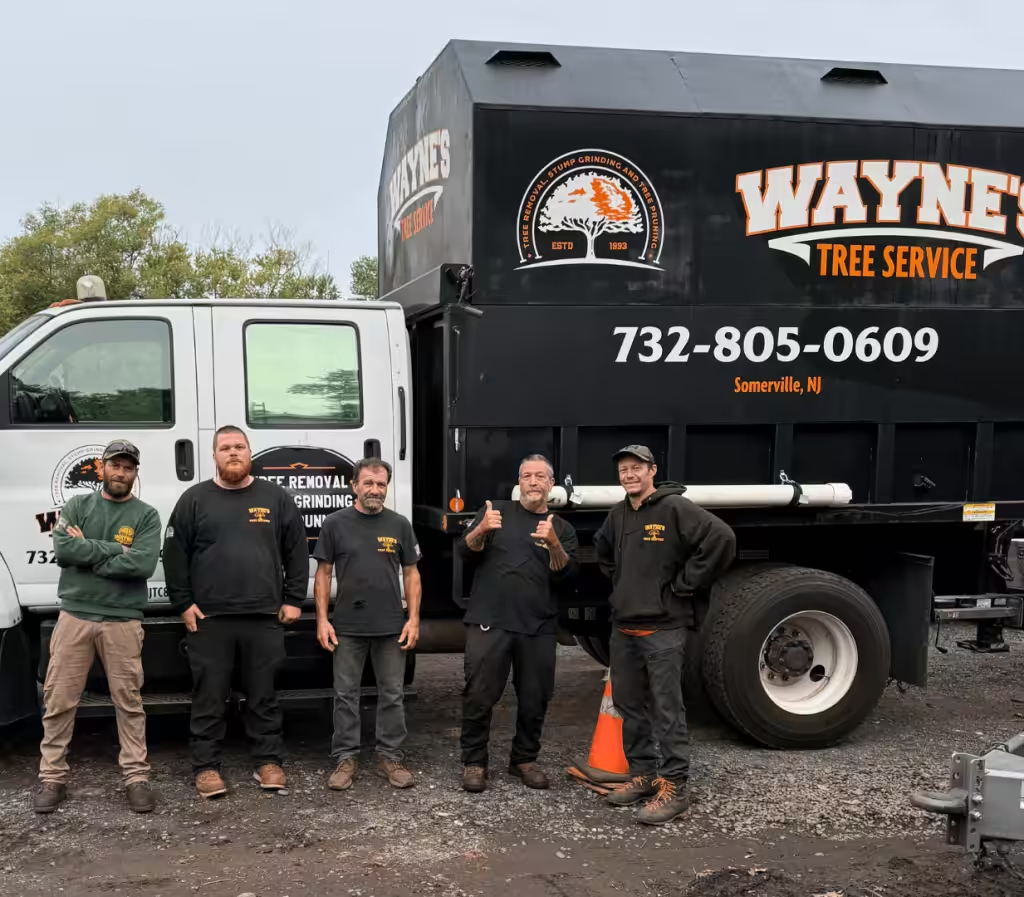
What is an NJTC license? A New Jersey Tree Care (NJTC) license is issued by the NJ Board of Tree Experts to a business that is legally allowed to do tree pruning, removal, cabling, and other tree care in New Jersey. It means the company has a qualified tree expert tied to it and has gone through the state’s approval process.
What is an LTEO license? An LTEO (Licensed Tree Expert Operator) is an individual who has met New Jersey’s education and experience requirements, passed the state exam, and is authorized to run or supervise a tree care operation. In practice, the LTEO is the person responsible for how the work is planned and performed.
What is a “licensed tree service NJ”? A licensed tree service in NJ is a company that has an active NJTC or LTEO license, carries proper liability insurance and workers’ compensation for tree operations, and is properly registered under the NJ contractor registration act when working on residential properties.
Why NJ Requires Tree Service Licensing (And What It Means for Homeowners)
New Jersey treats tree care the same way it treats electrical or roofing work. It’s skilled, it’s risky, and if it’s done wrong, people get hurt, and property gets wrecked. That’s why the state set up a licensing system through the NJ Board of Tree Experts and made it mandatory for companies that advertise or perform pruning, tree removal, cabling, or most tree care.
So no, all tree companies in New Jersey are not “the same.” A properly licensed business has:
- Met specific state standards for training and experience in tree work.
- Passed professional testing through the Board of Tree Experts that goes beyond basic chainsaw knowledge.
- Agreed in writing to follow ANSI A300 pruning standards and basic industry safety rules, including rope work and rigging practices.
- Submitted proof of insurance, business information, and responsibility to the state.
Hiring an unlicensed operator is not just rolling the dice. In many situations, it is illegal in New Jersey. If that unlicensed crew drops a limb through your roof, injures a worker, or hacks your trees in violation of local ordinances, you can be stuck fighting with your homeowner’s insurance protection and left with very little leverage against the contractor.
Once you understand how the licensing system works, you can quickly spot the difference between a solid, NJTC-licensed tree company backed by real credentials and a guy with a pickup, a chainsaw, and a business name he printed last week.
The NJ Tree Service Verification Checklist (7 Points)

If you’re trying to figure out how to hire a tree service in New Jersey without getting burned, treat this seven-point list like a pre-flight checklist. Do these before you sign a contract or let anyone fire up a saw on your property.
1. Confirm the NJTC or LTEO License
Start with the license. Everything else hangs off this. Any legit operator in this state will know exactly what you’re asking for when you mention the NJ Board of Tree Experts. What to look for:
- An NJTC license number (for example “NJTC #xxxx”) or an LTEO license number that shows up on:
- Truck doors or permanent truck lettering
- Business cards and printed brochures
- Their website, email signatures, and proposals
- Invoices, letterheads, or any formal paperwork
- The name on the license matches the business name you’re hiring, not some unrelated company.
- The license status shows as active when you look it up online, not “expired” or “pending.”
New Jersey recognizes both NJ Tree Care (NJTC) business licenses and the individual Licensed Tree Expert Operator (LTEO) credentials. For residential work, either is fine as long as the license is current and the license holder is actually responsible for your job, not just lending their number.
Expert tip: Ask them, “Who is your licensed tree expert, and will that person be on site or supervising my job?” If you get a vague “Oh, he’s around” or they can’t give you a name, that’s usually your cue to keep calling other companies.
2. Request a Liability Insurance Certificate
Tree work involves heavy wood swinging around your house, your vehicles, and your neighbor’s property. Things go wrong fast if the crew is careless or under-equipped. A real licensed tree service NJ carries commercial general liability insurance and can have their agent email you a certificate of insurance without any drama.
What to check on the liability insurance certificate:
- Your name and address listed as the certificate holder, or at least the job address clearly listed so there’s no confusion about what property is involved.
- The insured name matches the business name and the NJTC/LTEO license holder you’re dealing with, not some landscaping company you’ve never heard of.
- Coverage limits that make sense for tree work, commonly $1,000,000 per occurrence or higher for residential jobs.
- Policy dates that clearly cover the scheduled work period. No gaps, no “effective next week” issues.
If all they can show you is a blurry photo on a phone, or they refuse to list you as certificate holder, treat that as a serious warning sign. A properly insured company should be comfortable letting you verify coverage with their agent.
3. Confirm NJ Workers Compensation Coverage
This is the one most homeowners skip, and it’s where the biggest risk often sits. In New Jersey, any company with employees must carry workers compensation insurance. Tree work has real fall hazards, saw injuries, and chipper risks. If something goes wrong and there’s no workers comp, everyone starts looking for a deeper pocket, including the homeowner.
How to protect yourself:
- Ask for proof of NJ workers compensation insurance, either on the same certificate as their liability or on a separate document from the same agent.
- Look at the classification codes or description of operations. You want to see tree care / arborist / tree removal listed, not just “landscaping” or “lawn maintenance.” Those are cheaper policies and often don’t cover climbing and removal work.
- If they say “we’re exempt, it’s just me,” but you see two or three helpers unloading gear, be very cautious. Those “helpers” can end up being treated as employees if there’s an accident.
From a risk standpoint, this might be the single most important box to check. I’ve seen what a fall from 40 feet looks like, and you don’t want to be sorting out coverage after someone is already headed to the hospital.
4. Verify NJ Contractor Registration
On top of tree licensing, New Jersey has another layer that covers most residential work: the NJ contractor registration act, overseen by the NJ Division of Consumer Affairs. A lot of tree work counts as “home improvement,” especially if it ties into property upgrades, clearing for additions, or major landscape changes.
Your checklist here:
- Ask for their NJ Home Improvement Contractor registration number and write it down.
- Plug that number into the NJ Division of Consumer Affairs online lookup tool.
- Confirm that:
- The legal business name matches what’s on your estimate and website.
- The registration status shows as active, not suspended, revoked, or missing.
- The address listed lines up with what the company gave you.
This gives you extra protection under NJ law, like contract requirements, cancellation rules, and access to state complaint channels if the job goes sideways or the company disappears mid-project.
5. Get a Detailed Written Estimate
Tree work is one of those trades where “Yeah, we’ll take care of it for about a thousand” turns into confusion fast. A licensed tree service in NJ knows New Jersey’s consumer rules and will put all the details in writing, so there’s no arguing over what was “included” after the fact.
A proper written estimate should include:
- Company name, physical address, phone number, and their NJTC/LTEO license number along with any contractor registration number.
- A clear description of the work, including:
- Exactly which trees are being worked on and what’s happening to them. “Remove the red maple in the rear left corner” is better than “remove maple.”
- Which limbs or leaders are being pruned and how much is being removed for clearance or structure.
- Whether stumps are being ground, to what depth, and whether surface roots are being addressed.
- Cleanup details, such as who keeps the firewood, whether brush is chipped on site, and whether chips are left or hauled away.
- Any mention of municipal permits, HOA approvals, or utility coordination if wires are involved.
- The total price, how long the estimate is valid, and payment terms. For normal residential work, there should not be big cash deposits requested before any equipment even shows up.
If you want a deeper look at what a professional proposal covers, see what a licensed estimate includes for tree removal projects in Central NJ. It gives you a good benchmark to measure other quotes against.
6. Ask About Pruning Standards (ANSI A300)
A lot of damage to trees happens with a saw in someone’s hand long before the tree ever fails. Good tree work is as much about biology as it is about rigging. The common standard across the U.S. is the ANSI A300 pruning standard, and the NJ Board of Tree Experts expects licensed companies to work within those guidelines.
What to ask: “Do you follow ANSI A300 pruning standards?” Then stop talking and pay attention to how they respond.
Signs of a professional answer:
- They explain why they avoid topping trees, “lion’s tailing,” or stripping out all interior growth, and they can tell you what those terms mean.
- They talk about structural pruning, clearance pruning, and making proper pruning cuts just outside the branch collar instead of flush-cutting the trunk.
- They recommend a specific plan such as “remove deadwood 2 inches and larger, reduce weight on outer tips, and improve clearance from the house” instead of “we’ll just cut everything back hard.”
Companies that ignore ANSI A300 create weak regrowth, decay pockets, and long-term problems that cost more to fix later. If they brag about “topping” or “rounding over” as a selling point, that’s your signal to bring in a different crew.
7. Check Local References and Reputation
Tree work is very local. Soil types, wind patterns, and town rules all change from one town to the next. A strong NJTC licensed tree company should be able to point to work they’ve done right in your area. How to verify reputation:
- Ask for 2–3 recent customers in your town or in nearby towns that look similar to yours. Then actually call one or two of them.
- Scan reviews for consistent patterns mentioning:
- Safety and professionalism, such as cones, signage, hard hats, and controlled rigging.
- Clean-up quality. Whether they raked and blew off hard surfaces or left debris scattered around.
- Respect for fences, lawns, gardens, and neighbors’ yards, especially on tight suburban lots.
- If they advertise BBB accreditation, check their listing with the BBB (Better Business Bureau) to confirm they actually have that status and see if complaints have been resolved.
If you’re near Somerville, you may want a veteran-owned tree service Somerville that already knows local ordinances, shade tree commission rules, and power line clearance expectations. Local experience saves a lot of headaches with permits and inspectors.
5 Red Flags of an Unlicensed NJ Tree Service
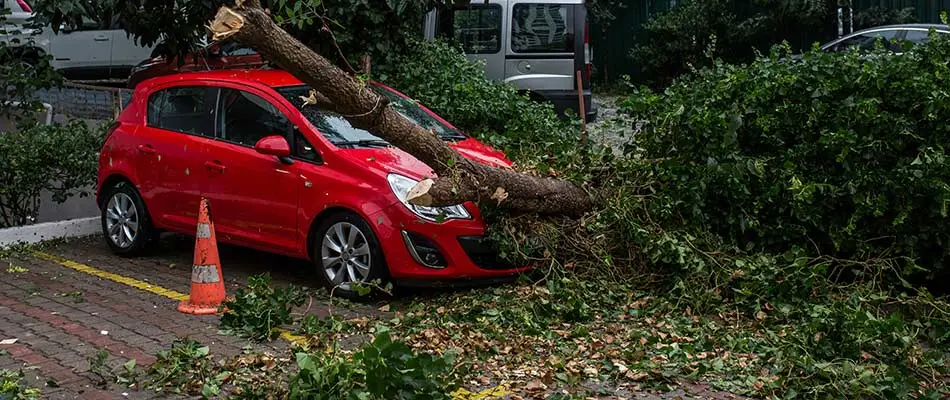
Some problems show up before the first cut if you know what to watch for. Here are five common tree service red flags NJ homeowners run into, especially when storms bring out every truck and trailer in the state.
1. Door-to-Door Solicitation After Storms
Right after a hurricane, nor’easter, or big wind event, you’ll see trucks you’ve never noticed before creeping through neighborhoods. Crews hop out, start knocking on doors, and offer to “take care of that mess” for cash. Why it’s a red flag:
- Legitimate licensed companies are usually swamped after storms, but they still give you written estimates and can provide license and insurance info. They aren’t begging on your doorstep.
- Storm chasers often have no NJTC or LTEO licenses, no insurance that covers tree work, and no clue about local tree or disposal rules.
- They tend to vanish as soon as problems show up, leaving you with damaged property and no easy way to track them down.
Even when a limb is on your roof and you’re stressed, you still have time to ask basic questions and confirm credentials. If you really need licensed emergency tree service, call a known local company, even if they have to put you in a queue. A short wait is better than paying twice to clean up a bad job.
2. Cash-Only “Today Only” Lowball Quotes
I see this all the time. One company gives you a reasonable written estimate, then someone else shows up and offers to do the “same work” for half the price if you pay cash right away. No paperwork, no details.
Risks of accepting these offers:
- No written contract or scope of work means no proof of what was agreed to if there’s a dispute later.
- No proof of insurance or workers compensation, so you’re exposed if a limb goes through a roof or a worker gets hurt.
- Higher odds of damage to lawns, fences, and roofs, or crews walking away before cleanup is finished because they already have your cash.
This is the classic lowball estimate red flag. It often pairs with lines like “We don’t need a license for this,” or “Licensing is only for big jobs.” In New Jersey, that’s just not true. Tree care licensing is mandatory for this trade.
3. No License Number on Trucks or Business Cards
New Jersey’s rules and common industry practice both expect licensed tree services to show their license numbers. If a company is proud of its credentials, it’s going to advertise them. Be wary if you notice:
- Plain trucks, or trucks with cheap magnetic signs, that list a company name but no NJTC license or LTEO license number anywhere.
- Business cards or flyers that only have a first name and a cell number, no address, license, or company information.
- Excuses like “we just changed our name,” “our license paperwork is in progress,” or “we don’t have the new stickers yet.”
If the license was real and current, they’d be using it as a selling point. Listen to that hesitation you feel when something looks thrown together, and keep looking.
4. Climbing Spikes Used on Living Trees for Pruning
Climbing spikes, or gaffs, strap onto a climber’s lower legs and dig into the trunk so they can ascend quickly. They’re a normal tool on trees that are being removed. They are almost never acceptable for pruning a living tree you plan to keep.
Why spike use is a red flag:
- Every spike punch puts a wound in the trunk. On a full climb that can mean dozens of punctures up and down the stem.
- Those wounds can open the door for decay, disease, and pests that shorten the tree’s lifespan and weaken its structure.
- Spike use on live trees goes against modern best practices under the ANSI A300 pruning standard for healthy trees.
If you see a climber strapping on spikes and the plan is “prune” instead of “remove,” stop the job and ask why they aren’t rope climbing. A reliable licensed pruning service will use ropes, saddles, and proper access methods on living trees, saving spikes for removals only.
5. No Certificate of Insurance Available
“Yeah, yeah, we’re insured, don’t worry about it.” That line means nothing without paperwork. Some outfits will flash a screenshot that’s years old or a certificate from another company that has nothing to do with them. Red flags include:
- “We’ll email it later” but they stall and the email never lands in your inbox.
- Only showing you a phone photo or PDF that doesn’t list your property and doesn’t come from an agent.
- Coverage that starts after your job date, or expired policies with no renewal shown.
Don’t let a single cut happen until you have a current liability insurance certificate and proof of workers compensation NJ coverage. If they push back on that, they’re not the company you want working over your house.
How to Verify a NJ Tree Service License Online
The good news is you don’t have to guess. You can verify the tree service license NJ status yourself for free in just a few minutes using state websites and a little attention to detail.
Step 1: Use the NJ Board of Tree Experts License Lookup
The NJ Board of Tree Experts keeps an online list of licensed tree care companies and LTEO license holders. This is the source you want to trust, not what’s printed on a business card. What to do:
- Go to the official NJ Board of Tree Experts website and find their license lookup or roster page.
- Search using the company name, the owner’s last name, or the license number they gave you.
- Confirm that:
- The license shows as active. If it says expired, suspended, or missing, that’s a problem.
- The business or individual name matches what’s on the truck, website, and estimate.
- The license type listed is NJTC or LTEO, both of which cover tree care work.
Step 2: Verify NJ Contractor Registration Through Consumer Affairs
Next, check their standing as a home improvement contractor through the NJ Division of Consumer Affairs. This step backs up what they put on your estimate and protects you if there are billing, contract, or workmanship disputes.
Steps:
- Go to the Division of Consumer Affairs contractor license and registration search portal on the state website.
- Enter the company’s legal name or the registration number printed on your estimate or contract.
- Check that:
- Status is listed as “active” or similar, with no obvious restrictions.
- There are no serious disciplinary notes, if those are visible in the system.
- The listed address is the same as what you see on their paperwork or website.
This second check ties back into the NJ contractor registration act and strengthens your position under NJ consumer protection rules if a job goes bad.
Step 3: Request and Read the Insurance Certificate
Online verification tells you the company is recognized by the state. It doesn’t prove they’re insured for your job. After you confirm licenses and registration, have their insurance agent send a certificate of insurance, ideally directly to you by email.
Key points on the certificate:
- Your name and property address appear as the certificate holder so you know the document was issued for your job, not someone else’s.
- General liability is listed, with at least $1M per occurrence. Many well-established companies carry higher limits, especially if they do crane work.
- Workers compensation coverage is either included or listed on a separate page, with coverage dates that are current and continuous.
- The named insured matches the NJTC or LTEO license holder or the business you actually hired, not a parent company that only covers landscaping.
If you’re not sure what you’re looking at, call the agent listed on the certificate and ask them to confirm that the policy is active and that it covers tree care. Any reputable company and agent will be fine with that call.
Step 4: Recognize Valid NJ License Number Formats
A lot of out-of-state or unlicensed operators will throw random “license numbers” at you hoping you won’t check. Knowing how New Jersey formats things makes it harder for them to bluff.
- NJTC #1234 or NJTC 1234 will usually be how a New Jersey Tree Care business license appears.
- LTEO #567 is a typical way a Licensed Tree Expert Operator number might be shown.
Be careful with vague numbers like “Lic. #12345” with no NJTC or LTEO prefix, or with license info from another state used as a substitute. If the number doesn’t match what you see in the NJ Board of Tree Experts database, treat that as a red flag and verify before you move forward.
What Happens If an Unlicensed Service Damages Your Property
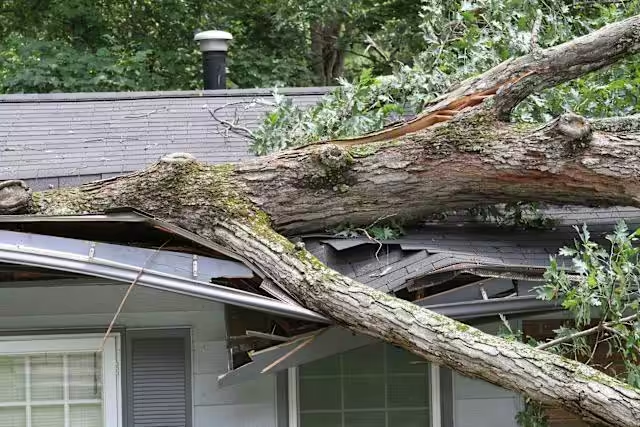
Price and timing are what most people focus on at first, but the real cost of hiring an unlicensed or uninsured crew often shows up later. In New Jersey, that can mean insurance headaches, legal issues, and problems with your town if someone ignores the rules.
Your Homeowner Insurance May Not Cover the Damage
Homeowner insurance is built around managing risk. If you bring in a contractor who ignores state licensing rules and they cause damage, your insurer may dig into that decision before cutting a check. Potential outcomes include:
- Claim delays while your insurance company investigates who is actually responsible and whether you used a proper contractor.
- Denial of coverage if your policy language was violated, for example by knowingly hiring an unlicensed contractor for regulated work.
- Out-of-pocket expenses or messy disputes between your insurer, the neighbor’s insurer, and the contractor’s non-existent coverage.
Doing your homework on licensing and insurance up front backs up your position if there is a claim and lines up with smart homeowner insurance protection practices. Insurers are a lot more cooperative when you can show you picked a qualified, legal contractor.
You Could Be Exposed to Worker Injury Claims
If you bring in a tree crew that doesn’t carry workers compensation NJ coverage and someone takes a spill, needs surgery, or can’t work for a while, the medical bills don’t just disappear. Someone will go looking for a way to get paid. Depending on the situation and policy language, choosing a contractor without proper workers comp can expose you to:
- Personal injury lawsuits claiming you were effectively the “employer” because the work happened on your property.
- Medical liens placed against any settlement or property until bills are covered.
- Legal fights involving your homeowner insurer over who is supposed to pay what.
Licensed companies are usually required to carry workers comp for their employees, which drastically cuts this risk. That’s why asking for proof isn’t nitpicking. It’s self-defense.
You Lose the Oversight and Complaint Process of the NJ Board of Tree Experts
Working with an NJTC licensed tree company or an LTEO-supervised business puts that company under the eye of the NJ Board of Tree Experts. That means there are standards they’re expected to follow and consequences if they don’t.
If big problems come up, such as grossly unsafe practices, misusing license numbers, or serious misrepresentation, you can file a complaint with the Board. They have tools to investigate and, if needed, take action against the license.
With an unlicensed crew, that oversight isn’t there. Your only options may be general consumer fraud complaints or a civil lawsuit, both of which are slower, more expensive, and harder to win compared to going through a professional regulatory board.
You May Also Violate Local Permit Rules
On top of state rules, a lot of New Jersey towns have their own tree ordinances. Some are strict, especially in older, tree-lined neighborhoods or towns with shade tree commissions. Those ordinances can control how and when trees can be removed or heavily pruned.
Common local requirements include:
- Tree removal permits for trees above a certain trunk diameter, sometimes even in your backyard.
- Use of a licensed tree service when work is done under a permit or near public right-of-way trees.
- Letters or reports on company letterhead from a licensed tree professional explaining why a tree is hazardous or needs to be removed.
If you bring in an unlicensed contractor and they take out a protected tree or ignore permit rules, the town can:
- Refuse to issue or finalize permits until the situation is corrected.
- Fine you as the property owner, or require replanting and remediation work at your expense.
- Hold up your property sale if there’s an open tree violation or missing documentation.
If your town asks for permit letters or proof of a licensed company, take a look at how to use a licensed service for permit letters. That keeps both the town and your paperwork in sync.
FAQ: Choosing a Licensed Tree Service in New Jersey
Here are some straight answers to the questions NJ homeowners usually ask once they start checking credentials and reading the fine print.
Is there a cost to look up an NJ tree service license?
No. There’s no fee to use the NJ Board of Tree Experts lookup or the NJ Division of Consumer Affairs contractor database. You should never pay just to verify an NJTC license or LTEO license. If someone tries to charge for that, walk away.
How many estimates should I get before hiring a tree service?
For non-emergency work, get 2–3 written estimates from licensed tree services in NJ. That gives you a realistic price range and lets you compare what each company is actually including. Watch for quotes that are way below the others with no clear reason. That’s usually a sign something is missing, rushed, or unlicensed.
Can I hire an unlicensed company if they are “just trimming a few branches”?
In New Jersey, most pruning, removals, and tree care work falls under licensing rules, even if it looks like a small job. A limb over your roof or near utility lines can do serious damage if mishandled. The safe and usually required approach is to use a NJTC licensed tree company or an LTEO-supervised business regardless of job size. “Just a few branches” is what people say right before a heavy limb swings the wrong way. You want someone who knows what they’re doing and is legally allowed to do it.
Do I need a licensed tree service for emergency storm damage?
Yes. The licensing requirements don’t disappear just because there was a storm. If anything, they matter more because the work is higher risk. Even when you need urgent help, you still have time to ask for a license number and proof of insurance before the crew starts cutting. Emergency tree work is exactly the kind of job that should be handled by qualified people.
Do I have to tip the tree crew in New Jersey?
No. Tipping is not expected in this trade. Most reputable tree companies pay their crews based on the work and don’t build tips into the equation. If the crew goes out of their way to protect your property or stays late to finish and you want to offer a modest tip or refreshments, that’s up to you, but it should never be requested or pressured by the workers.
How do I report an unlicensed or unsafe tree service in NJ?
If you suspect a company is working without proper licensing or you see dangerous practices, you can reach out to the NJ Board of Tree Experts and the NJ Division of Consumer Affairs with details. For obvious storm chaser warning NJ situations, especially aggressive door-to-door activity after storms, you can also contact your local police department or municipal code enforcement office.
Does my town require a licensed company for tree permits?
Many New Jersey towns either require or strongly prefer a licensed tree professional for permitted work. The rules vary a lot. Some towns only care about street trees, others regulate big backyard removals. Using a licensed company usually makes the permit process smoother and avoids headaches at inspection time. Check your town’s website or zoning office to see how strict their tree rules are.
What’s the difference between a landscaper and a licensed tree service?
Landscapers usually focus on lawns, mulch, plantings, and general yard maintenance. A licensed tree service NJ holds an NJ Tree Care license (NJTC) or operates under an LTEO, carries specific insurance for tree work, and follows the ANSI A300 pruning standard. For any serious pruning, removals, or work near structures and power lines, you want a licensed tree specialist, not just “the guy who cuts the grass.”
Is BBB accreditation required for tree services in NJ?
No. BBB accreditation is optional. It can be a helpful sign that a company cares about its reputation, but it doesn’t replace state licensing or proper insurance. Always put NJTC/LTEO licensing, liability coverage, and workers compensation at the top of your checklist. Badges and memberships are secondary.
Final Summary: How to Safely Choose a Licensed Tree Service in NJ
Picking a tree company in New Jersey is about more than whoever can show up the fastest or bid the lowest. The state put the licensing system in place to protect you, but it only works if you actually use it. Verifying an NJTC or LTEO license, getting a current liability insurance certificate and workers compensation proof, confirming NJ contractor registration, and watching for red flags like storm chasers or cash-only lowball quotes will cut your risk dramatically.
When you’re ready to move from research to getting the work done, run through the seven-point checklist in this guide before you hire licensed tree removal or a licensed pruning service. If a storm just hit and you need help fast, call a trusted licensed emergency tree service instead of opening the door to random crews cruising the neighborhood.
Do the homework once, keep those records, and you’ll be in a much better spot every time you need tree work done on your property in New Jersey.