TL;DR: For most homeowners in Central NJ, a standard tree removal in 2026 will land somewhere between $900 and $3,500 per tree. Small, easy-access trees can be as little as $300, while big, tight, or dangerous removals that need a crane can jump into the $5,500–$15,000+ range, especially near houses, garages, or power lines. Stump grinding is usually priced separately at about $150–$500 per stump.
Key Takeaways: Central NJ Tree Removal Pricing
- Small trees under 30 ft in Central NJ usually run about $300–$900 to remove. Very large 80+ ft trees, especially in tight yards or over structures, can climb past $15,000 once crane work and permits get involved.
- The biggest price drivers are canopy height, trunk diameter, species hardness, access, proximity to structures/utilities, and crane requirements. Those six things dictate how long the crew is there and what gear they need.
- Somerset County and a lot of neighboring Central NJ towns may require a tree removal permit in 2026. Expect roughly $50–$200 per tree, plus possible replacement tree requirements baked into the approval.
- Stump grinding, root ball removal, and debris hauling almost always sit on their own line in the estimate. Don’t assume they’re part of the base tree removal quote.
- A solid NJ tree removal estimate should include an on-site visit, correct species ID, canopy height measurement, a clear method of removal, a permit check, and a written quote from an NJTC licensed arborist.
- Crane-assisted removals in Central NJ often tack on $1,000–$4,000+ because of crane rental, extra crew needs, and possible road closure permits.
- If you want to save money, try off-season scheduling, ask about multi-tree discounts, and consider leaving wood or chips on-site. Just don’t ever compromise on NJ contractor liability insurance or proper licensing to shave a few dollars.
- Emergency and same-day removals usually carry a premium of 25–100% over normal rates, especially for hazard trees after storms or when a driveway or structure is blocked.
Quick Definitions: NJ Tree Removal Pricing Terms
What is “tree removal cost” in Central NJ?
In Central NJ, “tree removal cost” is the full price a licensed tree company charges to safely take a tree down piece by piece or in sections, lower the material to the ground, and clear the main wood from the immediate work area. Depending on the estimate, it may or may not include stump grinding, detailed cleanup, debris hauling, permits, and coordination with utilities or the municipality.
What is “cost per caliper inch”?
“Cost per caliper inch” is a way some companies price trees by multiplying the trunk diameter measured at chest height by a set dollar amount. For example, a 20-inch trunk at $35 per inch would give you a base of about $700 before any add-ons for poor access, crane work, or hazard tree surcharges.
What is a hazard tree surcharge?
A hazard tree surcharge is an extra fee tied to trees that are dead, unstable, decayed, badly leaning, or hanging over structures, driveways, or power lines. They take more planning, heavier rigging, and slower cuts, which means more labor hours and risk. So that same-sized tree in an open lawn will be cheaper than one rotting over a garage.
What is crane-assisted removal?
Crane-assisted removal is when a crane is brought in to lift tree sections away from homes, sheds, and tight backyards instead of letting pieces drop or swing on rigging lines. In Central NJ, crane-assisted removal usually comes with a crane removal surcharge that covers the crane rental for the day, extra crew to rig and signal, and sometimes municipal road closure permits when the crane sits partly in the street.
Tree Removal Cost in Central NJ — 2026 Average Pricing Table
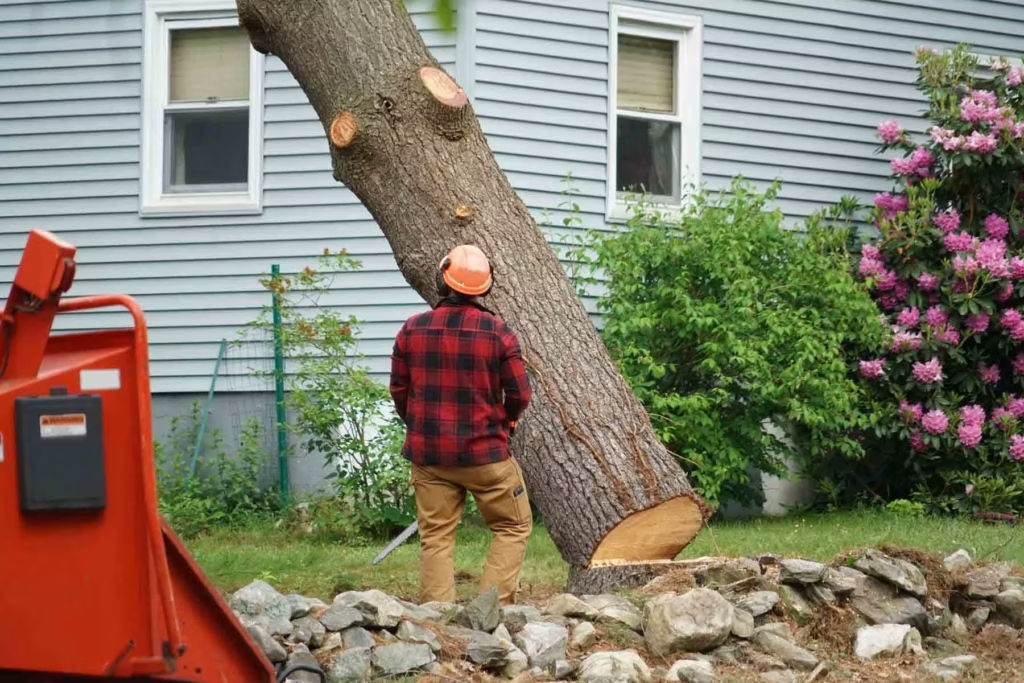
For 2026, most Central NJ homeowners will see tree removal quotes around $300–$900 for small trees under 30 ft, $900–$2,500 for medium 30–60 ft trees, $2,500–$5,500 for large 60–80 ft trees, and $5,500–$15,000+ for very large 80+ ft or highly complex removals. On top of that, expect $150–$500 per stump for typical stump grinding.
Central NJ Tree Removal Average Pricing by Size (2026)
| Tree Size Category | Height Range (ft) | Typical Trunk Diameter (in) | Central NJ Price Range (USD) | Typical Method | Time on Site (hrs) |
|---|---|---|---|---|---|
| Small ornamental / fruit | Under 30 ft | Up to ~12 in | $300 – $900 | Standard felling or light rigging | 1 – 3 hours |
| Medium shade tree | 30 – 60 ft | 12 – 24 in | $900 – $2,500 | Climbing & rigging; bucket truck | 3 – 6 hours |
| Large mature tree | 60 – 80 ft | 24 – 36 in | $2,500 – $5,500 | Advanced rigging, possible crane | 6 – 10+ hours |
| Very large/complex | 80+ ft | 36+ in | $5,500 – $15,000+ | Crane-assisted removal, heavy rigging | 1 – 2 days |
Those ranges line up with a typical Somerset County tree removal average and most nearby Central NJ counties, assuming the crew can get trucks fairly close and the tree is not a complete disaster. Once a tree is dead, hollow, leaning hard, or storm-damaged over a house or service line, you can expect a hazard tree surcharge, especially in tighter suburban lots.
Stump-related work usually lives on a different line of the estimate. The base price is for the tree coming down and the main wood getting moved. If you want the stump gone too, that’s almost always priced separately. For deeper detail on what drives stump grinding pricing, see our service page.
What Factors Affect Tree Removal Cost in NJ? (7 Price Variables)
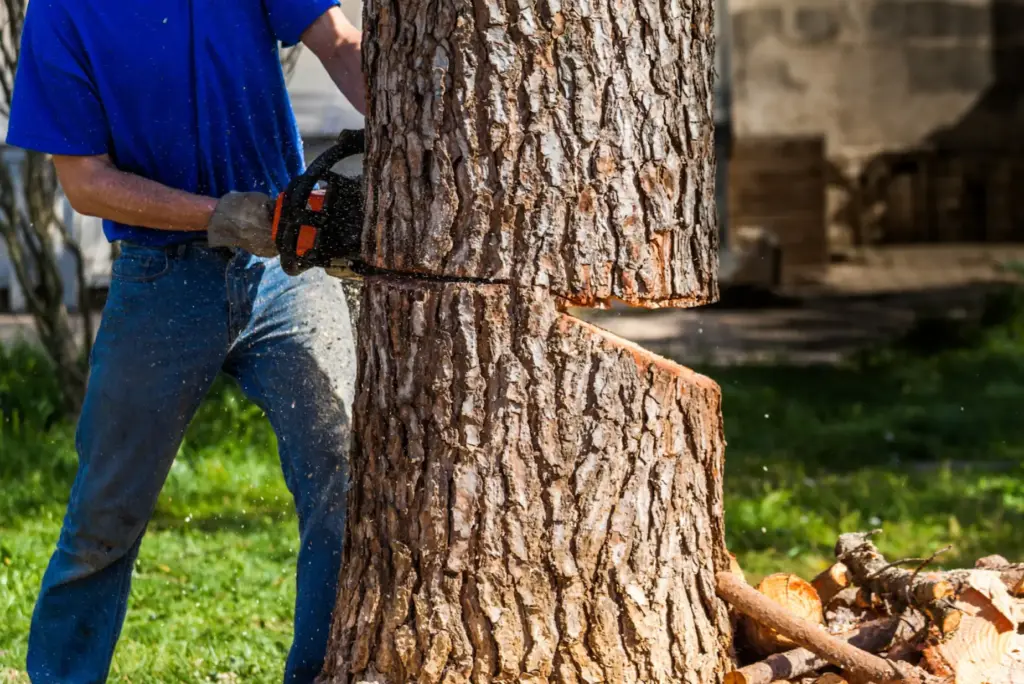
Tree removal cost in Central NJ is never just “height times a number.” You’re looking at a mix of tree characteristics, site conditions, and regulatory requirements. The big levers are tree height, trunk diameter, species hardness, proximity to homes and utilities, access for equipment, crane needs, and any NJ municipal permit fees tied to your town’s ordinance.
1. Tree Size & Species
Size is the first thing any experienced estimator looks at. Bigger trees mean more weight in the canopy, more cuts to make, more material to move, and often bigger machines in the street.
- Canopy height factor: As the canopy stretches higher, the job slows down. Crews spend more time climbing, moving rigging, and working around wind and lean. In Central NJ, jumping from a 30 ft ornamental to a 70 ft oak can easily triple the labor and the cost.
- Trunk diameter/caliper: Many NJ tree services use cost per caliper inch as a starting point. For example:
- 15–20 in: often $25–$40 per inch, assuming decent access
- 20–30 in: often $30–$50 per inch, as the weight and rigging complexity ramp up
- 30+ in: usually custom pricing, because big trunks in tight neighborhoods behave differently every time
- Species hardness: A 70 ft red oak is a different animal than a 70 ft spruce. Hardwoods like oak, hickory, and maple are dense and heavy, which beats on chains, saws, and chipper knives and slows production. Softer trees like pine or spruce are lighter and often quicker to process, so they sometimes fall at the lower end of the range for the same size.
- Tree health: Dead or decayed trees are one of the biggest wild cards. Limbs that snap without warning mean the climber has to over-rig everything, move slower, and sometimes avoid climbing entirely. That is where you see a hazard tree surcharge stacked on what would otherwise be a routine job.
Example from the field: A 40 ft ornamental cherry out in the middle of a flat yard with driveway access might run $700–$1,100. A 40 ft dead ash leaning over a detached garage in a tight back corner can jump into the $1,500–$2,000+ range once you factor in extra rigging and slower, safer cuts.
2. Proximity to Structures & Utilities
Now we get to where most homeowners feel the price. The closer that tree is to roofs, fences, sheds, or wires, the less margin for error the crew has. That calls for smaller pieces, more control, and more time.
- Proximity to structure surcharge: Trees that hang over roofs, gutters, fences, sheds, decks, pools, or paved driveways need every chunk tied, held, and lowered. Instead of dropping 8-foot logs into a lawn, the crew is cutting 3-foot pieces and swinging them to a landing zone. That kind of precision can add 20–50% over the cost of the same tree in an open field.
- Utility line clearance cost:
- If branches are within reach of power lines, the tree service has to treat the area with a lot more respect. That usually means more time and sometimes bringing in insulated equipment or different techniques.
- For live primary lines, JCP&L utility clearance or PSE&G utility coordination may be required. In many cases, the utility has to trim or drop service lines before your tree company can touch the tree safely.
- Every bit of back-and-forth with the utility and extra caution around energized lines slows the job and bumps up the quote.
- Underground utilities: Trees near water services, sewer lines, gas laterals, or septic systems require more careful stump and root work. Sometimes we’ll call for ground marking before grinding, or we limit how deep and wide we grind to avoid breaking pipes. That caution can nudge costs up, especially on big stumps.
3. Crane vs. Traditional Rigging
In a lot of older Central NJ neighborhoods, yards are narrow, driveways are tight, and trees have grown over houses for decades. In those spots, a crane-assisted removal is often the safest and fastest option, even if it feels like overkill to the homeowner.
| Method | Typical Use Case | Added Cost vs Rigging | Site Requirements |
|---|---|---|---|
| Traditional rigging | Open access, smaller trees, limited overhang | Baseline cost | Space for bucket truck or safe climber access |
| Crane-assisted removal | Over house, tight lots, 80+ ft trees, hazard trees | $1,000 – $4,000+ crane removal surcharge | Stable setup area; 50–100+ ft of reach for crane boom |
Crane-assisted removal NJ – typical attributes:
- Crane rental cost Central NJ: For a full-day setup in this region, you’re usually looking at $1,500–$3,000 per day depending on crane size, duration, and travel.
- Lot access requirement: Most cranes need a driveway or street spot with at least 10–15 ft width and solid, level ground for outriggers. Soft lawns, septic fields, or steep slopes can limit crane use or force the use of a larger, longer-reaching unit.
- Typical use cases: We bring cranes out for trees growing directly over homes, garages, patios, pools, or those wedged in tiny backyards with no safe drop zone. They’re also common for massive 80+ ft trees that would be brutal to rig down by hand.
- Road closure permit NJ: If we have to park the crane in the roadway, most towns want traffic control and a short-term road closure or right-of-way permit. That adds fees and a bit of planning time before the job even starts.
4. Permit Fees & Local Regulations
Central NJ is not the Wild West anymore for tree work. Many towns, especially across Somerset County (including tree service Hillsborough coverage area), have tree protection ordinances that dictate when you can remove a tree, what you pay the town, and how many you must replant afterward.
- NJ municipal permit fee: Expect a range of about $50–$200 per tree. Some towns charge a per-tree fee, others set a flat amount per application no matter how many trees you list.
- Replacement tree requirement: A lot of towns require one or more replacement trees for every “significant” tree removed. That might mean a 1:1 or 2:1 ratio once the trunk passes a certain diameter, like 6–8 inches at breast height. If you don’t have room, you may be allowed to pay into a municipal tree fund instead of planting yourself.
- Processing time: Standard processing time runs about 1–4 weeks. If your property touches wetlands, steep slopes, or a special zoning district, expect it to take longer, especially if a board review is needed.
- Licensed service handling: Most good NJ companies will fold permit help into their service. They’ll sketch basic site plans, provide species lists and diameters, and sometimes submit the paperwork on your behalf so you’re not chasing forms on your own.
If you want a more detailed look at how permit fees add to cost and how they interact with replacement requirements, see our NJ permit fees explained guide.
NJ Permit Costs Added to Tree Removal (Somerset County 2026)
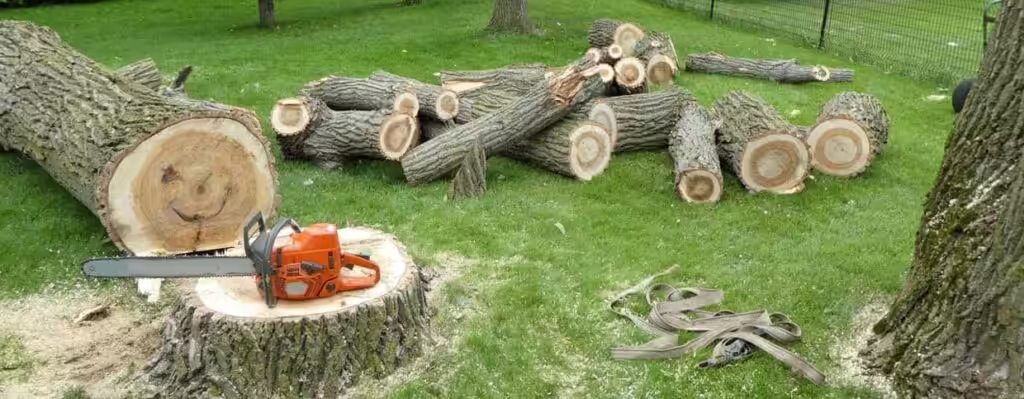
Across Somerset County and the surrounding Central NJ area, you should budget for tree removal permits in the $50–$200 per tree range for 2026. Some towns push towards the high end for large or “landmark” trees and may attach conditions such as replanting or escrow deposits. Most NJTC licensed tree services will walk you through the permit process and bundle the paperwork into your overall quote.
Typical NJ Municipal Permit Fee Structure
| Attribute | Typical Range / Notes |
|---|---|
| Typical fee range | $50–$200 per tree, sometimes replaced by a single flat fee per application |
| Replacement tree requirement | Often a 1:1 or 2:1 replacement ratio for “significant” trees, usually over 6–8 in diameter |
| Processing time | Generally about 1–4 weeks; longer for sensitive sites or major construction |
| Variation by municipality | Yes. Every township, borough, and city writes its own tree ordinance and sets its own size thresholds. |
| Licensed service handling | Most established companies collect measurements and photos, mark trees on a simple plan, and submit or assist with the application. |
Somerset County Examples (Typical Patterns)
Each town is a little different, but across Somerset County you’ll often see a few common patterns in the code and on permit forms:
- Permits needed before removing:
- Trees over a certain trunk size, usually 6–10 in diameter at breast height
- Trees in front yards or near property lines that affect the streetscape
- Trees on lots involved in construction, additions, or larger renovations
- Extra conditions such as:
- A brief arborist report if the tree is healthy but removed for construction or view
- Fee reductions or waivers if the tree is clearly dead, dying, or hazardous
- Replanting plans or escrow deposits to make sure replacement trees actually go in
Important: Cutting a regulated tree without a permit can lead to fines bigger than what the removal itself would have cost. Some towns will even require you to replant anyway. Always check whether you need a permit before the saws start, and lean on your NJTC licensed arborist if you’re not sure how your town interprets its own rules.
Additional Costs: Stump Grinding, Hauling & Cleanup
The base tree removal price in Central NJ usually covers one thing: safely getting the tree on the ground and moving the main pieces away from the fall zone. Everything beyond that, from grinding stumps to hauling chips, is extra unless it’s spelled out in the scope.
Typical pricing in Central NJ puts stump grinding in the $150–$500 per stump range depending on diameter and access — treat it as a stump grinding as add-on cost when budgeting. Debris hauling often runs around $75–$250 per truck load. If you want firewood-length logs cut and stacked or a meticulous, rake-level cleanup, those are often add-ons too.
Stump Grinding Central NJ – Typical Pricing
| Attribute | Typical Value (Central NJ) |
|---|---|
| Cost per stump diameter inch | About $3–$8 per inch, measured across the widest part of the stump above grade |
| Minimum charge | Often $150–$200 per visit to cover travel and setup |
| Grinding depth | Typically 6–12 inches below grade, with deeper grinding if you plan to replant or install hardscape |
| Cleanup included? | Varies by company. Some haul away grindings, others leave chips on-site and rake them roughly smooth. |
| Root grinding add-on | Commonly an extra $50–$200 depending on how far the surface roots extend |
If you’re doing a stump cost comparison between full removal and grinding, keep in mind that grinding is usually cheaper up front but leaves roots in the ground. Full root removal is more invasive and pricey, but it gives you a clean slate for patios, driveways, or new planting. For a closer comparison of those options, see:
Root Ball Removal Cost
Standard stump grinding chews the stump down below the surface. It does not yank the entire root system out of the ground. If you want the whole root ball gone, especially on a big hardwood, you’re moving into excavation work.
- That usually means bringing in a mini-excavator or skid steer to dig around and under the root mass.
- The root ball comes out with a lot of soil stuck to it, which makes it incredibly heavy and bulky.
- You then pay extra debris hauling fees because those machines fill trucks fast with dirt and wood mixed together.
Realistically, root ball removal cost starts around $300–$600+ for small trees where access is easy. For larger trees or tight yards, it can go north of $1,000, especially if the operator has to be delicate around utilities or irrigation.
Debris Hauling, Firewood & Cleanup
- Debris hauling fee: Every load of chips, limbs, and logs leaving your property has a disposal cost, fuel, and labor behind it. Expect $75–$250+ depending on truck size and the number of trips. Some companies absorb a basic amount of hauling into the main price, others itemize each load.
- Log removal vs. firewood processing:
- Standard practice is to cut the tree down and remove logs from the site unless you ask otherwise.
- If you want logs cut into firewood lengths and stacked, that’s a dedicated add-on, often $100–$300+ depending on how many cords worth of wood you’re talking about.
- Full cleanup: A bare-bones quote might only include basic raking in the work zone. If you’re expecting every twig blown off the lawn, beds cleaned up, and walks spotless, ask if “broom-clean” or “full cleanup” is built into the number. Many times that level of detail adds time and cost.
For more detail on specialty stump and root work and how it affects total budget, visit:
How to Save Money on Tree Removal in Central NJ
You can trim down your Central NJ tree removal estimate without sacrificing safety. The trick is to be smart about timing and scope rather than trying to talk a crew into cutting corners or working without the right gear.
In practice, scheduling in the off-season, grouping multiple trees into one visit, and being flexible about wood and chip removal can take a noticeable bite out of your bill. Bundling stump grinding with the removal usually costs less than calling a stump-only outfit weeks later.
Before you compare quotes, make sure removal is actually the right call — our what removal costs after diagnosis guide explains when removal beats treatment.
Smart Ways to Cut Costs (Without Cutting Safety)
- Off-season scheduling: Winter and early spring in Central NJ tend to be slower, especially outside of major storms. Crews are looking to keep schedules full, which can open the door to sharper pricing or willingness to negotiate a bit when they’re not backed up for weeks.
- Multi-tree discount: If you’ve got several trees on the chopping block, taking them all out in one mobilization is usually far more cost-effective than piecemeal work. Many companies offer a multi-tree discount whenever they can keep the same crew and equipment on your property for a full day.
- Keep wood on-site: Disposal fees and dump runs add real cost on our side. If you have room for a log pile or want to season your own firewood, ask the estimator what you can save by keeping some or all of the wood. Even leaving chips on-site instead of hauling them can trim debris hauling fees.
- Bundle stump grinding: Having the stumps ground during the removal visit is almost always cheaper than bringing out a stump grinder later. The equipment and crew are already mobilized, and the overhead for a return trip disappears.
- Flexible timing: If your tree is not actively threatening the house, let the company know you’re flexible. Many crews will slip you into a “fill-in” slot or tie your job to another one nearby, which can reduce costs since travel and setup are shared.
Why You Should Never Use Unlicensed or Uninsured Operators
I see this mistake over and over. Someone chases the lowest price and ends up taking on the liability that a proper contractor should have covered. Tree work is not like mowing. Things go bad in a hurry when something slips.
- Licensing: New Jersey expects professional tree outfits to carry an NJ Tree Expert / NJTC license for real tree work. That means training in safe removal and proper pruning practices, plus some accountability if something goes sideways.
- NJ contractor liability insurance: If an uninsured worker falls, or a limb crushes your neighbor’s car, you do not want that claim landing in your lap. Proper NJ contractor liability insurance and workers’ comp protect you and the crew doing the work.
- Permit compliance: Fly-by-night crews often skip permits because they don’t want the paperwork or the oversight. That shortcut exposes you to fines, stop-work orders, or demands to replant at your expense.
Always ask for the company’s NJTC number and a current certificate of insurance. A legitimate outfit will send both without blinking. If you’re ready to compare options, you can always get a free tree removal estimate from a licensed Central NJ provider:
What to Expect During a Tree Removal Estimate in NJ
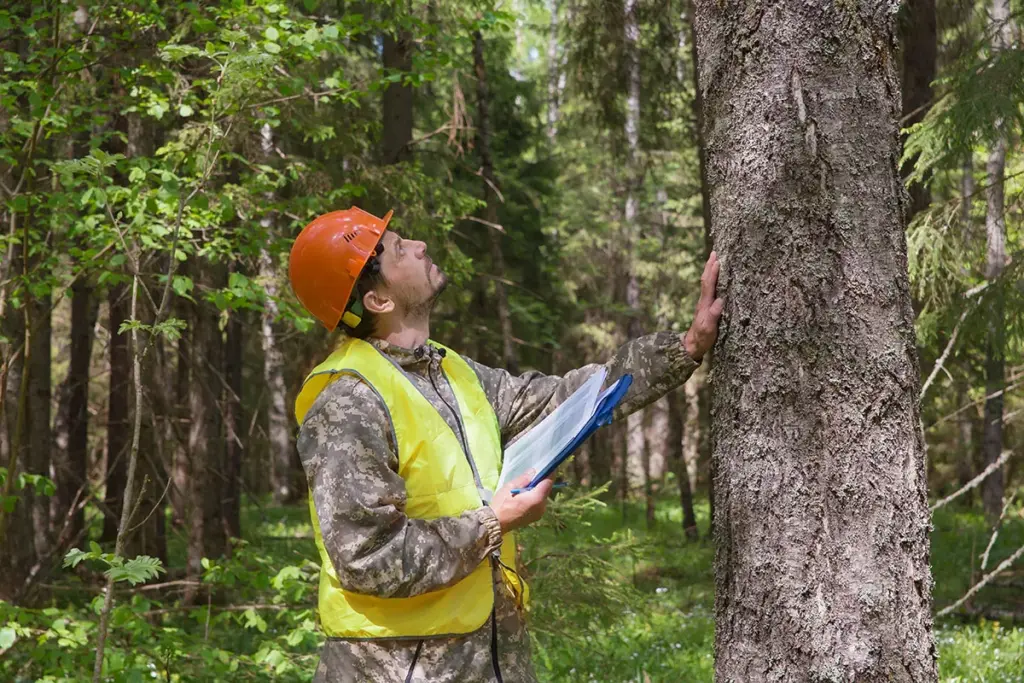
A real NJ tree removal estimate is not a quick guess from the street. In Central NJ, a reputable company sends someone who actually knows trees, ideally an NJTC licensed arborist who can look at structure, species, and risk, not just height. On site, they’ll size up your trees, talk with you about your goals, figure out whether standard rigging is enough or if crane-assisted removal makes more sense, and check if any permit fee NJ municipality issues or JCP&L/PSE&G coordination will slow things down or increase cost.
Typical Components of an NJ Tree Removal Estimate
For a vetting checklist, see what a licensed estimate includes from a licensed crew.
| Attribute | Standard Practice |
|---|---|
| Estimate cost | Usually free for residential jobs in Central NJ, especially for larger or multi-tree projects |
| Assessment includes | Species ID, canopy height, trunk diameter, access and drop zones, method (rig/crane), hazard rating, and permit/utility check |
| License verification | Company provides an NJTC number or NJ Licensed Tree Expert info if you ask |
| Insurance documentation | Certificate of general liability and workers’ compensation available, usually emailed before work starts |
| Written quote | Itemized scope that spells out what’s included. Things like wood handling, stumps, cleanup level, permits, and any crane surcharges. |
Step-by-Step: The NJ Tree Removal Estimate Process
- Initial contact: You call, email, or submit a form with your address, number of trees, and what’s worrying you: lean, fungus, branches over the roof, whatever you’re seeing from the ground.
- Scheduling the visit: The office books a time window. Some companies ask for photos or videos ahead of time to see if there’s obvious crane-assisted removal written all over the job.
- On-site evaluation: An estimator or NJTC licensed arborist walks your property. They measure approximate canopy height, estimate trunk diameter, check for defects, and look at access points for trucks, chippers, and possibly a crane. They also note any nearby utilities.
- Discussing goals: You explain whether you’re looking for full removals, selective pruning, stump grinding, or future plans like patios or driveways that might require root removal. This helps us recommend the right level of work.
- Method recommendation: Based on the tree’s condition and the site, the estimator explains whether standard rigging or crane-assisted removal makes the most sense. They’ll also flag any need for PSE&G utility coordination or JCP&L utility clearance if wires are a factor.
- Permit check: The estimator confirms your municipality and roughly outlines whether a NJ municipal permit fee, replacement planting, or an arborist letter is likely part of the process.
- Written estimate: You receive a clear, written quote, typically by email. It should show per-tree pricing or a total for the project, call out stump grinding separately, and list handling of wood, chips, hauling, cleanup, permits, and cranes where relevant.
- Scheduling and deposit: Once you approve, the company gets permits moving, schedules the crew, and may request a small deposit for large, multi-day, or crane jobs. The remainder is usually due only after work is completed and you’ve walked the site.
Red Flags During an Estimate
- The estimator only gives you a verbal “ballpark” with nothing in writing or refuses to email a proper quote.
- They dodge or delay when you ask for proof of NJ contractor liability insurance or an NJTC license.
- They make no mention of permits even though you’re removing big front-yard trees in a town everyone knows is strict about tree ordinances.
- The quote is dramatically lower than others, especially for crane work. That often means someone is gambling with safety, skipping insurance, or cutting out permit and utility coordination.
For homeowners in specific towns like Hillsborough, you’ll want to look at local guidance and services that understand your exact ordinances and typical site conditions:
Common Mistakes Homeowners Make (and How to Avoid Them)
Knowing how much tree removal costs in NJ is only half the battle. The most painful surprises usually come from misunderstandings about what’s in the quote or from hiring the wrong outfit for a complicated job.
- Mistake 1: Assuming stump grinding is included. Fix: Ask the estimator to show the tree removal price and the stump grinding add-on as separate items. Get clarity on how deep they grind and whether they haul grindings or leave them in place.
- Mistake 2: Ignoring permit requirements. Fix: Either call your town directly or have your tree service verify if you need a permit and replacement trees. Work the NJ municipal permit fee and permit timing into your plan so you’re not delayed or fined after the fact.
- Mistake 3: Not clarifying debris hauling and cleanup. Fix: Ask whether debris hauling fees are included or charged per load, and what “cleanup” looks like in their eyes. Have it written into the quote so expectations match what the crew delivers.
- Mistake 4: Choosing the lowest bid without checking credentials. Fix: Always check NJTC licensing, reviews, and insurance certificates before you let someone start cutting. A low bid from an unlicensed and uninsured crew can explode into huge costs if something goes wrong.
- Mistake 5: Not disclosing underground utilities or septic systems. Fix: Tell your estimator about septic tanks, leach fields, gas lines, irrigation, and any other buried utilities near the tree. They may need line marking or a modified plan for stump and root work to avoid expensive damage.
- Mistake 6: Waiting until the tree becomes a true emergency. Fix: If a tree is clearly declining, leaning more each season, or shedding heavy deadwood, schedule removal before storms turn it into an emergency removal premium situation. Planned work almost always costs less than calling a crew out in the middle of a crisis.
FAQ: Tree Removal Cost in Central NJ (2026)
Here are straight answers to the cost questions Central NJ homeowners ask most often.
How much does tree removal cost in NJ on average?
The average cost of tree removal in New Jersey for a typical residential job usually falls between $900 and $3,500 per tree. Smaller ornamental trees with good access might land in the $300–$900 range. Larger trees near houses, driveways, or power lines that require cranes or utility help can jump to $5,500–$15,000+, especially for multi-day projects.
What is the tree removal price in Somerset County specifically?
The tree removal price in Somerset County tracks closely with other Central NJ areas but often runs a bit higher in towns with strict tree ordinances and heavier permit requirements. Most single-tree jobs will fall between $1,000 and $4,000, with particularly large or tightly located trees costing more once you add permit fees, crane surcharges, and time lost to tricky access.
Does tree removal cost per foot in NJ, or is it per tree?
Most companies quote per-tree pricing based on size categories like small, medium, large, and very large. You may hear talk of tree removal cost per foot in NJ or cost per caliper inch as starting points, but the final number also folds in access, risk, structure proximity, and whether special equipment like cranes or larger chippers are needed.
Is stump grinding usually included in NJ tree removal quotes?
In Central NJ, stump grinding is often not included in a basic tree removal quote. Instead, you’ll see it as a separate stump grinding add-on with its own price, commonly $150–$500 per stump depending on stump size, depth requested, and chip cleanup.
Will my homeowner’s insurance pay for tree removal?
Homeowner’s insurance usually only helps with tree removal when the tree is damaged by a covered event, like wind, lightning, or ice, and actually hits a covered structure such as your house, garage, or fence. Proactive removals, even for trees that look risky, are typically treated as normal maintenance and are not covered. You’re paying for those out of pocket.
Why is emergency or same-day tree removal more expensive?
Emergency tree removal and same-day removal cost more because the company has to tear up its schedule, possibly call in overtime crews, and work in less-than-ideal conditions. Downed lines, unstable trunks, and night work all slow things down. That’s why an emergency removal premium of 25–100% over standard rates is common, especially for hazard trees on roofs or blocking driveways and exits.
Are there cheaper options than full removal?
Sometimes. If the tree is healthy but just crowding the house or driveway, targeted pruning or a careful crown reduction might solve the issue for less money. But if the tree is structurally compromised or diseased, full removal is usually the only honest recommendation. Chopping at a failing tree a little at a time often just delays the bill and pushes the final job into emergency territory.
How do payment structures usually work for tree removal in NJ?
Most reputable Central NJ tree companies collect payment upon completion, with a small deposit sometimes required for large, multi-day, or crane-heavy projects. Typical payment options include check, credit card, and electronic transfer. Be wary of anyone demanding a large up-front payment before mobilizing, especially if you have no long-term relationship with them.
Can I get a discount if I let them keep the wood or chips?
In some cases, yes. Certain companies view clean hardwood logs or chip loads as having some resale value or at least offsetting disposal costs. Allowing them to keep all the wood and chips, or leaving chips on-site, can sometimes lower your total cost, but it is not guaranteed. Always ask during the estimate and have it spelled out in the quote if it affects the price.
What if I live in Hillsborough or another specific Central NJ town?
Each Central NJ town has its own tree mix, lot sizes, and ordinance quirks. Hillsborough will not look exactly like Bridgewater, and neither looks like Princeton. For town-specific pricing expectations and to confirm whether a permit is required before removal, check local resources or a contractor that regularly works in your municipality:
Final Summary: Planning Your Central NJ Tree Removal Budget
By 2026, tree removal cost in Central NJ is driven by a familiar set of factors: tree size and species, site access, proximity to structures and utilities, and local permit rules. For most homeowners, that translates to roughly $900–$3,500 per tree for standard removals, with the total rising when you add stump grinding, debris hauling, or crane-assisted removal. To keep surprises off your invoice, ask for an itemized, written quote from an NJTC licensed arborist that clearly lists:
- How they’re estimating height and trunk diameter for each tree
- Whether removal is standard rigging or crane-assisted removal
- Who is handling permits and what NJ municipal permit fee is expected
- What’s included for stump grinding, root ball removal, and yard cleanup
- Proof of liability and workers’ compensation insurance with your address listed as certificate holder, if needed
Once you have those details in hand, planning your Central NJ tree work stops feeling like a guessing game and starts looking like any other home project with clear numbers and a solid scope of work.