TL;DR: Emerald ash borer (EAB) is established in every New Jersey county and is on track to kill virtually every untreated ash. If you’ve got ash trees, do not wait. Confirm they’re ash, inspect for EAB signs, then decide fast whether to protect the tree or plan removal before it becomes a serious hazard.
Key Takeaways
- Emerald ash borer (Agrilus planipennis) is an invasive beetle whose larvae feed in the tree’s vascular tissue under the bark, slowly choking the tree by cutting off water and nutrient flow.
- EAB was first confirmed in New Jersey in 2014 and has spread across the state. All NJ ash trees are at risk, in both forests and front yards.
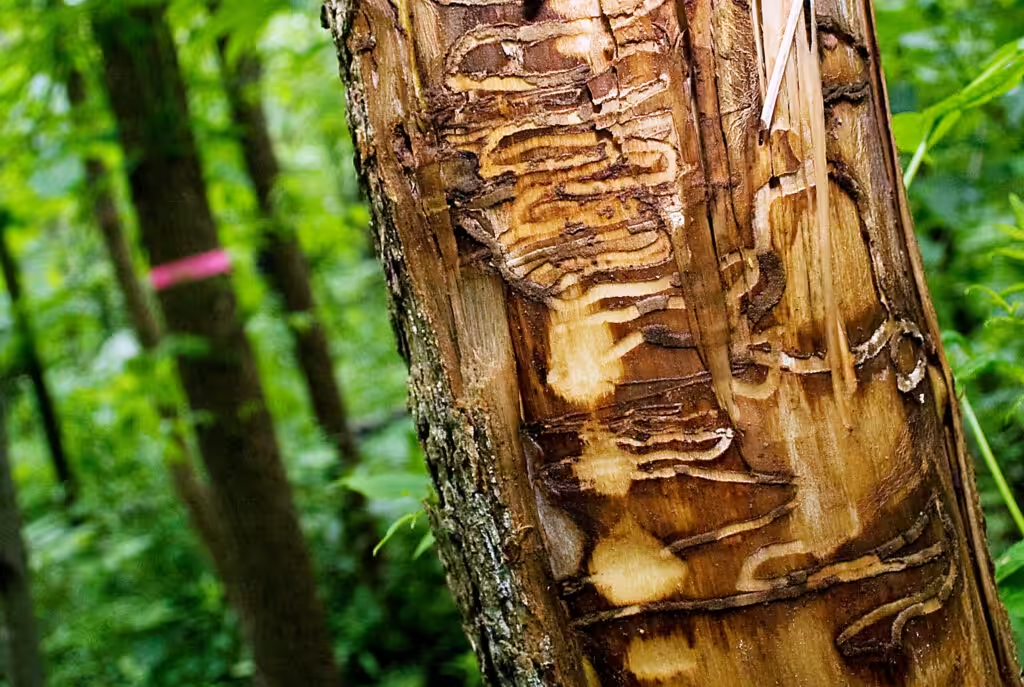
- Classic EAB clues include D-shaped exit holes, winding larval galleries under the bark, canopy thinning that starts at the top, bark splitting, heavy woodpecker activity, and epicormic sprouting on the trunk.
- White ash, green ash, and black ash growing in New Jersey neighborhoods, parks, and woodlands are all vulnerable. No native ash here has shown dependable resistance.
- Preventive trunk injections with emamectin benzoate (TREE-age) can shield suitable trees for up to two years. They work best before the tree loses more than about 30% of its canopy.
- Ash trees with over 50% canopy dieback, visible decay, or that stand over homes, driveways, or play areas usually need removal because they become brittle and dangerous.
- All of New Jersey is under an EAB quarantine. Under USDA APHIS rules, untreated ash firewood and raw ash logs cannot legally cross state lines.
- If removal is the only safe option, look at resilient ash replacement species that do well in central NJ, such as red oak, tulip poplar, sweetgum, and American hornbeam.
What Is Emerald Ash Borer (Quick Definition)
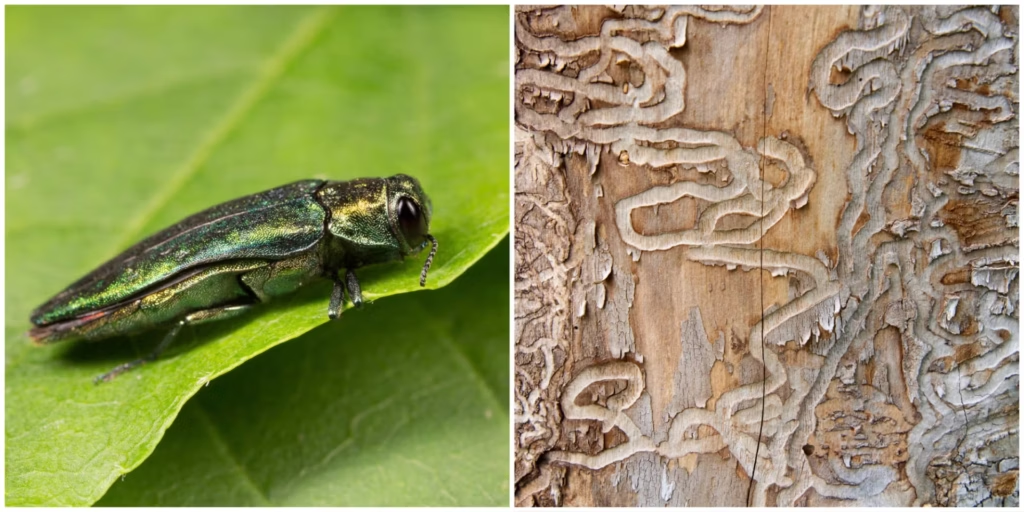
Emerald ash borer (EAB) is a small, metallic-green beetle (Agrilus planipennis) native to Asia that invades and kills ash trees. The larvae live under the bark, tunneling through the tissues that move water and nutrients. In New Jersey, an untreated infested ash usually dies within about 3–5 years, sometimes faster under heavy pressure.
What Is the Emerald Ash Borer and Why Is It Devastating NJ Ash Trees?
Emerald ash borer is an invasive wood-boring beetle that has torn through ash populations across much of North America. In New Jersey, it’s wiping out ash in backyards, along streets, and in forests at a pace most people have never seen from an insect before.
EAB is an invasive beetle from Asia that kills ash trees by eating the vascular tissue just under the bark. Since it was first confirmed in NJ in 2014, it has reached every county. All ash species in the state are susceptible, and untreated trees typically die within 3–5 years of infestation.
Emerald Ash Borer Basics
Scientific name: Agrilus planipennis
Origin: Asia (China, Korea, parts of Russia)
Host trees: All species in the genus Fraxinus (ash)
Adult EABs are small, roughly 1/2 inch long, and hard to spot unless you’re looking for them. They have bright metallic-green wing covers and a coppery-red body that you can see when the wings open. The adults nibble on ash leaves, which usually doesn’t hurt the tree much.
The real wrecking crew is the larval stage. Those creamy-white, flattened larvae live hidden beneath the bark. They feed in the inner bark and outer sapwood, right where the tree moves water and nutrients. That’s why an ash can look reasonably healthy one season and then crash quickly the next.
How EAB Kills Ash Trees
EAB larvae chew through the inner bark (phloem) and outer sapwood (xylem). As they feed, they carve serpentine galleries that twist and loop around the trunk and branches. Think of those galleries as cutting more and more “wires” in the tree’s plumbing and electrical system.
Over one or several seasons, enough of those channels get cut that the tree can’t keep the top of the crown supplied. Leaves at the top starve for water and nutrients, branches die back, and the damage works downward. Eventually the tree is functionally girdled and dies from the crown down, no matter how healthy it looked before the infestation.
Because EAB targets perfectly healthy ash as readily as stressed ones, many homeowners are blindsided. A tree that was casting good shade two summers ago can now be half bare, with dead tops and bark starting to peel.
Emerald Ash Borer in New Jersey
The NJ Department of Agriculture confirmed the first emerald ash borer infestation here in 2014. Since then, with monitoring help from the USDA APHIS EAB program and Rutgers Cooperative Extension, EAB has been detected in every county. At this point, professionals treat it as statewide and firmly established.
Ash was a popular street and shade tree for years because it was tough and adaptable. That means a lot of older neighborhoods, especially in central NJ counties like Somerset, Hunterdon, Middlesex, and nearby areas, ended up with dense pockets of ash. Now, those same blocks are facing mass decline at once.
Many towns have responded through NJ Community Forestry programs, tree inventories, and hazard assessments. You’ll see phased plans where municipalities decide which ash to treat, which to remove first, and how to replace them. On private property, you’re basically doing the same thing, just on a smaller scale.
How to Identify EAB Damage on Your Ash Trees
Catching emerald ash borer damage early gives you far better odds of saving a tree. The trouble is that the earliest signs are easy to miss or blame on drought, soil compaction, or storm damage.
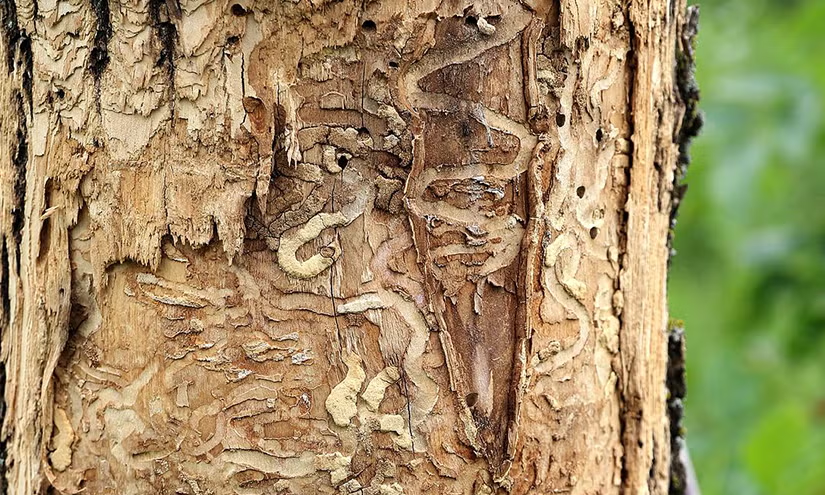
Signs of EAB include small D-shaped exit holes (around 3 mm across), winding larval galleries under the bark, thinning canopy starting at the top, heavy woodpecker activity, vertical bark splits, and epicormic sprouts growing on the trunk below dead crown sections.
D-Shaped Exit Holes
The classic calling card of emerald ash borer is the D-shaped exit hole left by adults when they chew their way out of the tree.
- Shape: Very distinctive, like a capital “D” lying on its side. One edge is fairly flat, the opposite side is rounded.
- Size: Roughly 1/8 inch (3–4 mm) across. Small, but once you know the look, you can pick them out at close range.
- Location: On the bark of the trunk and main branches. Early on you’ll often see them higher in the canopy, then later scattered all over the tree.
To spot them, look along sunlit areas of the trunk and larger branches. Lean a ladder safely or use binoculars from the ground to scan higher sections. A simple magnifying glass helps you tell these from round exit holes made by other insects. By the time you see lots of D-shaped holes at eye level, the infestation is usually well advanced. At that stage, you’re often past the sweet spot for treatment, which is why you want to be looking for all the symptoms together, not just exit holes.
Canopy Dieback Pattern
Most homeowners first notice emerald ash borer because the tree’s top looks thinner, or it just doesn’t leaf out like it used to compared to nearby trees in May or June.
- Top-down decline: EAB damage usually starts high in the crown and works downward. Dead tips show up at the top, then more branches fail over the next few years.
- Thinning foliage: Portions of the canopy look sparse, with fewer and smaller leaves. Some branches may not leaf out at all.
- Dead branches: First you’ll notice fine twigs dying back, then larger lateral branches go bare and brittle.
This top-down pattern happens because adults often feed and lay eggs higher up, so the larvae are damaging the upper plumbing first. Once that system is cut, those upper sections starve.
From a decision standpoint, the amount of live canopy left matters a lot. A tree with less than 30% canopy loss still has a realistic chance with treatment. Between 30–50%, it’s a judgment call depending on structure, location, and budget. Once you’re past 50% dieback, spending money on treatments is usually throwing good money after bad, and removal starts to make more sense.
Bark Splitting & Woodpecker Damage
As larval feeding ramps up, the bark can start to show the battle going on underneath.
- Bark splitting: You may see vertical cracks or sections where the bark is slightly lifted. If you carefully peel back a loose piece (on a branch you can reach safely), you’ll often find serpentine larval galleries in the wood beneath, packed with sawdust-like frass.
- Woodpecker feeding: Woodpeckers love EAB larvae. They hammer and flake off the bark in small chunks, leaving lighter patches that stand out against the darker bark. This “flecking” can cover big sections of trunk and limbs on a heavily infested tree.
In winter, when there are no leaves to hide anything, woodpecker damage is sometimes the easiest sign to pick up from the ground. If you see an ash with a patchy, scraped look on the upper trunk while other species nearby look normal, you should be suspicious of EAB.
Epicormic Sprouting
As the top of the tree starts to fail, the ash may try a last-ditch survival response. It throws out new shoots from places you normally don’t see growth. That’s epicormic sprouting.
- Location: Along the trunk, on big limbs below dead sections, or at the base near ground level.
- Appearance: Clusters of thin, broomy shoots with smaller leaves, often looking messy or out of place compared to the original canopy.
Those sprouts are the tree trying to put new foliage closer to the roots where some water and nutrients are still moving. On its own, epicormic growth could be from other stress. But when you see it on an ash, plus upper canopy dieback, plus maybe woodpecker activity, emerald ash borer jumps to the top of the suspect list in New Jersey.
For a fuller checklist of structural warning signs (cracks, lean, root issues) that may indicate a tree is unsafe and needs ash tree removal, see this guide:
Which NJ Ash Species Are Affected?
Every true ash species growing in New Jersey is vulnerable to the emerald ash borer. In the field, we just assume that if it’s an ash and it’s untreated, it’s on borrowed time.
All native New Jersey ash species are susceptible to EAB. That includes white ash (very common in central NJ yards and woodlots), green ash (often in wet areas and along streets), and black ash (less common, mostly in wetlands). None of these shows reliable resistance.
Key Ash Species in New Jersey
You’ll run into a few main ash species around central and northern NJ. Knowing which one you’ve got is useful, but from an emerald ash borer standpoint, they’re all at risk.
- White ash (Fraxinus americana)
– Very common in older neighborhoods, parks, and woodlots in Somerset, Hunterdon, Morris, and similar counties.
– Identification: Leaves are compound with mostly 7 leaflets, sometimes 5 or 9, all attached along a central stem. Leaves and buds are opposite on twigs. Mature bark has a distinct interlacing pattern that can look like diamond-shaped ridges. - Green ash (Fraxinus pennsylvanica)
– Frequently used along streets, in parking lots, and in low, wetter ground near streams and drainage areas.
– Identification: Also has opposite, compound leaves, typically 7–9 leaflets. Younger bark is relatively smooth, then becomes furrowed with age, usually without the sharply diamonded pattern you see on many white ash. - Black ash (Fraxinus nigra)
– Less frequent in landscapes and more associated with wetland woods and swamps.
– Identification: Usually 7–11 leaflets. The leaflets are often sessile, meaning no distinct stalk connecting each leaflet to the central stem. This species likes consistently wet, mucky soils.
How to Confirm You Have an Ash Tree
Before you stress over emerald ash borer, make sure the tree in question really is an ash. A lot of compound-leafed trees get lumped together by eye.
- Key ash identifier: Ash trees have opposite branching. Buds and leaves are set in opposing pairs. The leaves are compound, built from multiple leaflets attached to a single central stalk.
- Common look-alikes: Hickory and walnut also have compound leaves, but their buds and leaves are alternate, staggered along the twig instead of directly opposite each other. That simple check clears up a lot of misidentifications.
For a full breakdown of ash and alternative landscape trees for Somerset County, see:
Can You Save an EAB-Infested Ash Tree? (Treatment Options)
Many New Jersey homeowners look at a favorite ash that shades the house or anchors the yard and ask, “Can we save this one?” Sometimes you can. Sometimes you’re already too late. The key is how early you catch it and how sound the tree still is.
Preventive treatment works best, especially before you see a serious decline. Trunk injections with emamectin benzoate provide around two years of protection per treatment. Annual soil drenches with imidacloprid are an option for smaller trees. Trees with less than 30% canopy loss respond best. Over 50% dieback is usually not worth treating.
Understanding EAB Treatment Goals
The point of treatment is twofold. You’re trying to kill the EAB already in the tree and protect it from new attacks as adult beetles keep cycling through the area. In New Jersey right now, EAB pressure is high pretty much everywhere, so this is not a one-and-done situation.
If you commit to treatment, you’re signing up for a maintenance program. Depending on which product is used, you’ll be looking at injections roughly every other year or soil treatments every year, for as long as you want that ash in your landscape.
Trunk Injection with Emamectin Benzoate (TREE-age)
Emamectin benzoate is a systemic insecticide that’s injected directly into the trunk. One of the well-known brands is TREE-age. For medium and large ash in New Jersey, this is generally considered the most reliable emerald ash borer treatment right now. Key attributes of emamectin benzoate trunk injections:
- Trade name: Commonly sold as TREE-age or equivalent EAB-labeled products.
- Protection duration: Under typical NJ conditions, you can expect up to about 2 years of protection from a single injection cycle.
- Timing in NJ: Best in late spring, usually May through early June, when sap is moving and before peak larval feeding. That ensures the product gets distributed throughout the canopy.
- Tree condition threshold: Works best if the tree has under 30% canopy dieback. Between 30–50% is a gamble. Beyond 50%, the tree is usually too far gone for injections to be worthwhile.
- Cost per tree: In central New Jersey, a common ballpark is about $10–$15 per inch of trunk diameter measured at breast height (DBH). So a 16-inch ash might run $160–$240 per treatment, depending on the company, access, and site conditions.
These injections require the right tools, training, and pesticide license. They’re not a DIY project. When you’re getting estimates for emerald ash borer treatment in NJ, ask some pointed questions:
- Which product are you using, and at what labeled rate?
- Under local conditions, how long do you expect that treatment to protect this specific tree?
- What changes in canopy or structure would make you tell me to stop treating and plan removal instead?
Soil Drench and Soil Injection (Imidacloprid)
Imidacloprid is another systemic insecticide sometimes used for emerald ash borer through soil drenching or soil injection around the base of the tree. In practice, it fits best with smaller trees or as part of an early, lower-cost approach.
- Preferred use: Typically used on smaller ash, often under about 20 inches DBH, and in areas where EAB pressure is present but not yet overwhelming.
- Timing in NJ: Usually applied in early spring so the tree has time to pull the product up into the canopy before the heavy larval feeding period.
- Frequency: Most labels call for annual applications for ongoing protection.
Soil treatments come with more environmental considerations. Near wells, streams, ponds, or pollinator gardens, you need to be very careful and follow label directions exactly. In New Jersey, it’s wise to consult Rutgers Cooperative Extension recommendations or a licensed applicator before deciding that soil drenches are the right fit for your property.
Preventive vs. Curative Treatment
Preventive treatment means you start before the tree looks sick, or when symptoms are barely visible. From a mechanic’s perspective, this is like doing regular oil changes instead of waiting for the engine to seize. This approach gives you the best odds of keeping an ash healthy and is usually cheaper in the long run for high-value trees.
Curative treatment is where people get into trouble. The tree is already thinning out, maybe dropping big dead limbs, and they’re hoping injections will reverse everything. At that point, you’re fighting to stabilize, not restore.
- Under 30% canopy loss: Generally considered a solid candidate for treatment, as long as the tree is structurally sound.
- 30–50% canopy loss: Marginal. You may slow further decline, but you’re unlikely to get that full, dense canopy back. You weigh sentimental value and location heavily here.
- Over 50% canopy loss: The odds are poor. In most cases, money is better spent on safe removal and a replacement tree.
Expert Insight: When Treatment Makes Sense (and When It Doesn’t)
Treatment is worth considering if:
- The tree is in a key spot, shading the house, framing the front yard, or blocking a direct view of a road or neighbor.
- The structure checks out. No major trunk cracks, no big sections of decay, roots look stable, and no major lean over important targets.
- You’re ready to commit to repeated treatments. Expect injections roughly every two years or soil treatments yearly for as long as you want to keep that ash alive.
Treatment usually does NOT make sense if:
- The tree is already unsafe. Leaning hard, large limbs have failed, or there’s serious trunk or root decay.
- More than about 50% of the canopy is dead or missing.
- The tree sits in a back corner where you barely see it, and removal is straightforward and inexpensive compared to ongoing treatment.
If a certified arborist looks at your tree and recommends against treatment, they’re usually trying to keep you from sinking money into a losing battle. If they suggest removal, you can learn more about the process here:
When EAB Damage Means Removal Is Necessary
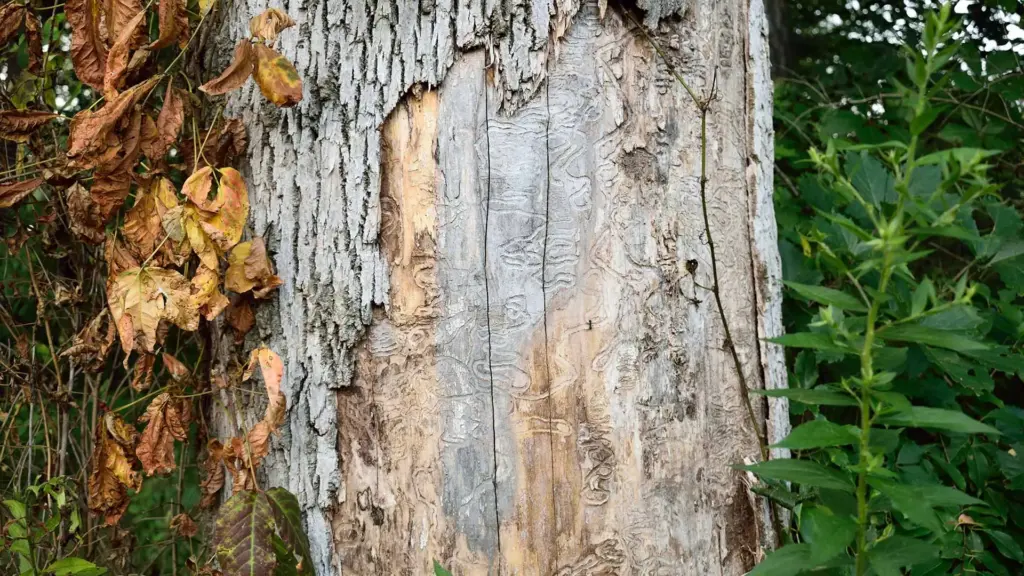
By the time many New Jersey homeowners notice emerald ash borer, the tree is already in rough shape. Once the structural integrity of the tree is compromised, removal stops being a choice and becomes a safety issue, especially near houses, driveways, or power lines.
Removal is typically necessary once canopy loss is around 50% or more, when larval galleries and decay have weakened the trunk or major limbs, when the tree is close to structures or utilities, or when an ash is dead and turning brittle, since dead ash fails quickly and unpredictably.
Canopy Loss and Structural Condition
Canopy condition is one of the easiest tools a homeowner has for deciding if an ash tree still has a shot or if it’s time to plan removal — see EAB as removal indicator for the warning signs.
- Treatable threshold: Under 30% canopy loss. Provided the trunk and roots look solid, treatment is still a good option.
- Questionable zone: 30–50% canopy loss. Here, you weigh the tree’s value, location, and your budget, and you really want an arborist’s eyes on it.
- Removal recommended: Over 50% canopy loss. At this stage, EAB damage is usually advanced enough that the odds of bringing the tree back to a safe, healthy condition are slim.
On top of canopy, look closely at the tree’s structure:
- Trunk integrity: Long vertical splits, sections where bark is gone and wood is exposed, or hollow, drummy-sounding areas are warning signs of serious internal problems.
- Root and base condition: Mushrooms or conks around the base, soft or crumbly wood, or soil heaving and cracking on one side of the trunk can signal instability and increased risk of failure.
Why Dead Ash Trees Are Especially Hazardous
Here’s one thing many people don’t realize until it’s too late: dead ash wood goes bad fast. Compared to a lot of other hardwoods, ash that’s been killed by emerald ash borer can become brittle and dangerous surprisingly quickly.
Within as little as 12–18 months after death, big limbs and even whole trunks can start snapping under wind load. The wood doesn’t flex much. It breaks. That’s why you see utilities, counties, and towns scrambling to get EAB-killed ash down along roads and under power lines.
For homeowners, that same brittleness makes climbing and rigging dead ash dangerous, even for pros. The longer you wait to remove a dead ash, the riskier and often more expensive the job can become.
When to Call a Professional
Bring in a qualified arborist or reputable tree service to assess removal if:
- The ash is larger than about 10–12 inches DBH and could hit your house, garage, shed, vehicles, pool, or play set if it fell.
- You see large dead limbs over areas you or your family use regularly, like a driveway, patio, or sidewalk.
- The tree has a noticeable lean, visible trunk cracks, or signs that the root system is lifting on one side.
Because EAB-killed ash can fail without much warning and is difficult and dangerous to climb, full removals are usually not a DIY project. Learn more about professional removal options here: Once the tree is down, you may want to deal with the stump grinding after ash removal too, especially in lawns or near walkways:
Emerald Ash Borer Lifecycle in New Jersey
Understanding the emerald ash borer’s lifecycle gives you a better sense of why treatment timing matters so much in New Jersey. The insect’s schedule and your treatment schedule need to line up.
| Lifecycle Stage | Typical Timing in NJ | Details |
|---|---|---|
| Adult emergence | Late May – early July | Adults chew out through D-shaped exit holes as spring warms into early summer. In many parts of NJ, June is the peak activity window. |
| Egg laying | ~1–2 weeks after emergence, continuing for several weeks | Females lay eggs in cracks and crevices of ash bark on trunks and larger branches. Eggs hatch after a short period and larvae enter the tree. |
| Larval feeding | Summer – fall (June – October) | Larvae tunnel into inner bark and outer sapwood and feed, creating serpentine galleries that disrupt the tree’s water and nutrient transport. |
| Pupation | Spring (April – May) | Most larvae overwinter in the tree, then pupate in spring and transform into adults just before emergence. |
| Generations per year | 1 generation annually in NJ | Each year’s larvae develop into adults that emerge the following late spring and summer, repeating the cycle. |
Treatment timing tip: Injections and most soil treatments in New Jersey are scheduled in spring. The goal is to get the product moving throughout the tree before the heaviest larval feeding and before the new generation of adults starts emerging.
NJ EAB Quarantine and Firewood Rules
Most long-distance jumps of emerald ash borer haven’t happened because beetles flew that far. They rode on trucks. Firewood, untreated logs, and other ash materials moved by people move the insect a lot faster than it can spread on its own.
All of New Jersey is within a federal EAB quarantine area. Regulated ash materials, including ash firewood, can’t be transported across state lines without proper compliance. State agencies urge residents to buy firewood locally and burn it where it’s bought, and to handle infested wood according to guidelines.
NJ EAB Quarantine Overview
| Attribute | Value in New Jersey |
|---|---|
| Quarantine area | Entire state of New Jersey |
| Firewood transport | No interstate transport of regulated ash materials (logs, untreated firewood) without meeting quarantine requirements. Residents are strongly advised not to move firewood long distances. |
| State regulatory authority | NJ Department of Agriculture |
| Federal authority | USDA APHIS (Animal and Plant Health Inspection Service) |
| Compliance | All New Jersey residents, landowners, and businesses that cut, sell, move, or process ash wood are responsible for following quarantine and wood movement rules. |
Firewood Best Practices
- Buy local, burn local: Get firewood near where you’ll use it, ideally in the same county or immediate region. Don’t haul a truckload of wood halfway across the state or into neighboring states.
- Don’t move ash firewood across state lines: Even clean-looking ash can hide EAB larvae or pupae under the bark, so it’s treated as a regulated material.
- Use kiln-dried or certified firewood when regulations or campgrounds require it. Properly heat-treated wood is much less likely to carry live pests.
Disposing of Infested Ash Wood
If you cut down a tree with emerald ash borer, the job isn’t finished until the wood is dealt with the right way. That keeps you in compliance and reduces the chance of spreading pests into new pockets.
- Have branches and smaller logs chipped into fine material, often less than 1 inch in size. That level of chipping is usually enough to destroy larvae and pupae.
- Use a licensed tree service or municipal yard waste program that understands and follows the EAB quarantine rules and proper disposal practices.
- Where local ordinances allow, burn ash wood on site rather than transporting it, especially if you’re in a more rural area. Always check local rules before burning.
A professional company experienced with emerald ash borer treatment in NJ and removals can explain your best options for handling infested material legally and safely.
Ash Tree Canopy Loss Assessment: When to Treat vs. Remove
Treatment and removal both have real costs, so you want a straightforward way to decide which path makes sense for each ash on your property. Looking at canopy loss in a structured way helps you avoid emotional or rushed decisions.
| Canopy Condition | Recommendation | Notes |
|---|---|---|
| Under 30% canopy loss | Treat (good candidate) | Start or continue trunk injection or soil treatment. Also confirm that trunk and root structure are sound before committing. |
| 30–50% canopy loss | Case-by-case | Consider sentimental value, the tree’s role in the landscape, and long-term costs. A professional arborist assessment is strongly recommended. |
| Over 50% canopy loss | Remove generally recommended | The tree has usually sustained too much internal damage to rebound. Focus on safety and planning an appropriate replacement. |
| Dead ash (0% live canopy) | Remove ASAP | Brittleness and structural hazard increase sharply within 12–18 months after death. Prioritize ash near buildings and high-use areas. |
Assessment method: Stand far enough back that you can see the entire crown, ideally from more than one angle. Estimate roughly what fraction of the canopy is dead or missing leaves compared with a healthy ash. An ISA Certified Arborist can refine that estimate and also factor in trunk, root, site conditions, and local targets that could be hit if the tree fails.
Replacement Species for Removed Ash Trees in Central NJ
Losing a mature ash is tough, especially if it’s been part of the property for decades. But removal also gives you a chance to replant with a species that’ll handle pests, disease, and climate swings better in the long run.
Strong ash replacement species options in central New Jersey include red oak for a similar large shade canopy, tulip poplar for quick shade, sweetgum for standout fall color, and American hornbeam for smaller yards. All perform well in Somerset County’s Zone 6b–7a conditions.
Recommended Ash Replacement Trees
The table below lists good replacements that match the general size, function, or look of ash without inheriting the same EAB vulnerability.
| Species | Size & Form | Benefits in Central NJ |
|---|---|---|
| Red oak (Quercus rubra) | Large shade tree, 60–75 ft tall, broad canopy | Reaches a size similar to many mature ash, offering strong shade. Has sturdy branch structure, attractive red fall color, and provides excellent habitat and food for wildlife. |
| Tulip poplar (Liriodendron tulipifera) | Very fast-growing, 70–90 ft tall | One of the fastest large shade trees for this area. Has showy tulip-like flowers in late spring and grows well in the deep, moist soils found in many parts of Somerset County. |
| Sweetgum (Liquidambar styraciflua) | Medium-large, 60–75 ft; pyramidal to oval | Known for outstanding fall color that can include yellow, orange, red, and purple. Quite adaptable on many central NJ sites, though the spiky seed balls can be an annoyance near walkways. |
| American hornbeam (Carpinus caroliniana) | Smaller, 20–35 ft; rounded form | Great for smaller lots and under utility lines. Features smooth, “muscular” looking bark, nice texture, and provides comfortable shade over patios or garden spaces. |
Expert tip: Don’t replace an ash with another ash. With emerald ash borer firmly entrenched across New Jersey, new ash plantings will face the same pressure and the same long-term problems.
To set your replacement tree up for success, proper species choice, planting depth, and aftercare all matter. You may want professional help to plant a replacement tree after ash removal:
Working with an Arborist in New Jersey
Guides are useful, but they don’t replace eyes on the tree. A qualified arborist or tree care company can look at your site, your soil, and each ash you have, then lay out realistic options that fit your budget and risk tolerance.
What to Ask a NJ Arborist About EAB
- Can you confirm that this tree is ash and that the symptoms I’m seeing match emerald ash borer rather than another problem?
- Roughly what percentage of canopy loss do you see, and does that make this tree a good candidate for emerald ash borer treatment or not?
- Do you recommend trunk injection, soil treatment, or no treatment here, and why?
- How long do you expect your recommended treatment to protect this tree, and what might the cost look like over the next 5–10 years?
- Do you see any structural issues, like trunk decay or root problems, that would make treatment unsafe or not worth the investment?
If you live in or near Hillsborough, NJ, and want local guidance on EAB and other tree concerns, learn more about tree care Hillsborough:
Common Mistakes NJ Homeowners Make with Emerald Ash Borer
I’ve seen a lot of people lose money and trees by repeating the same avoidable mistakes. A little awareness up front can save you a lot of headaches and surprise expenses later.
- Mistake 1: Waiting until the ash is almost dead to act Fix: Walk your property at least once a year and take a hard look at your ash. If you see early thinning at the top, D-shaped exit holes, or unusual woodpecker activity, schedule a professional assessment while treatment is still on the table.
- Mistake 2: Treating severely compromised trees Fix: Don’t pour money into injections or soil drenches on trees with more than about 50% canopy loss or obvious structural defects. In those cases, it usually makes more sense to put funds toward safe removal and a well-chosen replacement.
- Mistake 3: Ignoring dead ash trees as they deteriorate Fix: EAB-killed ash doesn’t stand up well for long. It gets brittle and fails unpredictably. If an ash is dead or nearly dead, especially over driveways, play areas, or buildings, get it on the removal schedule sooner rather than later.
- Mistake 4: DIY pesticide use without guidance Fix: If you’re going to use pesticides, follow Rutgers Cooperative Extension recommendations and the product label carefully, or bring in a licensed pro. Misuse can harm bees and other beneficial insects, contaminate water, and still fail to save the tree.
- Mistake 5: Moving infested firewood Fix: Treat ash firewood as suspect. Keep it local and respect NJ EAB quarantine rules. Never haul ash firewood to out-of-state campsites or friends’ houses, even if the wood looks clean.
- Mistake 6: Replanting ash as replacements Fix: Resist the temptation to replant with what you lost. Choose alternative species that are better suited to central NJ conditions and not vulnerable to emerald ash borer. That’s how you build a more resilient landscape over the long haul.
FAQ: Emerald Ash Borer in New Jersey
This FAQ tackles common homeowner questions about emerald ash borer in New Jersey, including typical treatment costs, best treatment timing, how to get a proper arborist assessment, how nearby untreated ash trees affect your risk, and how to confirm that your tree is actually an ash.
1. How much does emerald ash borer treatment cost in New Jersey?
Costs depend on tree size, access, and the method used. For trunk injections with emamectin benzoate (TREE-age or a similar product), many New Jersey homeowners pay around $10–$15 per inch of trunk diameter. That means a 16-inch ash often runs $160–$240 per treatment, repeated about every two years if you want continued protection.
2. When is the best time to treat ash trees for EAB in NJ?
In most of New Jersey, the sweet spot is spring. Trunk injections with emamectin benzoate are commonly scheduled in late spring (May–early June) when the tree is actively moving sap. Soil drenches or injections with imidacloprid are often applied a bit earlier in spring so the tree can pull the product into the canopy before peak larval activity.
3. How can I get my ash trees assessed for emerald ash borer?
Reach out to a reputable, insured tree care company or an ISA Certified Arborist and ask specifically for an EAB assessment. They should confirm that your tree is ash, estimate canopy loss, check structural health, look for emerald ash borer signs, and then walk you through treatment vs removal choices tailored to your property.
4. Do my neighbor’s untreated ash trees increase the risk to my treated tree?
Yes. A cluster of untreated ash nearby means more beetles in the area, which raises the overall pressure on your trees. That said, properly treated ash trees can remain protected even when neighbors don’t treat theirs. This is one reason consistent, long-term treatment is so important in New Jersey’s current EAB situation.
5. How can I tell if my tree is an ash or something similar?
Look for opposite branching. Ash buds and leaves appear in pairs directly across from each other on the twig. The leaves themselves are compound, made up of multiple leaflets on a central stalk. Trees like hickory and walnut also have compound leaves, but their twigs show alternate buds and leaves that zig-zag, not opposite each other.
6. How long after an ash tree dies does it become dangerous?
There’s no exact clock, but EAB-killed ash can become hazardous faster than many people expect. In many cases, within about 12–18 months after death, the tree starts getting brittle enough that large branches or the main stem can fail in storms or strong winds. If it can hit something valuable, don’t delay removal.
7. If I remove one ash, do I need to remove them all?
Not automatically. Each tree should be evaluated on its own. You might treat higher-value, structurally sound trees in good locations and remove others that are already showing advanced decline, are poorly placed, or don’t add much value. An arborist can help you prioritize which ash to treat and which to schedule for removal.
8. Will emerald ash borer go away if all ash trees are removed?
EAB numbers will drop as its favorite food source disappears, but the insect is now part of the landscape in New Jersey. Even as populations cycle up and down, any remaining ash or newly planted ash will stay vulnerable for the foreseeable future. That’s why alternative species are recommended for new plantings.
Final Summary: Protecting Your Property from Emerald Ash Borer in New Jersey
Emerald ash borer has changed what ash trees mean in New Jersey. If you have ash on your property, you’re facing a deadline. You can invest in treatment, plan for removal and replacement, or do nothing and accept a growing risk of sudden failure and storm damage.
Start by confirming that your tree is ash, then look closely for EAB signs. Use canopy loss as a guide, and weigh treatment vs. removal with realistic expectations about cost and longevity. A clear plan now is far better than scrambling after a big limb comes down in a nor’easter.
If you’re not sure how far along your ash trees are or which ones deserve investment, schedule a professional evaluation. A local tree care expert with experience handling emerald ash borer in New Jersey can help you decide where treatment makes sense, where removal is the safer path, and how to plant a replacement tree that will serve your property well for decades.