
TL;DR: Best Time to Prune Trees in Central NJ
In Central New Jersey (USDA hardiness zones 6b–7a), the safest and most effective time to prune most shade and ornamental trees is the dormant season, roughly from late November through early March. Trees are “asleep,” disease activity is low, and the tree can start sealing wounds as soon as spring growth kicks in. Any serious safety issue or obvious hazard gets pruned whenever you notice it, no matter the month.
Key Takeaways
- Ideal window: Late November–early March is the main NJ pruning calendar window for most Central NJ trees. That is when you handle most structural and larger cuts.
- Avoid heavy fall pruning: Big cuts in September–October often trigger tender new shoots that freeze, and those damaged points invite fungal problems later.
- Species matter: Oaks, maples, birch, fruit trees, and spring-flowering ornamentals all have specific timing rules. Treating them all the same is how people lose flowers or stress trees.
- Disease timing counts: Bad timing makes issues like oak wilt risk, bacterial leaf scorch, and fire blight more likely to spread or flare up.
- Summer pruning is limited: From May–August stick to light shaping, broken limbs, or targeted disease work. Avoid full-on “haircuts” in the heat.
- NJ weather is unique: Nor’easters, heavy wet snow, freeze-thaw swings, and how long the cambium is active make Central NJ pruning timing different than warmer Mid-Atlantic or Southern states.
- Safety overrides the calendar: Any limb that could hurt someone or damage property needs attention right away, no matter what the calendar says.
- Use standards: Follow ANSI A300 seasonal guidance and Rutgers Cooperative Extension recommendations for timing, how much to remove, and how to cut.
Quick Definitions: What Is a Tree Pruning Schedule for Central NJ?
Tree pruning schedule (Central NJ): A practical, species-aware calendar that tells you when to prune trees in New Jersey based on how they actually grow here. It considers:
- Local climate patterns in USDA hardiness zones 6b–7a
- Tree biology, including dormant season, growth flush, and cambium activity
- Regional disease and insect pressure common in Central NJ
- Safety concerns like nor’easter storms, ice loads, and heavy wet snow
Using a pruning schedule keeps NJ homeowners from guessing. It helps you pick the best time to trim trees so you protect tree health, lower disease risk, and manage hazards before storms turn them into real problems.
Quick Answer: Best Time to Prune Trees in Central NJ
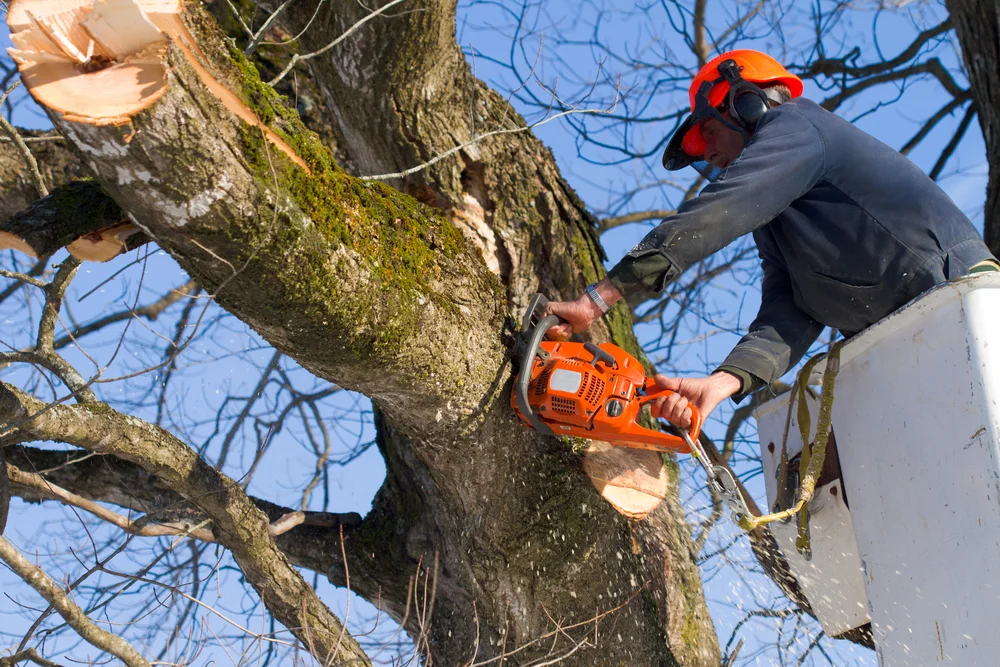
For most tree species in Central NJ yards, the sweet spot for pruning is late November through early March, during the dormant season. The tree is not pushing new growth, disease organisms are mostly quiet, and the cuts are ready to start sealing as soon as spring sap and cambium activity return. Emergency and hazard pruning is always on the table, no matter the time of year.
That’s the 10,000-foot view. The details matter. The rest of this guide walks you through your New Jersey pruning calendar by month and by species so you know exactly when to work on oaks, maples, birch, fruit trees, and flowering ornamentals in a Central NJ yard.
Central NJ Tree Pruning Calendar by Month
Short answer: November–March is best for most trees. April is the time for post-bloom work on spring-flowering trees. May–August is light-use only. September–October is a bad idea for major pruning in New Jersey unless you are dealing with a hazard. Central NJ falls mainly in USDA hardiness zone 6b–7a. Around here you typically see:
- Average first hard freeze: late October to early November
- Average last frost: late March to mid April
Those frost dates create the edges of your safe pruning windows. Push too hard on either side of that, and you start fighting freeze damage and slow wound closure.
November–March: Prime Dormant-Season Pruning (Best for Most Species)
This is the core of the NJ tree trimming season for shade and ornamental trees. By late November, leaves are usually off, growth has shut down, sap flow has eased, and most fungal diseases are taking the winter off.
- Best for: Oaks, maples, ash, elm, honeylocust, sycamore, many ornamentals, and most fruit trees in the late dormant period.
- Benefits:
- Far lower disease risk because most fungal spores and insect vectors are inactive in cold weather.
- You can clearly see branch structure, co-dominant leaders, and crossing branches without a wall of leaves in your way.
- Less sap flow and reduced “bleeding” on species like maples and birch when you time it toward mid to late winter.
- As soon as temperatures rise and cambium wakes up, the tree starts laying callus wood over pruning wounds.
- Nor’easter preparation: Late November–December is perfect for getting rid of weak, dead, cracked, or over-extended limbs that are just waiting for a heavy, wet snow or wind event to fail. Use this pre-storm pruning window to cut down post-storm cleanup later.
Rutgers Cooperative Extension pruning guidance and ANSI A300 seasonal guidance both point to dormant-season pruning for major work like structural correction, clearance over roofs and driveways, and bigger diameter cuts.
April: After Bloom for Spring-Flowering Trees
Once April hits in Central NJ, a lot of trees are coming out of dormancy fast. Sap is moving, buds are swelling, and many ornamentals are in full bloom. This is not when you start reshaping big shade trees. It is the right time to tackle many spring-flowering ornamentals once they finish their show.
- Prune after flowering: Dogwood, flowering cherry, crabapple, serviceberry, magnolia, forsythia, lilac, and similar trees and shrubs should be pruned right after they finish blooming if you want a good flower display again next year.
- Limit cuts: You are not rebuilding the tree here. Focus on:
- Dead, diseased, or damaged wood you can see clearly once the blossoms fall.
- Light thinning to improve air flow and clean up crowded spots.
- Crossing or rubbing branches that will cause wounds if left touching.
For non-flowering shade trees, push anything non-urgent back to the next dormant season. You will get better results and less stress on the tree.
May–August: Limited Summer Pruning Only
By May, most trees in Central NJ are fully leafed out and in an active growth flush. They are busy making food, thickening twigs, and building root reserves. Heavy pruning during this time is a good way to set them back. Big cuts from May through August can:
- Strip away too much foliage, which cuts the tree’s energy production.
- Stress trees during heat and dry spells, especially on poor or compacted soils.
- Expose previously shaded bark to direct sun and cause sunscald on thin-barked species.
Acceptable summer pruning uses:
- Safety and clearance: Raising low branches over driveways, walkways, sidewalks, and roofs, or keeping limbs clear of siding and gutters.
- Deadwood removal: Dead branches can be cut any time. In summer they are easier to spot because they lack leaves or have dry, brittle twigs.
- Disease control:
- Taking out fire blight-infected branches on pear and apple during dry weather and disinfecting tools between every single cut.
- Removing clearly cankered or infected branches on other trees to keep the problem from marching down the stem.
- Light thinning: Minor cuts to take some weight off the ends of long limbs before thunderstorm season, staying within ANSI A300 guidelines. That usually means no more than 25% live crown removal in a season, and less than that on mature trees.
As a rule, avoid major limb removal, topping, or heavy reshaping during summer in NJ unless you have a solid safety or disease justification. You can cause more problems than you solve.
September–October: Why to Avoid Major Pruning
Fall in Central NJ likes to tease you. You get nice warm days in September, sometimes early October, and then out of nowhere you get a hard freeze. That flip is exactly why fall pruning is risky here.
- Fresh pruning cuts in early fall often trigger new growth that has no chance to harden off before freezing temperatures hit.
- Those new shoots and soft tissues are easily freeze-damaged, which leaves brown, killed patches that decay fungi move into.
- Many decay and canker fungi are still releasing spores well into October, especially in damp, mild weather.
Acceptable fall work:
- Removing dead, broken, or clearly hazardous branches that could fail in the next storm.
- Very light corrective pruning on young trees if you missed something earlier in the year, but avoid large diameter cuts.
If the work is more than minor cleanup, put it on the list for the upcoming dormant season and get it scheduled early.
Species-Specific Pruning Timing for Central NJ
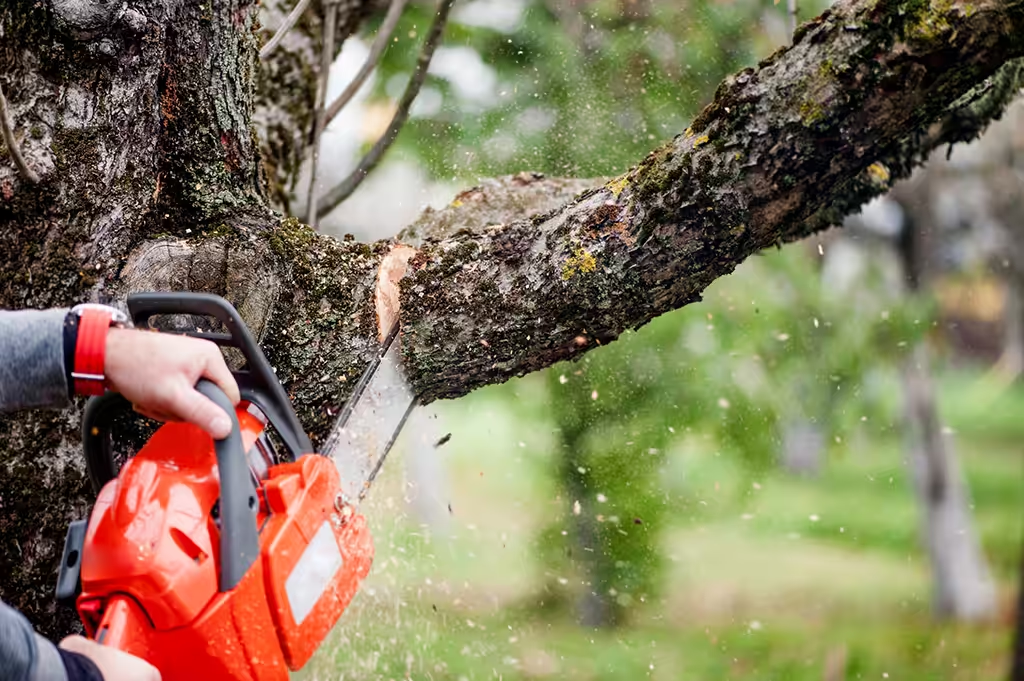
Short answer: Oaks want strict dormant-season pruning. Maples like late winter. Birch often do best with late summer or very late winter work. Fruit trees prefer late dormant pruning. Spring-flowering ornamentals want cuts right after bloom if you care about next year’s flowers.
Central NJ’s common landscape trees respond very differently to timing. Here’s a straightforward tree pruning schedule by species for NJ homeowners so you are not guessing your way through it.
Oaks (Red, White, Pin, Scarlet, and Others)
Oaks are unforgiving if you get the timing wrong. A lot of serious issues start with poorly timed oak cuts.
- Best time: Mid-December through February, the deep dormant stretch when things are good and cold.
- Avoid: Late spring through summer, when insect vectors and fungal pathogens are most active and attracted to fresh cuts.
Oak wilt and timing: Oak wilt is not running wild across NJ yet, but it is not something you want to help along. Best practice is to avoid pruning oaks during oak wilt vector season, which is usually late spring into summer when sap-feeding beetles are busy. Fresh cuts during that window can draw beetles that carry the fungus.
Bacterial leaf scorch and pruning: In Central NJ, bacterial leaf scorch is a long-term problem on red oaks, pin oaks, and some related species. Wrong-timed pruning can make things worse by:
- Putting extra stress on trees that are already struggling and pushing them further into decline.
- Spreading the pathogen if you move from tree to tree without disinfecting tools.
Follow Rutgers Cooperative Extension pruning guidance and keep pruning of suspect or infected oaks in the coldest dormant months. Use clean, disinfected tools and avoid unnecessary cuts. Key oak pruning rules for Central NJ:
- Schedule major oak pruning only in winter, especially December through February.
- In areas where oak wilt is a concern, follow local advice on sealing larger wounds and pay attention to any county or state recommendations.
- On mature oaks, be conservative. Limit how much live crown you remove so you do not shock the tree.
Maples & Birch
Maples and birch both “bleed” heavily if you cut them at the wrong time. That heavy sap flow is mostly a cosmetic problem, but it tells you the timing is off.
Maples (Red, Silver, Sugar, Norway, Japanese)
- Best time: Late winter, usually February to early March in Central NJ, just before buds really swell but before sap gushes at full force.
- Avoid: Early spring (March–April) when sap flow peaks. Pruning then often leads to long-lasting drips of sap from every cut.
Light pruning in summer for clearance or broken branches is fine if you keep it modest. Save structural work, crown thinning, and bigger cuts for the dormant season. Following ANSI A300 seasonal guidance, do not strip a mature maple of a heavy percentage of its live foliage all at once.
Birch (River, Paper, European White)
- Best time options:
- Late summer (around August) when sap flow has slowed down, or
- Very late winter (February) before growth wakes up.
- Avoid: Early spring, when birch will bleed almost nonstop from fresh cuts.
Birch in Central NJ are magnets for bronze birch borer if they are stressed. Heavy summer pruning, poor watering, or root damage give that insect exactly what it wants. Keep cuts on birch small and well thought-out, and avoid thinning them hard in the heat.
Fruit Trees (Apple, Pear, Peach, Plum, Cherry)
Fruit trees are a different animal. You are not only managing structure, you are managing production, light penetration, and disease pressure. Timing is a big piece of that puzzle in New Jersey.
- Best time: Late dormant season, generally late February through mid-March in Central NJ. You want to be past the harshest cold but still ahead of bud break.
- Fire blight pruning timing: On apples and pears, you handle blighted shoots by:
- Cutting during dry weather, not on damp, warm days.
- Taking your cut 8–12 inches below the last visible symptom.
- Disinfecting your tools between every cut so you do not spread the bacteria.
- Whenever possible, trying to do this work in late winter rather than high summer.
Why late dormant is best for fruit trees in NJ:
- You lower the chance of winter injury to the exposed tissue around your cuts.
- You have a clear view of branch angles, crossing limbs, and fruiting wood without foliage in the way.
- The tree puts its first spring push into the branch structure you just designed, giving you better fruiting wood and fewer water sprouts.
Backyard orchards and single fruit trees need a bit more attention. Each fruit species has its own quirks about spurs, one-year wood, and renewal cuts, so it pays to follow a dedicated pruning guide for your type of tree.
If you are seeing significant dieback, bark splitting, or big dead sections, there might be a larger problem beyond timing, like root rot, borers, or severe disease. In those situations, it helps to know when pruning won’t save the tree so you are not pouring money and effort into something that is already on its way out.
Flowering Ornamentals (Dogwood, Cherry, Crabapple, Magnolia, Etc.)
Most of the ornamental favorites in Central NJ bloom on old wood that formed the previous growing season. If you prune them at the wrong time, you are literally cutting off next year’s flowers before they open.
- Post-bloom pruning:
- Dogwood
- Flowering cherry and ornamental plum
- Crabapple
- Serviceberry
- Forsythia
- Lilac
- Magnolia: Do only light shaping right after bloom. If major cuts are absolutely unavoidable, push those into the dormant season, understanding you might sacrifice some flowers.
- Crepe myrtle (in warmer spots of 7a): Prune in late winter by removing seed heads, weak or rubbing shoots, and crowded stems. Never “top” a crepe myrtle, despite what you might see around parking lots.
Summer pruning limitation: For ornamentals, do not strip off large portions of live foliage in summer. Stick with cleaning out deadwood, removing lightly crossing twigs, and making small corrective cuts that do not change the overall structure too dramatically.
Evergreens (Pine, Spruce, Fir, Arborvitae, Holly)
Evergreens follow a different rhythm than deciduous trees. They rarely appreciate heavy cutting into old wood, and timing around their flush of new growth matters a lot.
- Best time:
- Late winter to early spring before new growth starts, if you need to make structural or reduction cuts.
- Late spring to early summer during or just after new growth “candles” extend, for light shaping and tip pruning.
- Avoid: Heavy pruning in late summer or fall. That fresh growth may not harden and can get burned by winter winds or cold, leaving bare spots that may never fill in.
Key evergreen tips for Central NJ:
- On arborvitae, spruce, fir, and many conifers, do not cut back into bare, brown wood that has no green needles. Most species will not re-sprout from that old wood, so you are stuck with holes.
- Dead, brown, or storm-damaged limbs can come off any time of year, including right after a storm.
- If you need serious height or width reduction, plan it in the dormant season, and follow ANSI A300 limits on how much you remove so you do not shock the tree or ruin its natural form.
Why Fall Pruning Is Risky in New Jersey
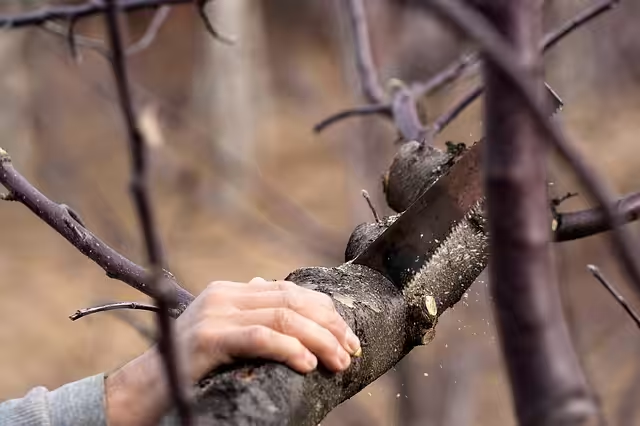
Short answer: In Central NJ, fall pruning often wakes the tree up just before the first hard freeze. That new growth gets burned, and fungal spores are still out there looking for fresh wounds. Outside of clearing dead or hazardous branches, heavy fall pruning is asking for trouble.
Homeowners often assume fall is perfect for pruning because the rest of the yard work happens then. Leaves are dropping, it feels like cleanup season, so the saws come out. For a lot of trees here, that mindset leads to long-term damage.
1. Fall Pruning Stimulates Tender Growth Before Frost
Cuts made in September or early October tell the tree it has room to grow. In Central NJ’s 6b–7a climate, many species respond with a late flush of growth.
- Those new shoots do not have enough warm time to lignify, or harden up, before the first hard freeze hits.
- Soft tissue gets killed by cold, so the ends of shoots die back and turn brown.
- Those frozen, dead tips become entry points for decay fungi and other opportunistic organisms once things warm up again.
2. Fungal Disease Pressure Is Still High
A lot of decay and canker fungi are still very active in September and October around Central NJ. Warm days, cool nights, and moisture from rain or dew give them perfect conditions.
- It is still warm enough for spores to be released and move around.
- It is still humid enough for those spores to germinate on fresh pruning wounds.
So if you prune in fall, you are creating fresh, unprotected wounds at the exact time many of these organisms are looking for a place to land.
3. Cambium Activity and Wound Closure Are Slowing
The cambium, that thin layer of living tissue under the bark, is what closes wounds by laying down callus wood. As fall settles in:
- Cambium activity gradually slows as trees gear down for dormancy.
- Wounds made in September–October may sit mostly unsealed for months, sometimes until spring.
- That extended open period gives decay fungi and bacteria a much longer window to invade the exposed wood.
4. The Valid Exception: Dead or Hazardous Wood
There is one place where fall timing does not matter much in Central NJ. That is safety work.
- Dead branches with no green tissue, no bud activity, and dry, brittle twigs.
- Cracked, hanging, or split limbs after a storm that could drop at any time.
- Branches rubbing on roofs, blocking emergency access, or encroaching on utilities.
Those all get handled as soon as you find them, even in fall. The risk of personal injury or property damage is a bigger issue than seasonal timing in those situations.
When Emergency Pruning Is Always Appropriate
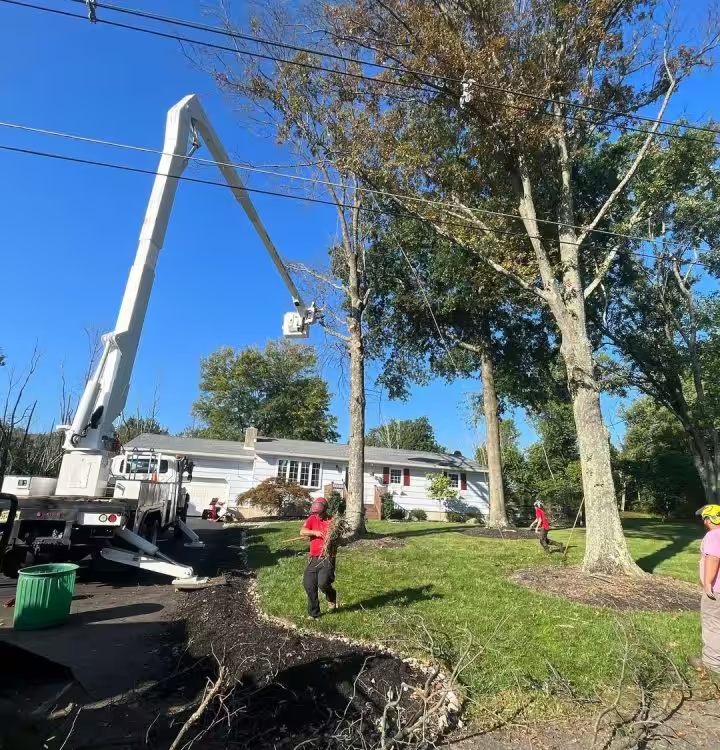
If a branch could injure someone, hit a car, damage your house, or interfere with utilities, you deal with it immediately. Calendar rules go out the window during an emergency.
Safety always sits at the top of the list. A cracked limb over your driveway or a hanging branch over a playset is not a “wait for winter” project. It is an urgent risk that needs to be evaluated and handled.
Situations That Justify Immediate Pruning in Any Season
- Storm-damaged or hanging limbs: After nor’easters, ice storms, or strong summer winds, remove broken, hanging, or twisted limbs as soon as possible before they come down on their own.
- Branches over walkways, driveways, or play areas: If a limb shows cracks, decay, or obvious instability, you do not wait for the right month. You get it addressed.
- Utility line interference: Branches contacting or very close to electrical lines are not a DIY project. Call your utility. They handle those situations and have crews trained to work around energized lines.
- Active splitting or trunk cracks: Visible splits, shear cracks at branch unions, or cracks that suddenly appear or widen are signs of possible failure. These need professional eyes fast.
- Disease containment cutting: With fast-moving problems like fire blight or aggressive cankers, quickly removing infected limbs can sometimes slow the spread.
If you are in over your head, look into emergency branch removal from qualified professionals. They have the gear, rigging, and know-how to handle dangerous situations safely and in line with industry standards.
Sometimes inspection reveals a bigger mess than pruning can fix. If decay, cracks, or structural defects are too advanced, removal when pruning isn’t enough may be the only safe option.
Common Mistakes NJ Homeowners Make With Pruning Timing (and How to Fix Them)
Mistake 1: Heavy Pruning in Early Fall
Problem: Big cuts in September–October trigger soft regrowth that winter kills. Those dead tips and partially sealed wounds give decay organisms a foothold and shorten the tree’s lifespan.
Fix: Move major pruning onto the calendar for late November–March. During fall, keep yourself limited to deadwood and urgent safety work only.
Mistake 2: Pruning Spring-Flowering Trees in Winter
Problem: Cutting dogwoods, cherries, crabapples, lilacs, and similar trees in January or February removes flower buds that formed the previous year, leaving you with weak bloom or none at all.
Fix: For spring-flowering trees and shrubs, plan the work for immediately after bloom. Use winter for structural and clearance work on non-flowering shade trees where flower loss is not an issue.
Mistake 3: Ignoring Species-Specific Needs (Maples, Birch, Oaks)
Problem: Treating every tree like a generic “shade tree” leads to excessive sap bleeding on maples and birch, and increased disease risk on oaks. Fix: Use this simple rule of thumb for when to prune trees in NJ if you are unsure:
- Oaks: Mid-December–February only, during the coldest stretch.
- Maples: Late winter before sap really starts to flow.
- Birch: Late summer or very late winter to cut down on bleeding and stress.
Mistake 4: Over-Pruning During Summer Heat
Problem: Taking out a big chunk of live foliage between May and August weakens trees during heat and dry spells, and can expose bark to sudden sunlight. That can invite pests and cause sunscald or scorch. Fix: In summer, stay disciplined. Limit yourself to:
- Dead, broken, or clearly diseased branches that you can remove cleanly.
- Minor clearance work to get branches off roofs, gutters, or walkways.
- Targeted disease work like fire blight sanitation cuts, using disinfection between cuts.
Mistake 5: Delaying Hazard Work for “Better Timing”
Problem: Putting off a cracked or hanging limb because you read that winter is better for pruning, while that limb is hanging over your driveway or your kids’ play area.
Fix: Treat any obvious risk as an emergency. Seasonal timing recommendations do not apply to hazard scenarios. If you are on the fence about how dangerous a branch really is, have a professional arborist take a look and give you a clear answer.
Mistake 6: Large DIY Cuts Without Standards
Problem: Making big, flush cuts or leaving long stubs, especially during the wrong season, damages the branch collar and the tree’s natural defense zones. That can lead to rot pockets and structural weakness down the line. Fix: For anything larger than what you can comfortably handle from the ground with hand tools:
- Learn proper pruning cuts, how to find the branch collar, and how seasonal timing fits into ANSI A300 seasonal guidance.
- If you are not confident, or the work involves ladders, roofs, or big limbs, consider professional tree pruning so you do not cause long-term damage trying to save a few dollars.
FAQ: Tree Pruning Schedule for Central NJ
How often should I prune my trees in Central NJ?
Most mature shade trees in Central NJ only need a good structural pruning every 3–5 years, with lighter clearance work in between when branches start creeping toward roofs, driveways, or walkways. Young trees benefit from formative pruning every 1–2 years in their first decade to set up strong branch structure early. Fruit trees usually need annual attention to keep them productive and in balance.
What is the best time to trim trees in Central NJ overall?
The best overall time to trim most trees in Central NJ is the dormant season, roughly late November through early March. That timing matches the NJ pruning calendar used by many pros and lines up with low disease pressure, less sap loss, and reduced stress on the tree. The main exception is spring-flowering ornamentals, which should be pruned right after they bloom.
Is it OK to trim trees in summer in New Jersey?
Yes, but with limits. Light summer pruning is fine in New Jersey for deadwood removal, minor clearance, and hazard reduction. Try to avoid heavy structural work and large thinning jobs between May and August. If you need to prune for safety or disease reasons in summer, keep cuts small, well placed, and as few as possible.
When should I prune oak trees in NJ?
Prune oak trees in NJ only during the coldest part of the dormant season, generally mid-December through February. That timing helps reduce the odds of attracting sap-feeding insects that can spread oak wilt and keeps stress down on trees that might already be dealing with bacterial leaf scorch or other issues.
Why do my maples “bleed” when I prune them in late winter?
Maples naturally push a lot of sap in late winter and early spring. If you prune just as sap is moving hard, cuts can bleed for a while. It usually does not harm the tree, but it looks bad and alarms people. To cut down on bleeding, aim to do major maple pruning in February, ahead of peak sap flow, and try not to make unnecessary cuts once you see heavy bleeding start.
Is there a specific NJ tree trimming season I should book ahead for?
Yes. The prime NJ tree trimming season is late November–March. That is when most homeowners, towns, and commercial properties try to schedule their work. Those calendars fill up quickly. If you know you want dormant-season pruning, get in touch in early fall so your work is on the schedule before winter backlogs pile up.
Who is responsible for pruning branches near power lines in New Jersey?
In most cases, the utility company maintains clearance around primary high-voltage lines running along the street. You should never try to prune branches near energized lines on your own. Call your utility provider and report the issue. For the service line running from the pole to your house, policies vary, so check with your utility to see what they handle and what falls on the property owner.
Can bad timing really make diseases like fire blight or bacterial leaf scorch worse?
Yes. Fire blight on apples and pears spreads more easily when cuts are made in warm, wet weather and tools are not disinfected between cuts. Bacterial leaf scorch on oaks can worsen if you stress already infected trees with heavy pruning during the growing season. Good timing and strict sanitation, following Rutgers Cooperative Extension recommendations, help keep both issues in check.
How does Central NJ’s hardiness zone affect my pruning schedule?
Central NJ’s USDA hardiness zones 6b–7a give you relatively mild winters but still solid freezes and regular nor’easters. Those conditions affect how early cambium becomes active, how quickly pruning wounds start to close, and how long new growth has to harden before winter. The schedule in this guide is tuned to those specific zone conditions, not what you might see in South Jersey or much farther north.
When should I call a professional instead of pruning myself?
Call a pro if:
- You need to remove large limbs or do any work over your roof, near vehicles, or around utility lines.
- You see cracks, cavities, mushrooms on the trunk, or big areas of dead bark that suggest structural or root problems.
- You are not sure if a struggling tree can be brought back with pruning or if it is time for removal.
For more complex calls, think seriously about professional tree pruning for bigger jobs. The cost of fixing a bad pruning job or a failed tree is usually higher than doing it right the first time.
Final Summary: Building a Smart Pruning Calendar for Your Central NJ Yard
In Central New Jersey, grabbing a saw whenever you have a free weekend is not a pruning plan. Trees run on their own schedule. Your pruning calendar needs to respect that if you want long-lived, safe, good-looking trees.
- Use late November–March for the bulk of your major pruning and structural work.
- Save post-bloom spring pruning for your flowering ornamentals so you keep your flowers year after year.
- Keep summer pruning light, focusing on deadwood, clearance, and disease-specific cuts.
- Skip heavy fall pruning to avoid freeze-damaged regrowth and a higher disease window.
- Handle hazards immediately in any month. Safety always wins over the perfect date on the calendar.
If you want help deciding which trees to prioritize first or how to spread work over a few years, take a look at our educational resources on pruning timing for each species and our local guides for pruning service Somerville and nearby Central NJ communities. A thoughtful pruning calendar now can easily add decades of health, stability, and curb appeal to your trees.