TL;DR: Land clearing in Somerset County, NJ is heavily regulated and closely monitored. Most real projects need soil erosion certification from the Somerset County Soil Conservation District, and many also trigger NJ DEP wetlands or Highlands Act review, plus municipal zoning and tree permits.
Budget roughly $1,500–$4,000 per acre for brush-only, $3,000–$8,000 per acre for lightly wooded land, and $8,000–$15,000+ per acre for dense woods, not counting permit and engineering fees.
Key Takeaways
- Any project disturbing 5,000 sq. ft. or more in Somerset County almost always needs a certified Soil Erosion and Sediment Control Plan through the Somerset County Soil Conservation District.
- Work near streams, ponds, wetlands, or mapped floodplains may need NJ DEP environmental permits for freshwater wetlands and flood hazard areas, plus compliance with riparian buffer zone rules.
- Western parts of Somerset County lie in the Highlands Water Protection and Planning Act region. In the Preservation Area, large-scale clearing can be heavily limited or outright blocked.
- Typical land clearing cost in NJ runs about $3,000–$8,000 per acre for lightly wooded lots and $8,000–$15,000+ per acre for heavy woods, with extra costs for stumping, haul-off, and permitting.
- Residential land clearing in New Jersey usually spans 2–6 weeks once permits are factored in, though the boots-on-the-ground clearing often takes only a couple of days per acre.
- Big mistakes people make include clearing without soil erosion certification, cutting into wetland buffers, skipping silt fence, and taking down trees that needed a municipal permit.
- Topsoil preservation, erosion control blankets, and properly installed silt fence are standard parts of code-compliant land clearing in Somerset County, not optional extras.
- Always check municipal zoning approval and, for larger builds, whether you’ll need an NJ DCA construction permit or municipal planning board approval before you start clearing.
What Is Land Clearing in Somerset County, NJ?
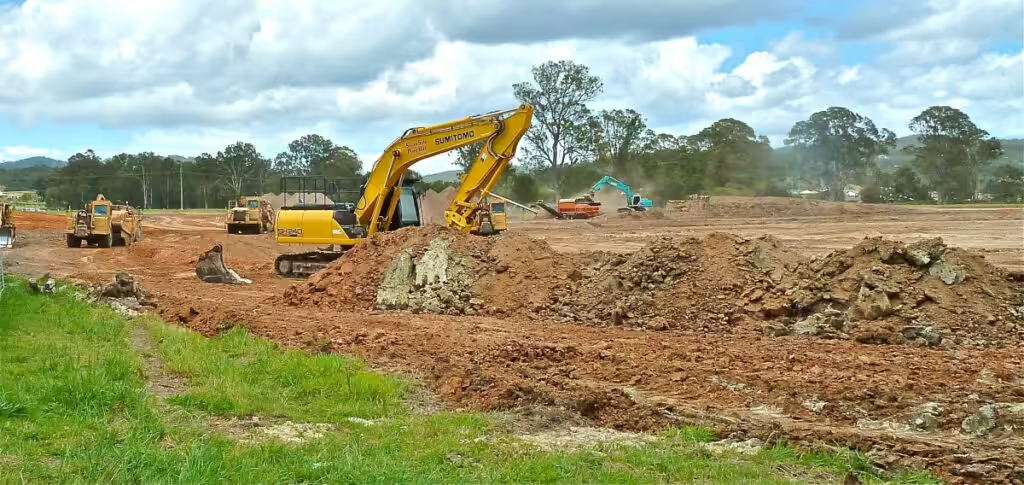
What is land clearing? Land clearing is the process of taking a piece of ground that’s covered in trees, brush, and stumps and getting it opened up for a house, garage, driveway, lawn, or other use. In practice that usually means cutting and removing trees, grubbing roots, pulling or grinding stumps, rough grading with machines, and then installing erosion controls so the soil doesn’t wash away the first time it rains.
What is “lot clearing” in Central NJ? Lot clearing is the same basic work, just focused on a specific property or building lot instead of a big farm or commercial tract. In Central NJ, including Somerset County, lot clearing has to line up with your town’s zoning rules, the Somerset County Soil Conservation District’s standards, and, where applicable, NJ DEP and Highlands Act regulations. All those layers decide how much you can clear, how you do it, and what protections you have to install.
What is soil erosion certification? Soil erosion certification is formal sign-off from the Somerset County Soil Conservation District on your Soil Erosion and Sediment Control Plan. Under N.J.S.A. 4:24-39 et seq., most projects disturbing 5,000 sq. ft. or more must have this. The plan shows exactly how you’ll keep dirt where it belongs instead of in the neighbor’s yard or the nearest stream.
What is NJ DEP wetlands review? NJ DEP wetlands review is the process where the New Jersey Department of Environmental Protection looks at your property and project and decides whether you’re touching freshwater wetlands, transition areas (buffers), or regulated waterbodies. If you are, they determine whether you need a permit, how much you can disturb, and what mitigation is required.
Somerset County Land Clearing Regulations (What You Must Know First)
Land clearing in Somerset County is not a “call a guy with a machine and have at it” situation. You’re dealing with soil erosion certification from the Somerset County Soil Conservation District, possible NJ DEP wetlands or flood hazard review, municipal zoning and grading approvals, and sometimes tree removal permits. On top of that, the Highlands Act affects portions of the western county, which can shut down large clearings before they start.
Before you book a crew or rent equipment, understand that both residential and commercial land clearing here are controlled by a stack of rules from different agencies. Ignore them and you risk stop-work orders, fines, and being forced to rebuild slopes, restore wetlands, or replant trees at your cost.
Core regulatory layers that often apply to the same project include:
- Municipal zoning and tree ordinances through your town, such as the Somerville zoning office or other local zoning offices
- Somerset County Soil Conservation District oversight for soil erosion sediment control certification
- NJ DEP environmental permits dealing with freshwater wetlands, flood hazard areas, and riparian buffer zones
- Highlands Water Protection and Planning Act coverage in western parts of the county
Each one looks at something a bit different. Towns care about land use, tree canopy, and grading. The Soil Conservation District is focused on erosion and sediment control. NJ DEP is watching wetlands, streams, and habitat. The Highlands folks look at large-scale water and forest impacts. In practice, that means you want your engineer and a professional land clearing contractor who knows Central NJ regulations talking early so your plan checks all the boxes the first time.
Permits Required for Land Clearing in NJ
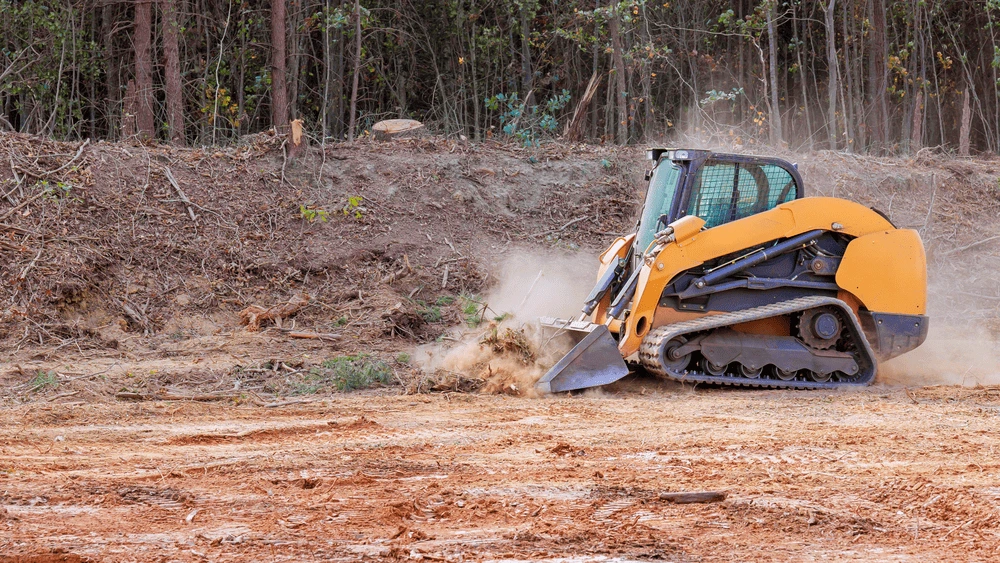
Most land clearing in New Jersey requires some level of paperwork. Somerset County is no exception. For even a straightforward lot, you may be dealing with soil erosion certification, tree permits, zoning sign-off, and, if you’re near wetlands or a stream, NJ DEP approvals.
Expect to need soil erosion and sediment control plan certification, any applicable municipal tree removal permits, possible NJ DEP wetlands or flood hazard permits, Highlands Act compliance in regulated areas, and municipal site plan or zoning approval on larger or commercial lot clearing NJ projects.
Soil Erosion Certification
For many jobs, soil erosion certification from the Somerset County Soil Conservation District is the gatekeeper. Until that’s approved, heavy work is supposed to be on hold. When is soil erosion certification required?
- Disturbance of 5,000 square feet or more of soil, which you hit fast once you’re clearing for a new house, big addition, pool, or long driveway
- Most subdivisions and commercial site plans, even “simple” parking lot expansions
- Any project with serious grading, cut-and-fill work, or topsoil stripping
Key attributes (EAV: Soil erosion certification):
- Issuing authority: Somerset County Soil Conservation District, not your town
- Typical application fee: Often $300–$1,000+, tied to how much area you disturb and how complex the plan is
- Review time: Roughly 2–4 weeks for a clean residential plan. Bigger or more complex commercial projects can stretch longer, especially if revisions are needed.
- Plan requirement: A Soil Erosion and Sediment Control Plan prepared by an engineer showing:
- Limits of disturbance sketched clearly, not “everything out to the treeline”
- Topsoil preservation and stockpile locations, fenced and protected
- Silt fence requirements and layout with attention to low points
- Erosion control blankets on steeper slopes or highly erodible soils
- Stabilized construction entrance so mud stays off public roads
- Temporary and permanent seeding schedules and seed mixes
- Inspections during clearing: Yes. The District can and does come out to check that silt fence, stone entrances, and stabilization match the approved plan.
Skipping soil erosion certification is one of the biggest and most avoidable headaches I see. People clear half a lot, a neighbor complains, and work gets shut down until a plan is drawn, submitted, and approved. By then you’ve paid twice and lost weeks.
Tree Removal Permits
Tree rules in Somerset County are very town specific. One municipality barely asks questions. The next might count and measure every trunk. You can’t assume what your friend did in another town will fly in yours.
Typical local requirements include things like:
- Tree removal permits for cutting trees over a certain diameter, often 6–8 inches DBH (diameter at breast height), or if you’re removing more than a set number of trees
- Replacement trees or payments into a municipal tree fund if you remove more canopy than their ordinance allows
- Tree protection during construction, such as:
- Orange tree protection fencing around trees that are supposed to stay
- Root zone protection by keeping heavy machines out of the dripline
Because each town writes its own rules, start with your ordinance or have your engineer or contractor check it. You can also read more here: permit requirements for land clearing for a deeper breakdown of how New Jersey towns handle tree removal.
Environmental Reviews (NJ DEP & Wetlands)
If there’s a stream, pond, swampy patch, or even just a low, soggy area on your property, you may trigger NJ DEP wetlands review or Flood Hazard Area controls. A lot of people guess based on how it “looks dry,” and that’s how they get in trouble. Key attributes (EAV: NJ DEP wetlands review):
- Trigger: Any work in or near mapped freshwater wetlands, their transition areas, or regulated waterbodies. That often includes work inside a riparian buffer zone NJ protects along streams and rivers.
- Buffer distance: Many freshwater wetlands in NJ carry transition areas up to 150 feet. Category One (C1) streams can carry 300-foot riparian buffers measured from the top of bank.
- Review timeline: For simple general permits, figure 2–6 months from start to finish. Complicated cases or contested decisions can take longer.
- Permit fee: Varies by permit type. Basic general permits tend to be in the low thousands when you roll in fees and consultant costs. Individual permits or major disturbance areas run higher.
- Avoidance preferred: Yes. NJ DEP expects you to avoid or minimize impacts. If you can pull the house forward 20 feet and save a buffer, they’ll usually insist on it.
In practice, the first move is often hiring an environmental consultant for an NJ wetlands delineation. They flag the wetland edge in the field, map it, and can submit that mapping to NJ DEP for a formal determination. That gives you a clear line of where you can and can’t touch.
On larger subdivisions or commercial lot clearing NJ projects, you may also need a formal environmental impact assessment. That dives into stormwater impacts, habitat (including NJ endangered species habitat), and how your disturbance lines up with state rules and mapping.
Highlands Act (NJ Highlands Water Protection and Planning Act)
Head out toward the western side of Somerset County and you start bumping into the Highlands Region. The Highlands Water Protection and Planning Act is aimed at protecting water supplies and forest cover, and it can seriously limit clearing on some parcels. Key attributes (EAV: NJ Highlands Act restriction):
- Preservation Area restriction: Strict. In the Preservation Area, large-scale new development and heavy clearing, especially on steep slopes or in mature forest, are highly restricted and sometimes not permitted at all.
- Planning Area restriction: Moderate. You have more flexibility, but major disturbance still has to comply with Highlands rules and may require extra review.
- Applicability in Somerset County: Mostly in western portions such as parts of Bernards, Bedminster, and a few other townships that clip the Highlands mapping.
- Clearing allowed: Often only under specific conditions. Plans usually need robust stormwater management, limits on impervious coverage, and protection of key recharge and forest areas.
- Highlands Council permit/approval: Certain major projects, especially in the Preservation Area, may need direct Highlands Council approvals alongside NJ DEP.
If your address falls in the Highlands Region, you want your engineer or planner checking both NJ DEP rules and Highlands Council mapping before you lay out any serious land clearing. I’ve seen people buy land assuming they’ll open up a big field and then find out they can only touch a small corner.
Land Clearing Cost in Somerset County (2026 Ranges)
Costs for land clearing cost in NJ swing a lot based on what’s on the ground and how tight the rules are on that parcel. Somerset County has a mix of older wooded lots, wet pockets, and strict regulatory layers, so you’ll see a pretty wide range here.
For 2026, most projects around Somerset County are falling in these ballparks:
Lightly wooded residential lots: Around $3,000–$8,000 per acre. Heavily wooded lots: Often $8,000–$15,000+ per acre. Brush-only clearing: Roughly $1,500–$4,000 per acre. Stump grinding is usually an add-on per stump, and then you have separate engineering and permit fees on top of that.
Cost Ranges by Site Condition (EAV: Land clearing cost NJ)
The table below gives realistic 2026 ranges for common conditions I see in Somerset County. These numbers assume professional, insured work with proper equipment and compliance with erosion rules.
| Condition / Item | Typical 2026 Range (USD) | Notes |
|---|---|---|
| Lightly wooded per acre | $3,000 – $8,000 | Scattered mid-size trees with some underbrush. Good access for machines and minimal haul distance. |
| Heavily wooded per acre | $8,000 – $15,000+ | Continuous canopy, larger trees, more felling, skidding, and either chipping or trucking. Often multiple machine days. |
| Brush-only per acre | $1,500 – $4,000 | Mostly scrub, saplings, and briars. Minimal chainsaw work. Great candidate for a forestry mower. |
| Stump grinding add-on (per stump) | $75 – $250 | Price scales with stump size and access. Ten small stumps in a row is cheaper per stump than one big oak behind a shed. |
| Permit cost total estimate | $500 – $3,500+ | Usually includes Soil Conservation District fees, municipal tree permits, and basic reviews. Major NJ DEP permits or complex engineering can push higher. |
What Drives Land Clearing Costs?
Two lots can sit across the street from each other and still cost very different amounts to clear. What drives price in Somerset County comes down to a mix of field conditions and paperwork.
- Tree density and size: A handful of 10-inch maples is easy. A stand of 30-inch oaks is a different animal. Larger and more numerous trees mean more saw work, more time on the excavator, and more debris to chip or haul.
- Access for equipment: Wide, flat access that lets a skid steer and excavator walk right in is cheap. Threading machines through a narrow side yard with power lines overhead or fighting a steep slope costs more time and money.
- Disposal method: How you handle the wood changes the bill:
- On-site chipping and spreading mulch tends to be cheaper, as long as your erosion plan allows it and the mulch layer isn’t too thick.
- Hauling logs off-site adds trucking and dumping fees, especially if you have a lot of low-value wood.
- Leaving select logs for firewood can cut a bit of cost, but they still have to be stacked in approved areas.
- Stump handling: Leaving stumps in the back woods costs nothing. Cutting them flush is fast but not great for lawns or foundations. Full stump grinding during clearing or excavating them out adds machine hours and sometimes imported fill.
- Regulatory complexity: A clean upland lot without wetlands or steep slopes is fairly straightforward. Throw in Highlands Act mapping, wetlands, or flood hazard issues and you’re paying for environmental consultants, extra engineering, and long review timelines.
- Distance and mobilization: Crews factor in how far they have to travel and whether they’ll tie up a lowboy trailer or extra trucks just to reach your site. Remote and awkward locations bump the cost.
- Season and ground conditions: Clearing in frozen or nicely dry conditions is efficient. Clearing during a wet spring can bog machines, damage soils, and force extra erosion controls or restoration.
Hidden cost insight: Many owners budget for “cutting trees” and forget all the erosion gear. Silt fence, stone construction entrances, erosion control blankets, seeding, and periodic maintenance can easily tack on several hundred to a few thousand dollars. Those pieces are not just best practice, they’re required for compliance with your Soil Erosion and Sediment Control Plan.
What the Land Clearing Process Looks Like (Step-by-Step)
Every legitimate land clearing job in Somerset County follows the same general rhythm. You start with mapping and planning, work through permits, install erosion controls, then start cutting, grubbing, grading, and finally stabilize everything so the site holds up in a storm.
For a typical single residential lot, the whole process usually runs about 2–6 weeks from the moment you start permit applications to final stabilization. The actual clearing and grading work is usually only 2–5 days per acre, depending on how thick the woods are and what the weather does.
Pre-Clearing: Permits, Planning & Erosion Control
This is the part most folks underestimate. The better you handle the front-end planning, the smoother the machines run once they’re on-site.
- Site survey and mapping
- A licensed surveyor or engineer prepares a base map showing exact property lines, existing structures, utilities, drainage paths, and often larger trees.
- Environmental consultants may be brought in to handle NJ wetlands delineation, identify streams, and flag any areas that might be NJ endangered species habitat.
- Conceptual clearing plan
- You and your design team decide what truly needs to be cleared for the house, driveway, septic field, pool, and access paths.
- Key trees to preserve get identified, and sensitive spots like wetlands, the riparian buffer zone NJ requires along streams, and steep slopes get marked as no-go areas.
- Soil Erosion and Sediment Control Plan
- Your engineer drafts a detailed plan that includes:
- Limits of disturbance, with clear boundaries and notes on topsoil preservation areas
- Silt fence alignment at the downslope edges and around stockpiles
- Use of erosion control blankets on steep or highly erodible slopes
- Stone construction entrance location to cut down on mud tracking
- Temporary stabilization and final seeding specs once clearing is complete
- That plan gets submitted to the Somerset County Soil Conservation District for soil erosion certification. They review, comment if needed, and then issue the certification.
- Your engineer drafts a detailed plan that includes:
- Municipal and state permit applications
- Apply for municipal zoning approval or site plan approval. Larger or commercial jobs often go through the municipal planning board.
- File any required tree removal permits with your town’s zoning or shade tree office.
- If wetlands, streams, or flood hazard areas are involved, your consultant submits NJ DEP environmental permits applications for freshwater wetlands or flood hazard area approvals.
- On bigger builds, you will also eventually need a NJ DCA construction permit or local building permit. Clearing often lines up with that larger construction schedule, but the exact order should be confirmed with your building department.
- Pre-installation of erosion controls
- Before any serious soil disturbance, the contractor installs:
- Silt fence where the Soil Conservation District plan shows it
- A stabilized stone construction entrance at the primary access point
- Tree protection during construction such as orange fencing for trees that you’re preserving
- Sometimes the Soil Conservation District will inspect these early measures before greenlighting full clearing.
- Before any serious soil disturbance, the contractor installs:
Active Clearing: Trees, Brush & Stumps
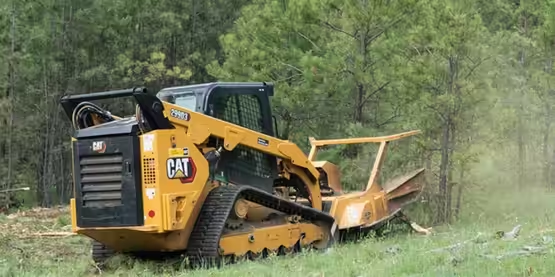
Once the paperwork is in order and erosion controls are in place, you’re ready for the noisy part. This is where you see the property transform very quickly.
- Grubbing and clearing
- Crews remove surface vegetation, saplings, and smaller trees that you’ve planned to take out.
- Brush removal is often handled with chippers or mulchers. Material may be chipped on-site and spread as mulch if your plan allows, or piled and hauled away.
- Tree felling and removal
- Professional crews perform tree removal during clearing with chainsaws, skidders, and excavators equipped with grapples.
- Trees are felled directionally to avoid damaging trees you’re keeping, any nearby homes, and overhead lines.
- Logs are cut into manageable lengths. Depending on your agreement, they’re stacked for homeowner use, chipped, or loaded onto trucks for off-site disposal.
- Stump handling
- You have a few options here:
- Full stump grinding to 6–12 inches below grade, which works well for lawn and landscape areas.
- Stump removal with an excavator, which pulls out roots but leaves holes that must be backfilled and compacted.
- Leaving stumps in rear or side woods where you don’t plan to mow or build, which saves money and reduces disturbance.
- For a deeper dive on trade-offs in NJ soils, see: stump options after clearing.
- You have a few options here:
- Rough grading
- Once trees, brush, and stumps are handled, the crew rough grades with dozers or excavators to:
- Form the building pad, driveway alignment, and lawn areas
- Shape drainage swales and avoid water draining toward foundations
- Prepare subgrades for future hardscaping or utilities
- If you’ve got a stormwater management plan, the grading will also integrate basins, rain gardens, or other required stormwater structures.
- Once trees, brush, and stumps are handled, the crew rough grades with dozers or excavators to:
Post-Clearing: Grading, Stabilization & Restoration
Once the heavy cutting and rough grading are done, the focus changes from “open it up” to “lock it down” so you don’t lose soil or violate your erosion plan.
- Fine grading and topsoil
- Stockpiled topsoil that was set aside behind silt fence is brought back and spread across yard and planting areas.
- Fine grading shapes smooth surfaces, blends slopes, and gets everything ready for seed, sod, or future beds.
- Erosion control blankets and seeding
- On steeper slopes, drainage channels, or other sensitive spots, contractors install erosion control blankets or matting to hold the soil while vegetation establishes.
- The site gets temporary or permanent seed mixes, often specified in your Soil Erosion and Sediment Control Plan, to stabilize disturbed soils as quickly as possible.
- Final inspections
- The Somerset County Soil Conservation District may conduct:
- Interim inspections during active clearing to confirm erosion controls are working
- A final inspection once the site is stabilized and vegetation is taking hold
- Municipal inspectors check that the actual clearing matches the approved plan, verify tree replacement or planting requirements, and may sign off on grading before you move into building work.
- The Somerset County Soil Conservation District may conduct:
Residential Lot Clearing Timeline (EAV: Residential lot clearing timeline)
Here’s a realistic timeline breakdown I’ve seen over and over in Somerset County for a typical residential lot. Larger or heavily regulated sites run longer, but the structure is similar.
| Phase | Typical Duration | Notes |
|---|---|---|
| Permit phase | 2–6 weeks | Covers soil erosion certification, local zoning or planning approvals, tree permits, and basic environmental checks. NJ DEP wetlands permits can extend beyond this. |
| Active clearing | 1–3 days per acre | Tree felling, brush removal, and the first pass of rough grading. Weather and site access can stretch this. |
| Stump grinding | 1–3 days | Depends on how many stumps you’re grinding and how large they are. Can happen right after felling or later in the schedule. |
| Grading | 1–3 days | Includes rough and fine grading plus topsoil respread where required by the plan. |
| Total typical | 2–6 weeks overall | The field work is relatively quick. Permits, design, and inspections are what stretch the overall schedule. |
Common Mistakes Homeowners Make with NJ Land Clearing
A lot of Somerset County homeowners think land clearing is just “getting the trees out of the way” before the real project starts. That mindset leads straight to violations, blown budgets, and fights with neighbors and inspectors.
Summary: The usual mistakes are starting without soil erosion certification, ignoring wetlands and riparian buffers, cutting protected trees without municipal permits, skipping silt fence and other erosion controls, hiring unqualified operators, and clearing way more than the project actually needs.
Mistake 1: Clearing Without Soil Erosion Certification
The problem: If you clear or grade over 5,000 sq. ft. without an approved Soil Erosion and Sediment Control Plan, you’re in direct violation of NJ law. It doesn’t matter if the contractor told you “we do this all the time.” The responsibility lands on the property owner.
Consequences:
- Stop-work orders that shut down your entire project until you get compliant
- Fines and enforcement actions from the Soil Conservation District
- Costs to repair eroded slopes, clean up sediment that washed onto neighboring lots, or restore clogged drainage
Fix: Before any heavy work starts, ask your engineer how much disturbance your project will create. If you’re anywhere near 5,000 sq. ft., assume you need certification and get a proper plan submitted to the Somerset County Soil Conservation District. Wait for the stamped approval before you bring in machines.
Mistake 2: Ignoring Wetland Buffers and Riparian Zones
The problem: Cutting trees and grubbing out roots inside freshwater wetlands, their transition areas, or protected riparian buffers without an NJ DEP permit is one of the most expensive mistakes you can make in this state. Wet areas on site are not “free space.” Consequences:
- Mandatory restoration of damaged wetlands or disturbed buffer areas, often with plantings and long monitoring periods
- Serious delays to the rest of your project while NJ DEP reviews what happened
- Potential civil penalties and fines from NJ DEP enforcement
Fix: Get an environmental professional to look at your property early and perform a wetlands check if there’s any doubt. If wetlands or regulated streams exist, build your clearing plan around them and use the formal NJ DEP wetlands review process if any disturbance is unavoidable.
Mistake 3: Removing Protected or Street Trees Without Permits
The problem: Many Somerset County towns treat big, healthy trees as part of the public resource, even on private lots. Street trees, specimen trees, and larger canopy trees can all be regulated, and “my contractor said it was fine” won’t get you out of a ticket. Consequences:
- Fines and requirements to plant replacement trees at your cost, sometimes multiple trees for every one removed
- Municipal departments holding up your zoning or building permits until tree issues are resolved
- Angry neighbors and potential public hearing issues if you cut trees that were part of a neighborhood streetscape
Fix: Before cutting any significant trees, contact your town or go through their ordinances in detail. If there’s any doubt, apply for tree removal permits and clearly document which trees are staying and which are going. You can find more detail here: permit requirements for land clearing.
Mistake 4: Skipping Silt Fence and Other Erosion Controls
The problem: Bare dirt on a sloped site with no silt fence or stabilization is an open invitation for mud to travel downhill. It doesn’t take much rain for sediment to clog storm drains, flood basements, and end up in streams. Consequences:
- Complaints from neighbors whose yards, patios, or basements get hit with runoff
- Soil Conservation District enforcement and orders to install or repair controls under a tight deadline
- Damage to your own driveway, foundation area, and any early landscape work
Fix: Treat erosion controls as part of the clearing itself, not an afterthought. Install and maintain:
- Silt fence along the downslope edge of disturbance and around stockpiles
- Inlet protections where storm drains could receive sediment-laden runoff
- Temporary seeding or mulch cover within 14 days of disturbance in areas that will sit exposed
Mistake 5: Hiring Unqualified or Uninsured Operators
The problem: There’s always someone with a chainsaw, a rented skid steer, and no insurance willing to undercut legitimate bids. Those are usually the same people who don’t understand NJ DEP, Soil Conservation District, or municipal processes at all. Consequences:
- You, the property owner, will be on the hook for violations, property damage, and regulatory fines, not the cheap contractor who disappeared.
- Real risk of damage to neighboring homes, fences, septic systems, wells, or buried utilities.
- Work left half-done if they underestimate the job and walk off after running out of time or money.
Fix: Hire a professional land clearing contractor who:
- Knows the Somerset County Soil Conservation District process and local municipal requirements
- Can show current liability and workers’ compensation insurance certificates
- Offers references from recent New Jersey projects similar in size and complexity to yours
Mistake 6: Over-Clearing the Lot
The problem: A lot of people tell the crew, “Just take everything so we have options.” That approach can create long-term erosion problems, increase stormwater demands, and strip your property of shade and privacy that are hard to get back. Fix: Work with your designer or engineer to draw precise limits of disturbance and stick to them. Leaving smart clusters of trees can:
- Reduce erosion and slow runoff naturally
- Provide shade, windbreaks, and visual screening
- Help meet municipal and Highlands Act expectations about tree preservation and canopy coverage
FAQ: Land Clearing in Somerset County, NJ
These are straight, practical answers to the questions I hear most from homeowners and small builders gearing up for land clearing in Somerset County.
How long does land clearing take in Somerset County?
For a normal residential lot, plan on 2–6 weeks total. Most of that is not machines on the ground. It’s soil erosion certification, municipal approvals, and scheduling. Once you’re permitted and ready, the actual clearing and grading on-site typically runs 2–5 days per acre, depending on how wooded the lot is and whether the weather cooperates.
Can I clear land in or near wetlands?
Clearing inside mapped freshwater wetlands or their transition areas almost always needs an NJ DEP wetlands permit, and in many cases NJ DEP will prefer you move the project instead of cutting into those areas. Work in nearby uplands might be allowed, but you still have to respect buffer distances and riparian zones. Always have a wetlands delineation done before you plan extensive clearing near wet spots or streams.
How do Highlands Act restrictions affect land clearing?
In the Highlands Preservation Area in western Somerset County, the Highlands Water Protection and Planning Act can severely limit how much you can clear, especially on steep slopes and in forested areas. Large building envelopes with heavy clearing are often not feasible there. In the Planning Area, you have more room to work, but major projects still get reviewed in light of Highlands standards. Always check whether your parcel falls in the Highlands Region before you count on a big open clearing.
Do I need a permit just to remove trees on my property?
Sometimes, yes. Some municipalities require permits if you remove more than a certain number of trees in a year or any tree beyond a certain trunk diameter, regardless of whether there’s a building project attached. If your tree removal is tied to construction or disturbs more than 5,000 sq. ft., you may also need soil erosion certification. For town-by-town nuance, see permit requirements for land clearing.
Can I keep logs or wood from the trees that are removed?
In most cases, yes. Many Somerset County homeowners keep logs cut into firewood lengths or save a few larger pieces for milling. Just remember your Soil Erosion and Sediment Control Plan and local approvals may limit where and how big debris piles can be. Large brush piles often have to be chipped or removed so they don’t create erosion or nuisance problems.
What happens to topsoil during land clearing?
On most NJ projects, topsoil preservation is written right into the erosion and sediment control plan. Contractors strip the topsoil from active work areas, stockpile it inside designated fenced zones with silt fence, and then later respread it over graded yards and landscaped areas. If you plan to export large amounts of topsoil off-site, discuss it with your engineer, since that can change how your plan is reviewed and what controls you need.
What if my neighbor complains about my land clearing?
Municipal inspectors and the Somerset County Soil Conservation District tend to move quickly on complaints, especially about erosion or tree removal. If you have all required permits, follow the approved plans, maintain silt fence and other controls, and keep communication open with neighbors about noisy or dusty days, you’re in a strong position. Problems usually come when permits and controls are missing or poorly maintained.
Do I need an NJ DCA construction permit before clearing?
Not in every case. Often, limited clearing that’s clearly shown on a certified soil erosion sediment control plan and supported by zoning or site plan approvals can start before the full building permit is issued. The catch is your clearing has to match what’s on the plans. Always check the sequence with your local building department so you don’t get out ahead of your paperwork.
Is Somerville’s zoning office involved in land clearing approvals?
Yes. If your property is in Somerville, or any other Somerset County municipality, the local zoning or planning office, such as the Somerville zoning office, will be part of the process. They review site plans, address setbacks and buffers, and may regulate tree removal and grading. They work alongside the Somerset County Soil Conservation District and NJ DEP but are a separate step in the chain.
How is land clearing different in Bridgewater vs. other Somerset towns?
Bridgewater has its own mix of ordinances, processes, and expectations, especially on tree removal and grading. County and state rules remain the same, but the way Bridgewater reviews and conditions approvals can differ from, say, Somerville or Bedminster. If your job is in Bridgewater, it’s smart to review: land clearing Bridgewater for details and town-specific guidance.
Final Summary: Planning a Compliant Land Clearing Project in Somerset County
Land clearing in Somerset County, NJ is a regulated construction activity, not just tree work. You’re dealing with municipal zoning and tree ordinances, the Somerset County Soil Conservation District, NJ DEP wetlands and flood hazard rules, and in some areas the Highlands Act. All of that affects how much you can clear, how you clear it, and how much it costs.
Budget for more than just a saw and a machine. Factor in soil erosion certification, engineering for your Soil Erosion and Sediment Control Plan, erosion control materials, seeding, and any environmental reviews that wetlands or Highlands mapping might trigger.
If you’re still in the early planning stage, the smartest next steps are:
- Check whether your property touches wetlands, streams, floodplains, or falls under Highlands mapping.
- Talk with your municipal zoning or planning office about local grading, clearing, and tree requirements.
- Hire an engineer to prepare a Soil Erosion and Sediment Control Plan if your disturbance will hit 5,000 sq. ft. or more.
- Line up a contractor experienced in professional land clearing across Central NJ, so the work is done safely, efficiently, and in full compliance.
With the right team and a solid plan, you can get your lot cleared, keep the regulators and neighbors happy, and set your project up on a clean, stable piece of ground instead of digging out from a mess of violations and washouts later.