TL;DR: For most Central NJ homeowners, stump grinding is the practical choice. It’s faster, far cheaper, and doesn’t tear your yard to pieces. Go with full stump removal only if you’re planning to build, pour a patio or driveway, or you and your pest pro have very strict structural or termite requirements that call for removing nearly all major roots.
Key Takeaways
- Grinding vs removal: With grinding, a stump grinder chews the stump down roughly 6–12 inches below grade. The main trunk and flare become mulch, and the roots are left to rot in the soil. Full stump removal uses digging equipment to rip out the entire root ball and big lateral roots, which means serious excavation work.
- Cost in Central NJ (2026): Stump grinding cost in NJ typically falls around $3–$5 per diameter inch with a $150–$300 minimum. Full stump removal usually starts in the few hundreds and can easily run 3–5× more than grinding the same stump.
- Yard impact: Grinding leaves a shallow hole filled with wood chips that you can dress with topsoil. Full removal leaves a big empty crater, requires imported soil, compaction, and usually a second round of leveling later.
- NJ soil matters: Central NJ’s typical clay–silt soil profile drains slowly and holds water. It tends to settle after excavation, but those same moisture and freeze–thaw cycles help ground stumps and roots decompose over several years.
- Termites & decay: New Jersey is firmly in a subterranean termite risk zone. Grinding cuts down the amount of exposed food, but it does not remove buried roots completely. Removal takes away more wood and may fit tighter termite management plans near structures.
- Regrowth: In NJ clay, most ground stumps stop sprouting within 1–2 growing seasons. Some aggressive species still push shoots and may need chemical stump treatment with potassium nitrate or targeted herbicides if you want them gone for good.
- Future use of the area: Grinding is plenty if you’re putting lawn back, doing light landscaping, or planting small shrubs and perennials. Full removal is smarter under future footings, walls, driveways, or additions that you plan to place directly over the old stump.
- DIY vs pro: You can rent a stump grinder, but on tight Central NJ lots with clay soil, buried rock, and nearby utilities, the risk of damage is real. Hiring professional stump grinding is usually safer and often not much more expensive once you count rental, time, and disposal.
What Is Stump Grinding vs. Stump Removal?
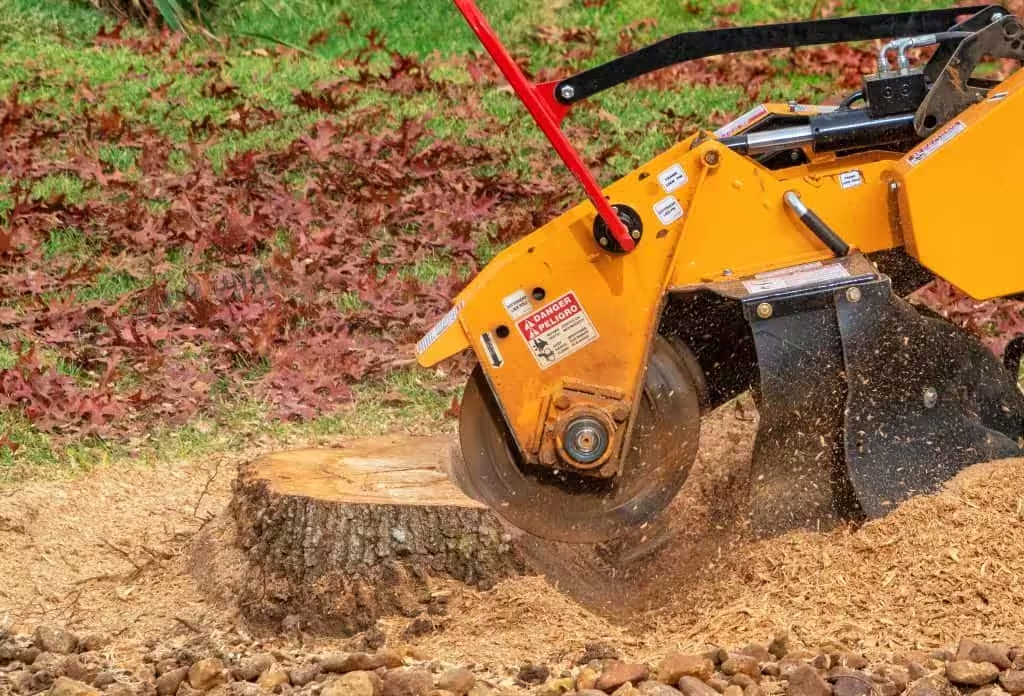
Stump grinding (NJ): A specialized stump grinder uses a spinning carbide-toothed wheel to mechanically shred the stump 6–12 inches below grade. Everything at or above ground, plus the upper root flare, is reduced to wood-chip mulch. The rest of the root system stays buried in place and slowly breaks down in the soil.
Full stump removal (NJ): An excavator or backhoe digs around the stump and pries out the entire root ball along with most big lateral roots. You’re left with a large hole that needs several yards of soil to fill, proper compaction, and later regrading. It is more invasive, more expensive, but removes almost all accessible wood.
Stump Grinding vs Stump Removal: Key Differences
The big split between stump grinding and stump removal in New Jersey is how aggressively you want to chase the roots and how much damage you’re willing to accept in your yard.
Stump grinding uses a spinning cutting wheel to sweep back and forth across the stump, shaving it down 6–12 inches below grade. The visible stump disappears, but the core of the root ball and most lateral roots stay locked in the clay–silt soil. Over time, they rot naturally.
Stump removal goes after the roots too. An operator uses a root ball excavator or backhoe to dig around the stump, loosen it, and haul it out. You’re taking the stump and most of the major roots out in one shot, but the tradeoff is a big cavity that needs soil backfill, heavy compaction, and usually lawn restoration.
Quick comparison for NJ properties:
| Factor | Stump Grinding (NJ) | Full Stump Removal (NJ) |
|---|---|---|
| Typical 2026 cost in Central NJ | $3–$5 per diameter inch; $150–$300 minimum | $400–$2,500+ per stump depending on size & access |
| Time on site | Roughly 30–90 minutes for most residential stumps | About 2–6+ hours including excavation, backfill & cleanup |
| Yard impact | Small disturbed area, light ruts at worst, mulch pile over the stump | Large hole, equipment tracks, significant soil disruption |
| Replanting readiness | Fine for sod and small shrubs; replanting after stump grinding works with reasonable soil prep | Ideal for future structures, patios, or walls where you don’t want buried wood |
| Root removal | Mostly stump and upper roots only | Stump plus most of the root ball and major lateral roots |
| Termite food source | Above-ground food reduced; buried roots stay to decay | Much lower; far less buried wood left behind |
| Best for | Lawns, garden beds, lower budgets, and minimal yard damage | Building sites, serious root problems, strict termite management plans |
How Central NJ's Soil Affects the Stump Decision
Central New Jersey doesn’t have the loose, sandy soil you see at the Shore. Most of Somerset, Middlesex, and nearby counties sit on a clay–silt soil profile that holds moisture, drains slowly, and compacts easily. Typical drainage rates under about 0.5–1 inch per hour are common in the heavier clay pockets.
Rutgers Extension and local soil surveys describe much of this region as a blend of clay, silt, and some loam. In the real world, that means:
- Moisture hangs around buried wood. That can slow root decay at first, but once fungus and bacteria get established, they have plenty of water to keep breaking wood down over several years.
- After you remove a large root ball, the backfilled area is very prone to settling, especially if the fill dirt isn’t compacted in layers.
- Winters bring repeated freeze–thaw cycles down to a frost depth often around 24–36 inches. That expansion and contraction breaks up decaying wood and loosens dense clay pockets.
So in practice:
- After grinding: Stump chips and remaining roots buried in clay–silt can take roughly 3–7 years to fully break down. Areas with richer topsoil and better biological activity break things down on the faster end of that range.
- After full removal: Even with plate compactors or rammers, the combination of disturbed subsoil and clay means a higher settling risk over the next 6–18 months, especially after heavy rains or snowmelt.
That’s why Central NJ homeowners should always think about drainage and settling before choosing grinding or excavation. I’ve seen plenty of patios and sheds shift because somebody yanked a stump, stuffed loose dirt back in, and started building right away without giving the soil time to settle or be compacted correctly.
Stump Grinding Cost in Central NJ (2026 Pricing)
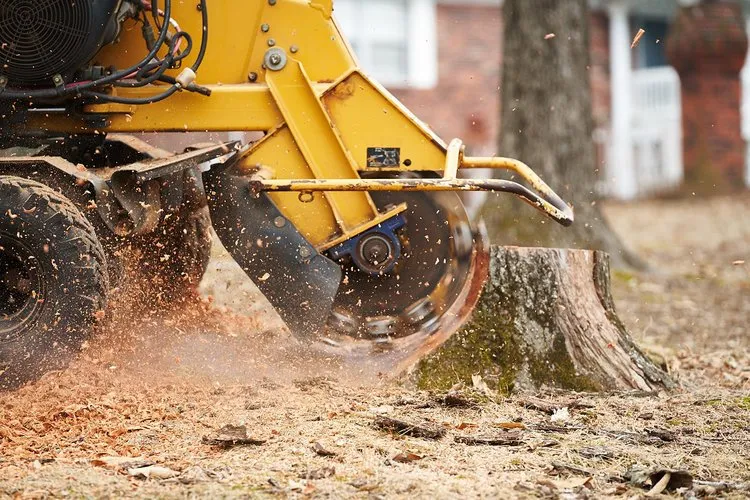
Most folks start by asking, “What’s stump grinding cost in NJ going to run me?” In Central NJ, especially around Somerset County, pricing is usually based on a per‑inch diameter model with a minimum service charge to cover mobilization and setup.
Typical 2026 stump grinding cost in Central NJ:
- Per‑inch pricing: Expect roughly $3–$5 per diameter inch, measured at or near ground level where the stump actually sits.
- Minimum charge: Most reputable outfits land in the $150–$300 range per visit, even if the calculated inch total is less, just to cover travel, fuel, and some machine time.
- Multi-stump discounts: Once the crew is there, extra stumps usually come cheaper on a per-stump or per-inch basis, which makes it smart to clear multiple stumps in one go.
- Cleanup & mulch removal: Basic raking is often included. Hauling away stump grinding mulch, loading it, and paying disposal or recycling fees is usually a separate line item.
Example pricing scenarios (Central NJ):
- One 18″ stump in open lawn with good access. At $4 per inch, the math is 18 × $4 = ~$72. Because of the service minimum, you’re really looking at $175–$225 total for that visit.
- Three stumps, 12″, 20″, and 26″. Total diameter is 58 inches. At $3.50–$4.50 per inch, that puts you roughly in the $200–$260 range. With a multi-stump discount, you might see quotes in the $225–$325 neighborhood for everything.
Key cost factors in Central NJ:
- Stump diameter: This is what drives stump grinding cost in NJ more than anything else. Very tall stumps may need to be cut lower with a chainsaw first, or you’ll pay a bit extra in machine run time.
- Accessibility: Standard grinders need roughly 36–40 inches of gate width. Tight side yards, steep slopes, or terraces can force the use of smaller machines that grind slower and may bump the price.
- Grinding depth below grade: A basic grind for lawn restoration is often 6–8 inches. If you want 10–12 inches for replanting a tree or prepping for stone work, that’s more passes and more time.
- Number of surface roots: Trees like maple, poplar, and willow love to send fat surface roots everywhere. Chasing those roots around adds to the labor and cost.
- Cleanup expectations: Leaving the pile of grindings in place is cheapest. Asking for chip haul-off and fresh topsoil brought in can turn a basic job into a mini landscaping project cost-wise.
If you compare your stump cost comparison against tree removal, many companies discount the grinding while they’re already on site with equipment, which is usually the most economical way to handle both.
Stump Grinding NJ: Typical Specs & Cost (EAV Data)
| Attribute | Typical Value (Central NJ) |
|---|---|
| Grinding depth (inches below grade) | 6–12 inches depending on how you’ll use the area afterward |
| Cost per diameter inch (USD) | $3–$5 per inch |
| Minimum charge (USD) | $150–$300 per visit |
| Debris volume (cubic yards per inch) | Roughly 0.01–0.02 cubic yards of chips per diameter inch, depending on stump size and species |
| Cleanup included | Varies by contractor; light raking yes, chip haul‑away often extra |
When you line up stump grinding cost NJ against full stump removal for the same tree, grinding nearly always wins on price, especially if you’re tackling several stumps at once.
Full Stump Removal Cost in Central NJ
Full stump removal in New Jersey is a different animal. You’re paying for excavators, bigger trucks, more labor, and replacement soil. That’s why it often runs 3–5 times more than a straightforward grind.
Typical 2026 full stump removal cost in Central NJ:
- Small stumps (up to ~12" diameter): Usually somewhere around $400–$700 if the equipment can access the site easily.
- Medium stumps (13–24" diameter): Often $700–$1,200, depending on species, root depth, nearby hardscaping, and how tight the yard is.
- Large stumps (25–36"+ diameter or old multi-stem trees): Regularly in the $1,200–$2,500+ range, especially for deep-rooted oaks, maples, or where material haul-off is involved.
On top of that, you can expect some extra line items:
- Backfill material: Truckloads of topsoil or fill dirt in Central NJ typically cost around $30–$50 per cubic yard, delivered.
- Mechanical compaction: Time and equipment for compacting in 6–12 inch lifts. Skipping this step is a surefire way to get a sinking spot later.
- Disposal fees: That root ball is heavy. Hauling and dumping it, plus any contaminated soil, adds to the overall bill.
Full Stump Removal NJ: Specs & Soil Behavior (EAV Data)
| Attribute | Typical Value (Central NJ) |
|---|---|
| Root ball diameter (feet) | Commonly 2–4 feet for mid-size trees, and easily 5+ feet across for mature oaks or maples |
| Extraction equipment | Excavator and/or backhoe with a possible dump truck for hauling brush and root balls |
| Hole depth (feet) | Typically 2–4 feet. Some taps and very old trees can go deeper. |
| Backfill cost (USD per cubic yard) | Roughly $30–$50 per cubic yard delivered in Central NJ |
| Soil settling period in NJ clay | Usually 6–18 months before you trust it fully for finished hardscape |
When is the 3–5× premium worth it?
- You’ve got planned home additions, garages, or sheds where the footings or slab will sit right where that stump is today.
- You’re laying concrete patios, driveways, or walkways directly over the area and want to avoid future voids that cause cracking.
- There’s current root damage to foundations, sewer lines, or retaining walls, and you want to remove as much of the offending root structure as you reasonably can.
- Your pest control strategy is very conservative, and your termite professional wants minimal buried wood around the foundation as part of termite risk management.
NJ Clay–Silt Soil Profile: Why It Matters
| Attribute | Typical Central NJ Value |
|---|---|
| Drainage rate (inches per hour) | Frequently < 0.5–1 inch/hour in heavier clay pockets |
| Root decay rate (years) | Roughly 3–7 years for buried roots and stump wood |
| Frost depth in NJ (inches) | Commonly around 24–36 inches |
| Settling risk after extraction | Moderate to high, especially in disturbed subsoils without good compaction |
| Compaction method | Mechanical compaction in lifts using plate compactors or rammers |
These soil traits are why Rutgers Extension and most experienced NJ contractors harp on proper soil backfill, drainage planning, and compaction after full stump excavation. If you skip that, the ground looks fine the first month, then drops and turns into a bowl over the next year.
When to Grind vs When to Remove (Decision Guide)
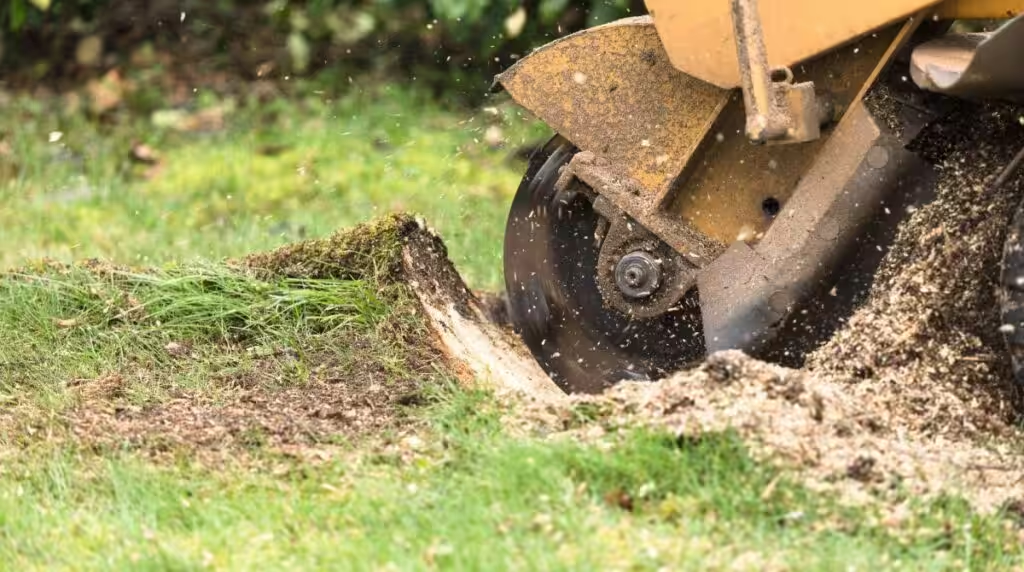
If you’re wondering, “should I grind or remove stump on my NJ property?”, stop and think about three things: how you’ll use that space, how risk-averse you are about termites and settling, and what your budget looks like.
Short answer: Choose grinding if you want the area level and usable at the lowest reasonable cost. Choose full removal if you absolutely need the wood gone at depth for building, structural repair, or strict termite management.
Choose Grinding When…
For most Central NJ homes I see, grinding is the workhorse solution. It fits best when:
- You’re keeping it as lawn or basic landscaping. Maybe you’re reseeding, laying sod, or planting small shrubs and perennials. You’re not pouring a garage slab there.
- Budget is a priority. Stump grinding cost in NJ being 3–5 times lower than full removal frees up money for other projects like new plantings or drainage fixes.
- The stump is away from foundations and utilities. The roots are not currently pushing on your basement wall, slab, or sewer line.
- You want less yard disruption. Stump grinders are compact, usually on rubber tires or tracks, and they keep damage confined to the immediate area.
- You’re OK with gradual root decay. You understand those roots are going to break down over 3–7 years in our clay–silt soil, helped by freeze–thaw, and that’s acceptable because you’re not building there.
- You plan to replant near, not exactly on top. Planting a new tree a few feet off the old stump center usually works better than trying to stuff roots into a hole filled with wood chips.
Once the stump is ground, you’re left with a low spot full of stump grinding mulch. That’s where people often make mistakes in NJ clay. If you mix all those chips deep into heavy soil, grass struggles and the spot stays spongy.
Most homeowners in this area have better luck if they:
- Rake off the excess grindings and pile them in a corner for paths or future mulch.
- Add a couple of inches of decent topsoil over the ground stump area.
- Then tackle replanting after stump grinding or lawn repair once everything is leveled and lightly compacted.
Choose Removal When…
Full stump removal is more aggressive and more expensive, but there are times it makes sense and grinding just isn’t enough.
- You’re building directly over the stump area. For additions, garages, or heavy hardscapes sitting right there, taking out the root ball and major roots drastically cuts the chances of future voids or slab issues.
- Roots are actively damaging structures. If you’re dealing with real lateral root excavation issues like heaving patio slabs, cracked foundations, or crushed pipes, simply grinding the stump doesn’t solve the main problem.
- You’re managing high-concern termite risk. In New Jersey’s subterranean termite risk zone, some pest control plans call for getting rid of as much buried wood as you can close to the house. Removal plus treatment sometimes fits that approach better than grinding alone.
- The stump is diseased and you want maximum removal. Certain fungal pathogens can travel along roots between nearby trees. While you rarely get every last root, removing as much infected wood as possible can be part of a broader management plan.
- You need full regrading or major drainage correction. If you’re already tearing up the area with an excavator to change grades or fix water issues, pulling the root ball while the machine is there can be efficient.
Hidden consideration: Full removal means heavier machines on the property, and that means soil compaction after extraction. Lawns in NJ clay don’t bounce back on their own. You usually need some follow-up NJ landscaping restoration like core aeration, topdressing, and reseeding to get the turf looking right again.
Step-by-Step: Typical Stump Grinding Process on an NJ Property
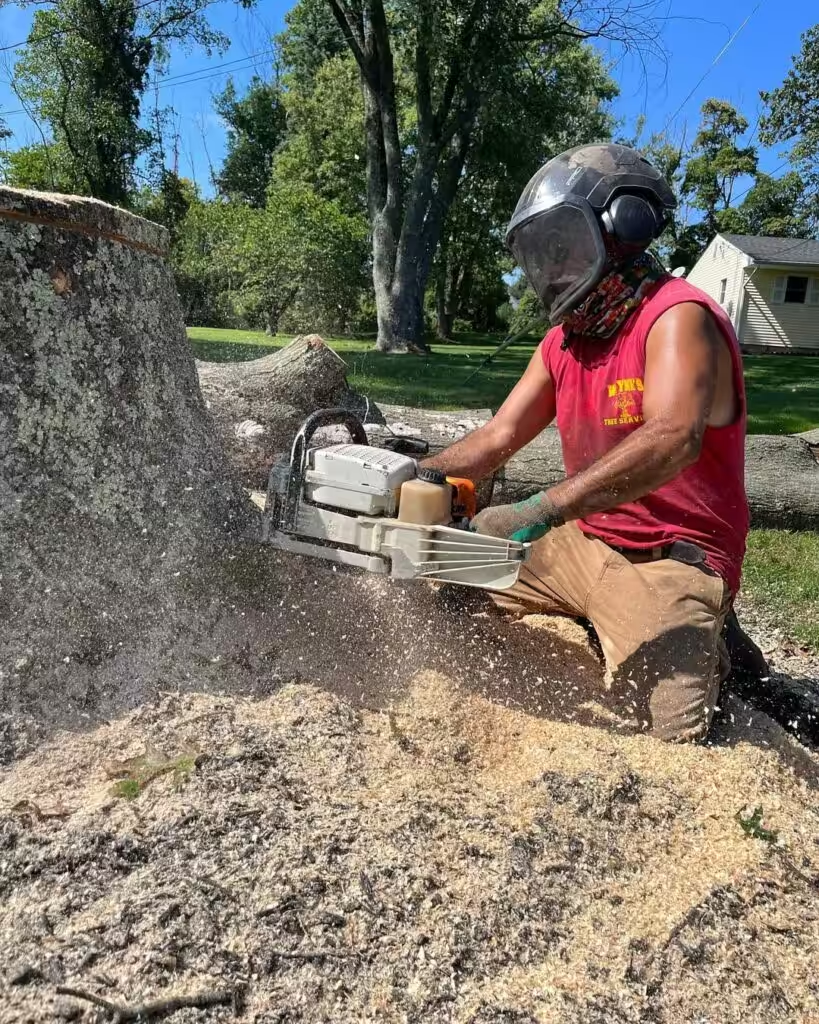
It helps to know what actually happens on-site so there are no surprises. Here’s how a standard stump grinding job usually plays out on a Central NJ property.
- Assessment & marking: Utilities get marked out through the proper channels so no one hits gas, electric, or cable lines. The crew checks the stump height, width, root flare, and any major surface roots that might need extra passes.
- Access planning: The operator looks at the route in and out. They confirm gate width, usually aiming for at least 36 inches, and they assess slopes, retaining walls, and soft spots to avoid getting the machine stuck.
- Stump prep: If the stump is high, a chainsaw is used to cut it close to grade. Lowering it first cuts down grind time and the amount of debris created.
- Grinding: The stump grinder’s cutting wheel is lowered and swept side to side. The operator gradually works across the stump and into the upper roots until the job hits the specified grinding depth below grade, often somewhere between 6 and 12 inches.
- Debris management: The grinding debris mulch gets pushed back into the hole or raked into a pile. Some homeowners keep it all. Others have part of it hauled off if there’s too much for the area.
- Backfilling & leveling: If needed, soil is added over the chips to create a slight mound. That small rise is intentional so that as chips settle and decay, the area ends up close to level with the surrounding yard.
- Site cleanup: The crew rakes chips off the lawn and hard surfaces, blows off walkways, and leaves the site neat so you can step right into restoration.
Stump Grinder Specifications (Typical Residential Machines)
| Attribute | Typical Value |
|---|---|
| Cutting wheel diameter | 16–24 inches |
| Grinding depth capacity | Generally up to 12–16 inches below grade for residential units |
| Access width required | Roughly 36–40 inches for common walk-behind or self-propelled grinders |
| Residential lot suitability | Yes – built specifically for tight suburban yards and side gates |
| Rental vs service cost in NJ | A 1-day rental is often $300–$450, which is similar to or only slightly cheaper than hiring professional stump grinding with an experienced operator |
That’s why, on most Central NJ residential jobs, DIY stump grinding doesn’t save as much as people expect once you add rental, time, fuel, and the risk of hurting yourself or damaging property.
Stump Grinding vs Stump Removal NJ: Side-by-Side Comparison
| Factor | Stump Grinding | Full Stump Removal |
|---|---|---|
| Typical Central NJ cost (2026) | $3–$5 per inch; $150–$300 minimum | $400–$2,500+ per stump |
| Equipment | Dedicated stump grinder machine | Excavator/backhoe, sometimes dump truck and compaction gear |
| Root ball extraction | No – root system left to decay | Yes – root ball and major lateral roots removed |
| Yard disturbance | Localized and relatively light | High – big hole, equipment tracks, disturbed subsoil |
| Soil backfill needed | Minimal – chips plus some topsoil for leveling | Significant – several cubic yards of soil plus careful compaction |
| Soil compaction concern | Low to moderate | Moderate to high due to heavy machinery traffic |
| Replanting readiness | Good for lawn and smaller plants; fair for new trees if offset | Best for building, hardscapes, and major plantings in the same footprint |
| Regrowth prevention | Usually enough; some species can re-sprout from roots | Most effective – very few live roots remain |
| Termite food source | Lowered but not eliminated | Minimized as much as practical |
What Happens to the Roots After Grinding in NJ Soil?
With grinding, you get rid of the visible stump. What you don’t see is the root system that remains underground. In Central NJ’s clay–silt soils, those roots slowly turn into compost over several seasons.
Typical root decay timeline:
- Within 1–2 years: Fine roots and sections closest to the stump start to soften and crumble, especially in moist, biologically active topsoil layers.
- Within 3–7 years: The bigger lateral roots and chunks of subsurface stump wood usually finish breaking down, depending on species, moisture levels, and how active the local soil biology is.
As this happens, you may notice a few things in the yard:
- Mushroom and fungal growth in rings or patches over the old stump area. That’s not a problem, that’s nature’s cleanup crew doing its job.
- Minor soil settling over root runs, especially after heavy rains. A thin topdressing of soil or compost every year or two keeps things level.
- Occasional soft spots in the lawn where a bigger root finished decaying and left a little void.
Freeze–thaw effect: NJ winters are a big help here. Frost can reach 24–36 inches deep. As the ground freezes and thaws, it cracks decaying wood, opens pathways for air and water, and slowly blends those root channels back into the surrounding soil.
Termite risk in remaining roots: New Jersey has established populations of subterranean termites, and yes, they feed on buried wood. That includes dead roots and stumps.
Termite Risk NJ Stump: EAV Snapshot
| Attribute | Typical Situation |
|---|---|
| Subterranean termite presence in NJ | Yes – widespread across much of the state |
| Stump colonization timeline | As little as 6–18 months after the tree dies under favorable conditions |
| Grinding vs removal risk reduction | Grinding removes most obvious above-ground food. Full removal can cut remaining buried wood volume by an estimated 50–90% compared with grinding alone. |
| Treatment method | Typically professionally applied termiticide barriers and/or bait systems around nearby structures |
| Inspection recommendation | At least annual inspection is wise for homes in termite-prone NJ zones |
In real-world jobs, if a stump is out in the yard and not hugging the foundation, grinding is usually enough from a termite perspective. For stumps within a few feet of the house or where there’s existing termite activity, it’s smart to talk with your pest company about pairing grinding with targeted soil treatment or bait stations.
Regrowth & Chemical Stump Treatment
Some New Jersey species are stubborn. Maples, willows, poplars, and a few ornamentals can send up shoots from surviving roots even after the stump is ground. Grinding usually knocks back most of that, but sometimes you’ll still see green shoots popping up nearby.
- Cut new sprouts off at ground level as soon as you see them. Repeated cutting over a season or two usually starves the roots.
- If the tree keeps fighting back, a licensed pro may recommend chemical stump treatment. Potassium nitrate is often used to speed decay, and selective herbicides can be applied carefully to halt regrowth.
Most Rutgers-style guidance emphasizes using these products carefully, exactly as labeled, and turning to them after you’ve tried simple mechanical control like repeated cutting.
For larger jobs spanning multiple stumps, see our stump options after clearing guide.
Common Mistakes NJ Homeowners Make (and How to Avoid Them)
I’ve been on more jobs than I can count where the biggest problems weren’t the stumps, they were the choices made before and after the work. Here are the missteps I see over and over in Central NJ, and how to dodge them.
- Mistake 1: Underestimating future use of the area.
People grind a stump to save money, then two years later call because they want a patio or addition in the exact same spot.
Fix: Before you pick between stump grinding vs excavation NJ, sketch out what you might build or plant there over the next 5–10 years. If there’s even a decent chance of a structure, consider going more aggressive now. - Mistake 2: Mixing too many chips into heavy clay.
I see folks rototill all the grinding debris into NJ clay–silt and then wonder why the area stays soft and the grass turns yellow.
Fix: Scoop out the bulk of the chips. Use quality topsoil and compost as backfill. Use chips as a surface mulch around trees or paths, not buried in large quantities under your lawn. - Mistake 3: Expecting zero settling after full removal.
Even with good compaction, a 3–4 foot deep hole in clay is going to move some as it consolidates.
Fix: Slightly overfill and mound the area after backfilling. Check it over the next 6–12 months and plan for at least one more round of leveling before you set pavers or pour concrete. - Mistake 4: DIY grinding without realistic risk assessment.
Rental grinders are no joke. On tight Central NJ lots with fences, windows, and shallow utilities, a small mistake gets expensive fast.
Fix: Price out a rental including delivery, fuel, damage waiver, and PPE. Then get a quote for professional stump grinding. Once you factor in your time and the risk, hiring it out often wins. - Mistake 5: Ignoring termite and decay near the foundation.
Letting a big stump rot right up against the house isn’t ideal in a subterranean termite risk zone.
Fix: For stumps tucked close to foundations, coordinate with your pest pro. You might opt for deeper grinding, partial excavation, and a targeted termite treatment plan. - Mistake 6: Replanting too large a tree directly on a ground stump.
New tree roots don’t do well sitting in a basin full of decaying chips.
Fix: Move new trees a few feet off the old stump center so they’re rooted in real soil. If you absolutely need a big tree right there, full removal starts making more sense.
FAQ: Stump Grinding vs Stump Removal in NJ
Will a ground stump grow back in New Jersey?
Often it won’t, but it depends heavily on the species and how aggressively it was ground. Many NJ hardwoods are done once the stump and upper roots are thoroughly shredded. Fast, wet-loving trees like willow, poplar, and some maples can send up shoots from surviving root fragments for a year or two. Staying on top of sprouts with a trimmer or clippers, or using a targeted chemical stump treatment through a pro, usually shuts that down.
Does a stump attract termites in NJ?
Any dead wood that touches soil is fair game for subterranean termites in New Jersey. That includes fresh stumps, buried roots, and old logs. Stump grinding removes the above-ground section but leaves some wood underground. For most yards, especially away from the house, that’s not a major concern. Near foundations or in neighborhoods with active termite problems, pairing grinding with soil treatments and regular inspections is a smarter long-term plan.
How soon can I replant after stump grinding?
For lawn or small shrubs, you can usually replant right after grinding. Clear out excess chips, bring in topsoil, and you’re good to seed or sod. For new trees, give them cleaner real estate by planting a few feet off the old stump center so roots get into soil, not mostly chips. If you absolutely have to use the same spot, plan on deeper grinding, more chip removal, heavier soil amendment, or look at full stump removal.
Is DIY stump grinding a good idea in Central NJ?
It’s possible, but on most residential properties it’s not as attractive as it looks on paper. Daily rental in New Jersey can land close to what a pro charges per stump, especially once you add delivery and fuel. The machines are powerful, they throw debris fast, and tight suburban layouts leave very little room for error. Many homeowners decide that professional service is the safer and more cost-effective option after running the numbers.
Is full stump removal worth the extra cost?
Sometimes yes, sometimes no. Full removal pays off when you will build, pour concrete, or set heavy structures directly on that footprint, or when roots are already causing structural or pipe damage. In those situations, the 3–5× higher upfront cost can be cheap insurance against future repairs. For standard lawn, garden, or light landscaping areas, grinding is usually more than enough.
How does Central NJ’s clay soil change the stump decision?
Clay–silt soils in Central NJ drain slowly, compact fast, and don’t forget when you’ve disturbed them. After full removal, large extraction holes in clay are prone to settling over 6–18 months, so serious backfill and compaction are non-negotiable. With grinding, you sidestep that big excavation. Roots take 3–7 years to decay, but they do so quietly underground while freeze–thaw cycles help the soil blend back together.
Can I use the stump grinding mulch in my garden?
Yes, just be smart about where and how. Stump grinding mulch works fine as a surface mulch around trees, shrubs, and walkways. Spread it in a thin layer on top of the soil. Avoid burying large volumes of fresh chips in NJ clay–silt where you want a lush lawn or demanding plants, because it can tie up nitrogen and hold excess moisture. Use compost and good topsoil below, chips on top.
What if I still have tree work to do before stump service?
Always tackle the tree first, stump second. If you still need removals or heavy pruning, handle that, then schedule grinding or tree removal before stump work once you know which stumps are staying. For planning and budgeting the whole sequence, take a look at our guide on tree removal before stump work.
Final Summary: Choosing the Right Option for Your NJ Property
On most Central NJ residential properties, stump grinding is the go-to move. Grinding the stump 6–12 inches below grade, managing the chips the right way, and topping off with soil gives you a clean, usable area without wrecking the yard or the budget.
Full stump removal is more specialized. It shines when you need wood gone for structural reasons, you’re dealing with severe root damage, or you and your pest company want an extra-conservative approach to termites right next to the house.
Before you pick a direction, take a few minutes to:
- Think through how you’ll use that spot over the next decade.
- Factor in Central NJ’s clay–silt soil, slow drainage, and the way excavations tend to settle.
- Weigh the premium for excavation against the specific risks you’re trying to avoid.
If you’re in the stump service Bound Brook area or anywhere else in Central NJ, use this breakdown as a checklist. It’ll help you have a sharper, more informed conversation with local professionals about whether stump grinding or full stump removal is the better fit for your property, soil, and long-term plans.